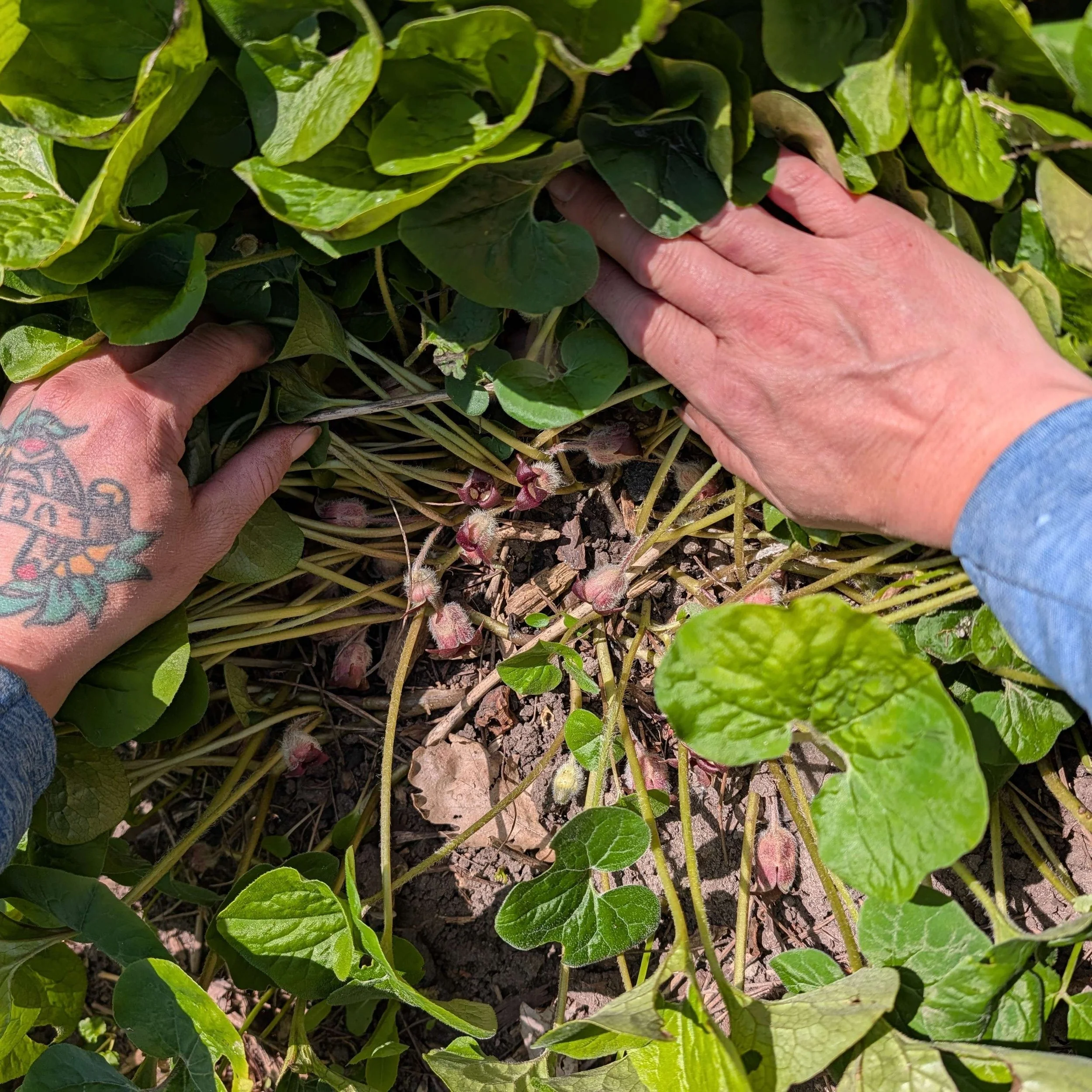
Geranium maculatum, Wild Geranium
FS-PS, Zone 3, blooms April - May, 1-1.5’ x 1’-1.5’, medium to medium dry, sand to some clay.
Keystone Species - It is a keystone wildflower that supports 26 species of butterflies and moths in our eastern region. It also supports. Cranesbill Miner Bee (Andrena distans): This is a primary pollen specialist (oligolege) of the genus Geranium. It is specifically adapted to collect the blue-tinted pollen from these flowers to feed its larvae. As an early bloomer it provides a critical early source of nectar and pollen for pollinators emerging from dormancy or migrating, such as bumblebee queens. By hosting numerous caterpillars, it indirectly feeds terrestrial birds like chickadees, which require thousands of caterpillars to raise a single brood.
Wild Geranium has been our top selling plant for the last 3 seasons.
This lovely woodland plant does well in most soils. Its foliage is beautiful! Useful for difficult dry shade conditions, it’s a clump-forming perennial which produces a profusion of upward-facing, saucer-shaped, pale lilac-pink flowers, adorned with a creamy-white center and faint veins. I am always excited to see these lovlies in the spring. It blooms for 6-7 weeks from late spring to early summer and sometimes reblooms in the fall. This hardy geranium is reliable and easy to grow. It’s said that the foliage dies back or yellows towards the fall, but ours has usually stayed green.
This plant has evolved a unique way to reseed itself. A seed pod that resembles a crane’s bill forms and when it dries, it catapults away from the plant. Each seed has a tiny tail that is humidity-sensitive. The tail bends and moves in response to moisture which helps drive it into the soil, to better germinate (see photo).
Attracts a wide range of native bees, honeybees, butterflies and moths. It’s seeds are relished by mourning doves. It is the host plant for 25 species of moths and butterflies including the Baltimore Checkerspot, Eastern-tailed Blue and the Gray Hairstreak Butterflies.
DA Planting Notes - One of the questions we frequently hear, is does a plant spread. A Wild Geranium plant will spread slowly by rhizomes. In moist, woodland conditions it spreads by seed. See above description of how this occurs. This is easily controlled by pulling those early sprouts. Or dig them up and gift them to a fellow gardener!
Geranium maculatum, Wild Geranium
FS-PS, Zone 3, blooms April - May, 1-1.5’ x 1’-1.5’, medium to medium dry, sand to some clay.
Keystone Species - It is a keystone wildflower that supports 26 species of butterflies and moths in our eastern region. It also supports. Cranesbill Miner Bee (Andrena distans): This is a primary pollen specialist (oligolege) of the genus Geranium. It is specifically adapted to collect the blue-tinted pollen from these flowers to feed its larvae. As an early bloomer it provides a critical early source of nectar and pollen for pollinators emerging from dormancy or migrating, such as bumblebee queens. By hosting numerous caterpillars, it indirectly feeds terrestrial birds like chickadees, which require thousands of caterpillars to raise a single brood.
Wild Geranium has been our top selling plant for the last 3 seasons.
This lovely woodland plant does well in most soils. Its foliage is beautiful! Useful for difficult dry shade conditions, it’s a clump-forming perennial which produces a profusion of upward-facing, saucer-shaped, pale lilac-pink flowers, adorned with a creamy-white center and faint veins. I am always excited to see these lovlies in the spring. It blooms for 6-7 weeks from late spring to early summer and sometimes reblooms in the fall. This hardy geranium is reliable and easy to grow. It’s said that the foliage dies back or yellows towards the fall, but ours has usually stayed green.
This plant has evolved a unique way to reseed itself. A seed pod that resembles a crane’s bill forms and when it dries, it catapults away from the plant. Each seed has a tiny tail that is humidity-sensitive. The tail bends and moves in response to moisture which helps drive it into the soil, to better germinate (see photo).
Attracts a wide range of native bees, honeybees, butterflies and moths. It’s seeds are relished by mourning doves. It is the host plant for 25 species of moths and butterflies including the Baltimore Checkerspot, Eastern-tailed Blue and the Gray Hairstreak Butterflies.
DA Planting Notes - One of the questions we frequently hear, is does a plant spread. A Wild Geranium plant will spread slowly by rhizomes. In moist, woodland conditions it spreads by seed. See above description of how this occurs. This is easily controlled by pulling those early sprouts. Or dig them up and gift them to a fellow gardener!
 Image 1 of 6
 Image 2 of 6
 Image 3 of 6
 Image 4 of 6
 Image 5 of 6
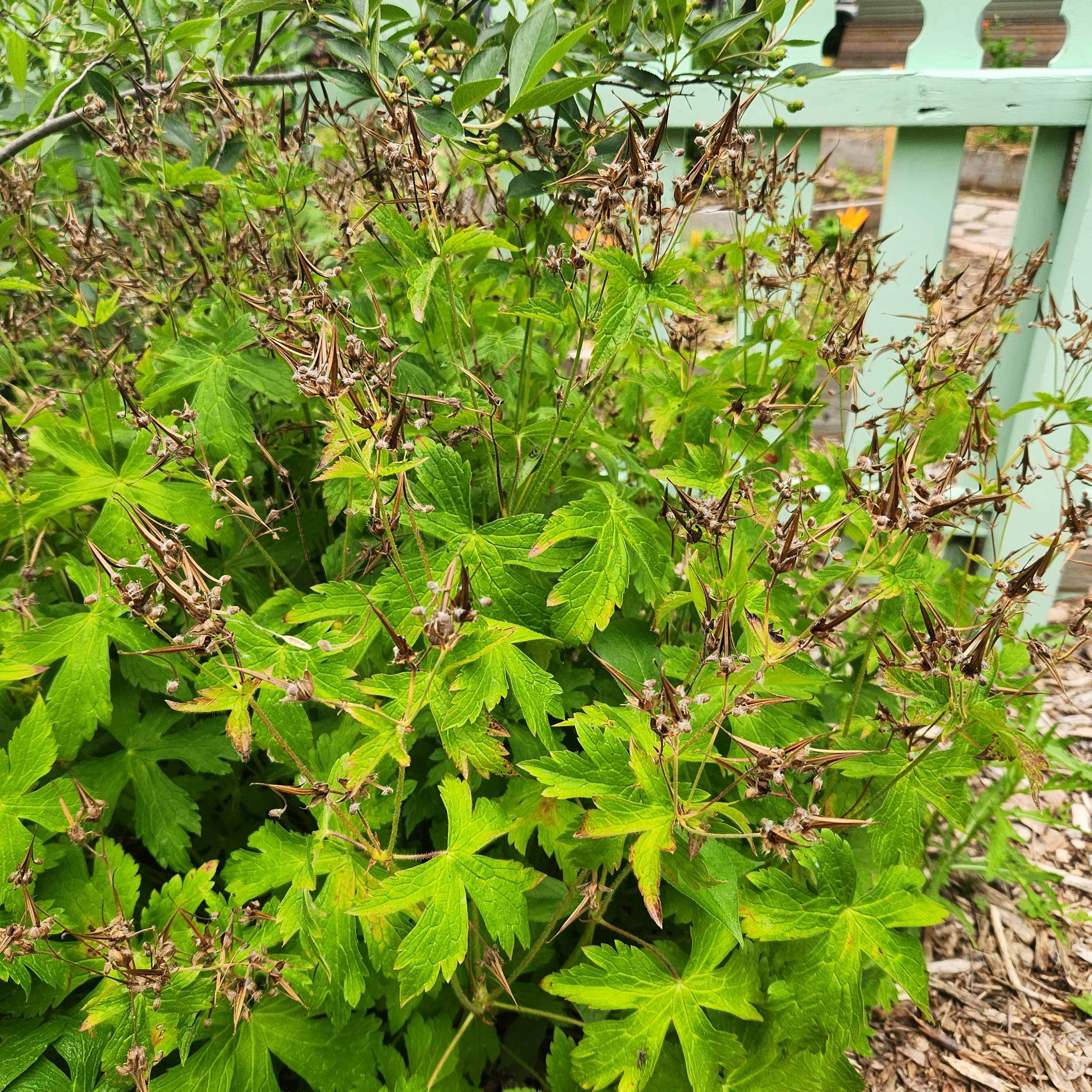 Image 6 of 6