Veronicastrum virginicum, Culvers Root
FS-Full Shade, Zone 3, blooms June-August, 5’ x 2-3’, wet to medium dry, deer and rabbit resistant.
Keystone Species - It is the exclusive host for the Culver's Root Borer Moth (Papaipema sciata), whose larvae depend solely on its roots for survival and two other moths. It is also the host plant for the Common Buckeye butterfly. According to the Xerces Society, it is identified as a plant of special value for native bees and healthy populations of beneficial insects that help control garden pests. It attracts an exceptionally wide variety of insects, including long-tongued and short-tongued bees, honeybees, bumblebees, mason bees, butterflies, moths, syrphid flies, and beneficial wasps.
Culver's Root can offer a strong upright accent to any perennial garden or prairie/savanna. It's an elegant unbranched plant, reaching heights of 5' with candelabra-like spikes of white flowers that open from the bottom up mid-summer. The small white flowers densely packed together can sometimes take on a purple hue; the contrast of these flowers against the dark green foliage is stunning. Its foliage are whorled-type leaves set in tiers, a perfect setting for the flower blooms.
Veronicastrum virginicum prefers partly sunny wet sites or gardens with moist rich acidic soil. It is listed as FS to full shade, but will need to be coralled in shadier spots. Plants tolerate some shade but will flop is shade is too dense. This species will adapt to sandy, loamy or clay soils and brief periods of drought. It is a good rain garden plant.
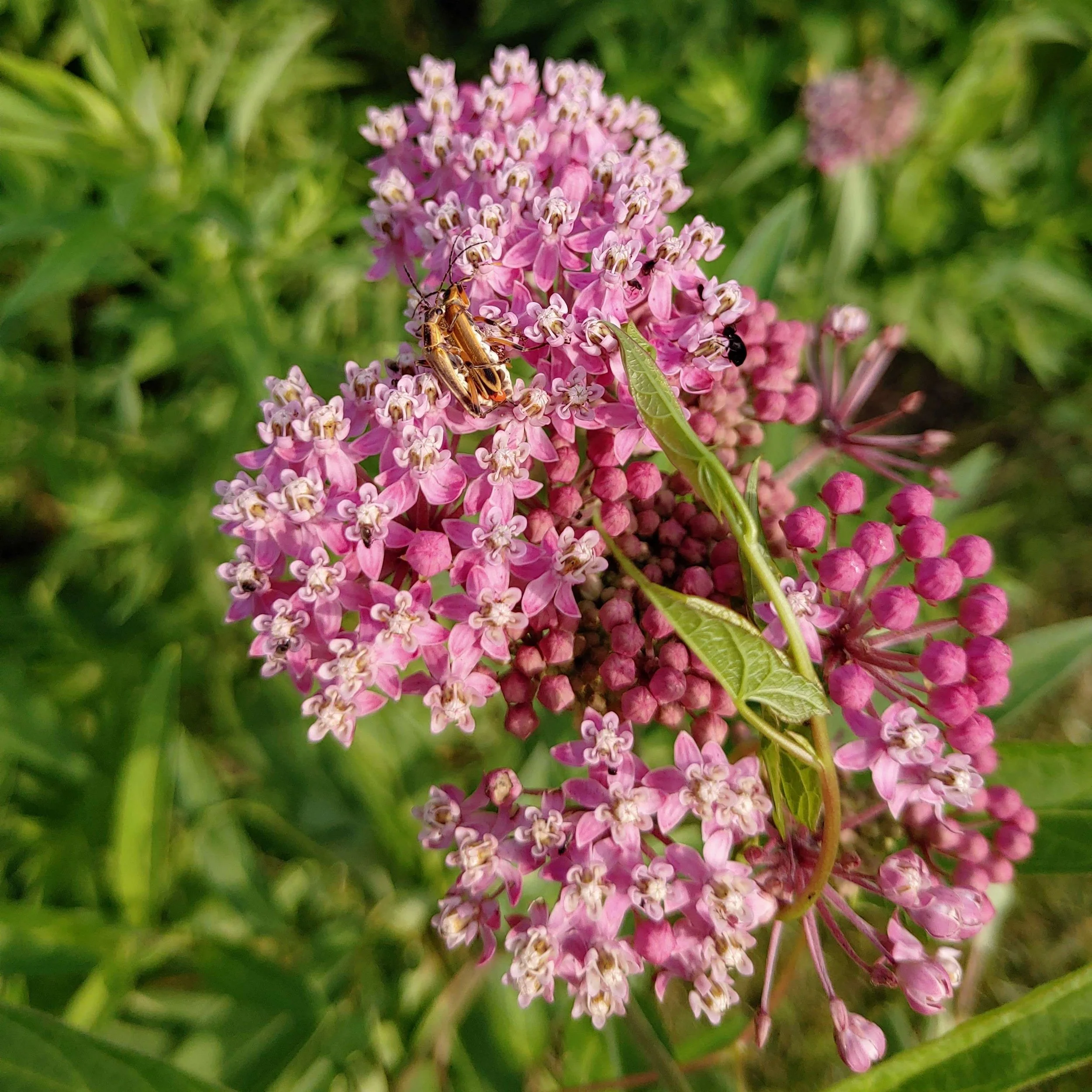
Attracts many species of long-tongued and short-tongued bees, beneficial wasps, soldier beetles, Syrphid flies, butterflies and moths. Host for Common Buckeye Butterfly and Culvers Root Moth.
Veronicastrum virginicum, Culvers Root
FS-Full Shade, Zone 3, blooms June-August, 5’ x 2-3’, wet to medium dry, deer and rabbit resistant.
Keystone Species - It is the exclusive host for the Culver's Root Borer Moth (Papaipema sciata), whose larvae depend solely on its roots for survival and two other moths. It is also the host plant for the Common Buckeye butterfly. According to the Xerces Society, it is identified as a plant of special value for native bees and healthy populations of beneficial insects that help control garden pests. It attracts an exceptionally wide variety of insects, including long-tongued and short-tongued bees, honeybees, bumblebees, mason bees, butterflies, moths, syrphid flies, and beneficial wasps.
Culver's Root can offer a strong upright accent to any perennial garden or prairie/savanna. It's an elegant unbranched plant, reaching heights of 5' with candelabra-like spikes of white flowers that open from the bottom up mid-summer. The small white flowers densely packed together can sometimes take on a purple hue; the contrast of these flowers against the dark green foliage is stunning. Its foliage are whorled-type leaves set in tiers, a perfect setting for the flower blooms.
Veronicastrum virginicum prefers partly sunny wet sites or gardens with moist rich acidic soil. It is listed as FS to full shade, but will need to be coralled in shadier spots. Plants tolerate some shade but will flop is shade is too dense. This species will adapt to sandy, loamy or clay soils and brief periods of drought. It is a good rain garden plant.
Attracts many species of long-tongued and short-tongued bees, beneficial wasps, soldier beetles, Syrphid flies, butterflies and moths. Host for Common Buckeye Butterfly and Culvers Root Moth.
 Image 1 of 14
 Image 2 of 14
 Image 3 of 14
 Image 4 of 14
 Image 5 of 14
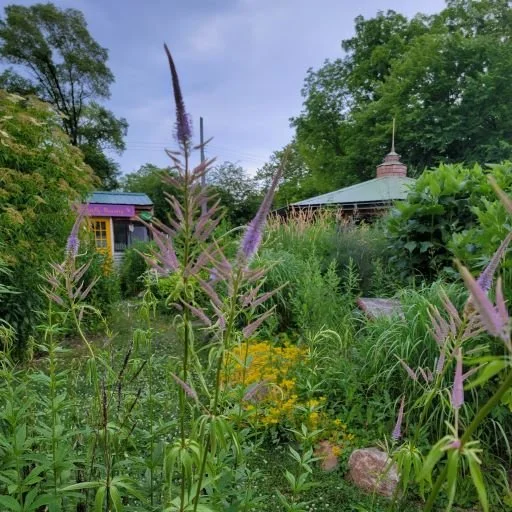 Image 6 of 14
 Image 7 of 14
 Image 8 of 14
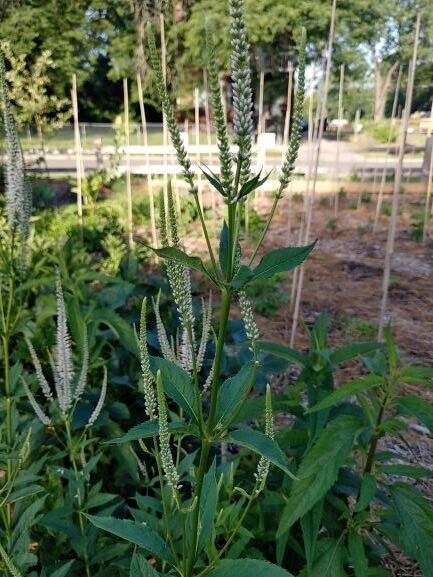 Image 9 of 14
 Image 10 of 14
 Image 11 of 14
 Image 12 of 14
 Image 13 of 14
 Image 14 of 14