 Image 1 of 5
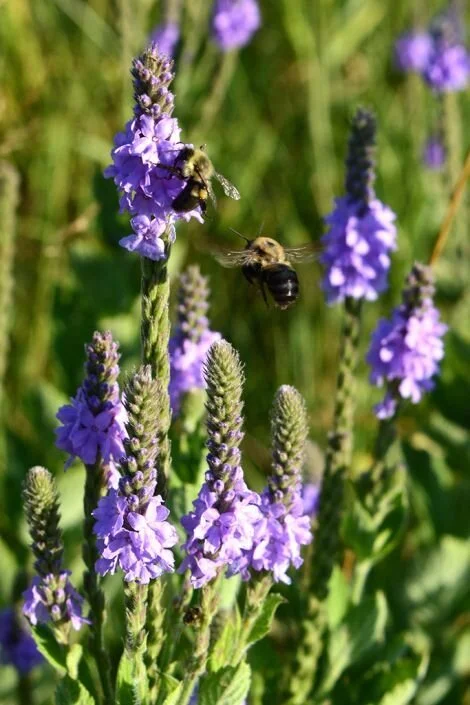 Image 2 of 5
 Image 3 of 5
 Image 4 of 5
 Image 5 of 5
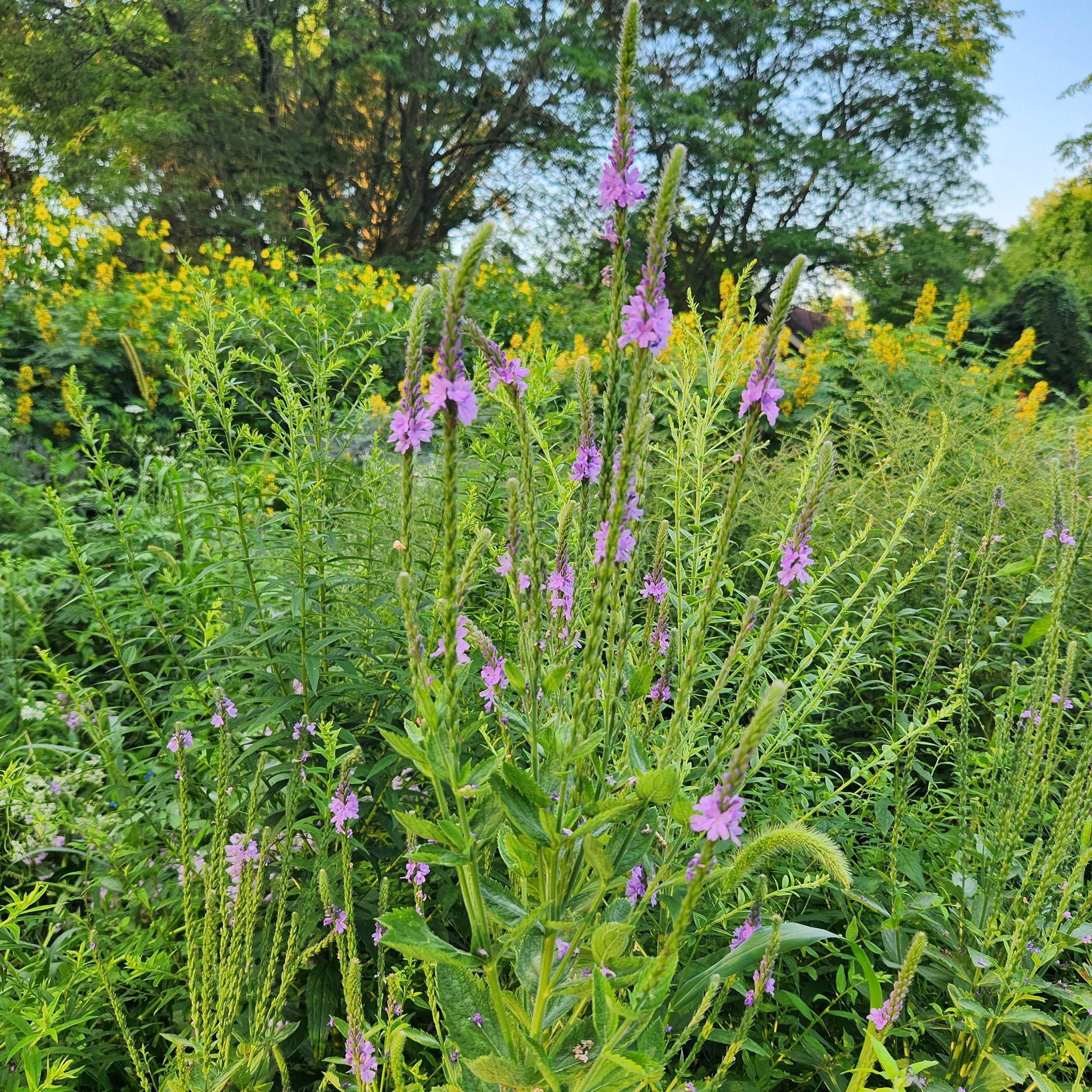
Verbena stricta, Hoary Vervain
FS, Zone 3, blooms July - August, 3’ x 1’, medium dry to dry, sandy to loam, deer resistant.
Keystone Species - Is the larval host plant for 11 moth and butterfly species including the Common Buckeye butterfly. It is a specialist bee host for the Verbena bee, a small mining bee. it provides abundant nectar over a long blooming period (mid-to-late summer), supporting a vast array of native bees, butterflies, and hummingbirds when other food sources may be scarce. It thrives in dry, rocky, or sandy soils where other plants cannot survive, providing stability and nectar in degraded or tough environments. The seeds are a staple food for many songbirds (including cardinals and field sparrows), particularly in late summer and winter.
This prairie plant likes well-drained soil. Its considered a short-lived perennial, but it readily spreads by seed, not by its roots. The plant is widely distributed across most of the U.S. and you may see it in old fields or pastures. The blooms last 6-8 weeks and small mammals depend on the seeds it produces.
Native bees, honey bees, butterflies, moths and Soldier Beetles are attracted to this plant. Whenever you see this type of bloom with small florets, it is usually a good plant for pollinators. Hoary Vervain is no exception. Some specialist bees like Long-Horned, Leafcutter, Green Sweat Bees and Cuckoo Bees visit Hoary Vervain for pollen.
Most other pollinators come for the nectar. It is a preferred plant for butterflies and moths. Syrphid flies resemble bees to deter predators but are really flies. Bee flies forage for nectar using their long mouth parts. Flowers develop from the bottom upwards. Host plant for Verbena and Fine-Lined Sallow Moths and for the Common Buckeye Butterfly.
DA Plant Notes - We have Verbena stricta planted in two FS locations, one mostly morning sun and the other afternoon. The sfternoon site seems to be blooming better. We have not noticed that it spreads by seed although we wish it would!
Verbena stricta, Hoary Vervain
FS, Zone 3, blooms July - August, 3’ x 1’, medium dry to dry, sandy to loam, deer resistant.
Keystone Species - Is the larval host plant for 11 moth and butterfly species including the Common Buckeye butterfly. It is a specialist bee host for the Verbena bee, a small mining bee. it provides abundant nectar over a long blooming period (mid-to-late summer), supporting a vast array of native bees, butterflies, and hummingbirds when other food sources may be scarce. It thrives in dry, rocky, or sandy soils where other plants cannot survive, providing stability and nectar in degraded or tough environments. The seeds are a staple food for many songbirds (including cardinals and field sparrows), particularly in late summer and winter.
This prairie plant likes well-drained soil. Its considered a short-lived perennial, but it readily spreads by seed, not by its roots. The plant is widely distributed across most of the U.S. and you may see it in old fields or pastures. The blooms last 6-8 weeks and small mammals depend on the seeds it produces.
Native bees, honey bees, butterflies, moths and Soldier Beetles are attracted to this plant. Whenever you see this type of bloom with small florets, it is usually a good plant for pollinators. Hoary Vervain is no exception. Some specialist bees like Long-Horned, Leafcutter, Green Sweat Bees and Cuckoo Bees visit Hoary Vervain for pollen.
Most other pollinators come for the nectar. It is a preferred plant for butterflies and moths. Syrphid flies resemble bees to deter predators but are really flies. Bee flies forage for nectar using their long mouth parts. Flowers develop from the bottom upwards. Host plant for Verbena and Fine-Lined Sallow Moths and for the Common Buckeye Butterfly.
DA Plant Notes - We have Verbena stricta planted in two FS locations, one mostly morning sun and the other afternoon. The sfternoon site seems to be blooming better. We have not noticed that it spreads by seed although we wish it would!