Verbena hastata, Blue Vervain
FS, Zone 3, Blooms July - Sept., 5-6’ x 2’, Wet to medium, deer resistant.
Keystone Species - Is the larval host plant for 11 moth and butterfly species including the Common Buckeye butterfly. It is a specialist bee host for the Verbena bee, a small mining bee. it provides abundant nectar over a long blooming period (mid-to-late summer), supporting a vast array of native bees, butterflies, and hummingbirds when other food sources may be scarce. It plays a structural role in wetland and prairie ecosystems by stabilizing soil and resisting invasive species encroachment.
Verbena hastata is a clumping perennial with stiff erect squarish stems. Leaves are opposite with coarse teeth. In summer, plants are topped by narrow spikey panicles of small tubular purple flowers. Plants thrive in full or part sun in moist or wet mucky soils. This tall stately plant provides architectural interest to your garden and also attracts a wide range of pollinators. The plant rarely needs staking. It can tolerate some flooding and standing water so it is a good candidate for a rain garden. The tiny tubular flowers bloom bottom to top and are long lasting when cut. It is a short-lived perennial that will self-seed.
Native to most of the temperate world. The plant has an ancient history. It is said priests cleaned the altars with the flower heads.
The flowers produce huge amounts of nectar over a long period. Vervain is a host plant for the Verbena moth. Leaving the seed heads on the plants in winter provides much needed food for birds and small mammals.
Attracts a wide range of pollinating insects as its tiny florets open over a long bloom period, including Honey bees, Mining bees, Leafcutter bees, Bumble bees, Long-horned bees, Bee Flies, Native Wasps, Thick-Headed Flies, Syrphid Flies and butterflies. Host plant for the Common Buckeye butterfly.
Verbena hastata, Blue Vervain
FS, Zone 3, Blooms July - Sept., 5-6’ x 2’, Wet to medium, deer resistant.
Keystone Species - Is the larval host plant for 11 moth and butterfly species including the Common Buckeye butterfly. It is a specialist bee host for the Verbena bee, a small mining bee. it provides abundant nectar over a long blooming period (mid-to-late summer), supporting a vast array of native bees, butterflies, and hummingbirds when other food sources may be scarce. It plays a structural role in wetland and prairie ecosystems by stabilizing soil and resisting invasive species encroachment.
Verbena hastata is a clumping perennial with stiff erect squarish stems. Leaves are opposite with coarse teeth. In summer, plants are topped by narrow spikey panicles of small tubular purple flowers. Plants thrive in full or part sun in moist or wet mucky soils. This tall stately plant provides architectural interest to your garden and also attracts a wide range of pollinators. The plant rarely needs staking. It can tolerate some flooding and standing water so it is a good candidate for a rain garden. The tiny tubular flowers bloom bottom to top and are long lasting when cut. It is a short-lived perennial that will self-seed.
Native to most of the temperate world. The plant has an ancient history. It is said priests cleaned the altars with the flower heads.
The flowers produce huge amounts of nectar over a long period. Vervain is a host plant for the Verbena moth. Leaving the seed heads on the plants in winter provides much needed food for birds and small mammals.
Attracts a wide range of pollinating insects as its tiny florets open over a long bloom period, including Honey bees, Mining bees, Leafcutter bees, Bumble bees, Long-horned bees, Bee Flies, Native Wasps, Thick-Headed Flies, Syrphid Flies and butterflies. Host plant for the Common Buckeye butterfly.
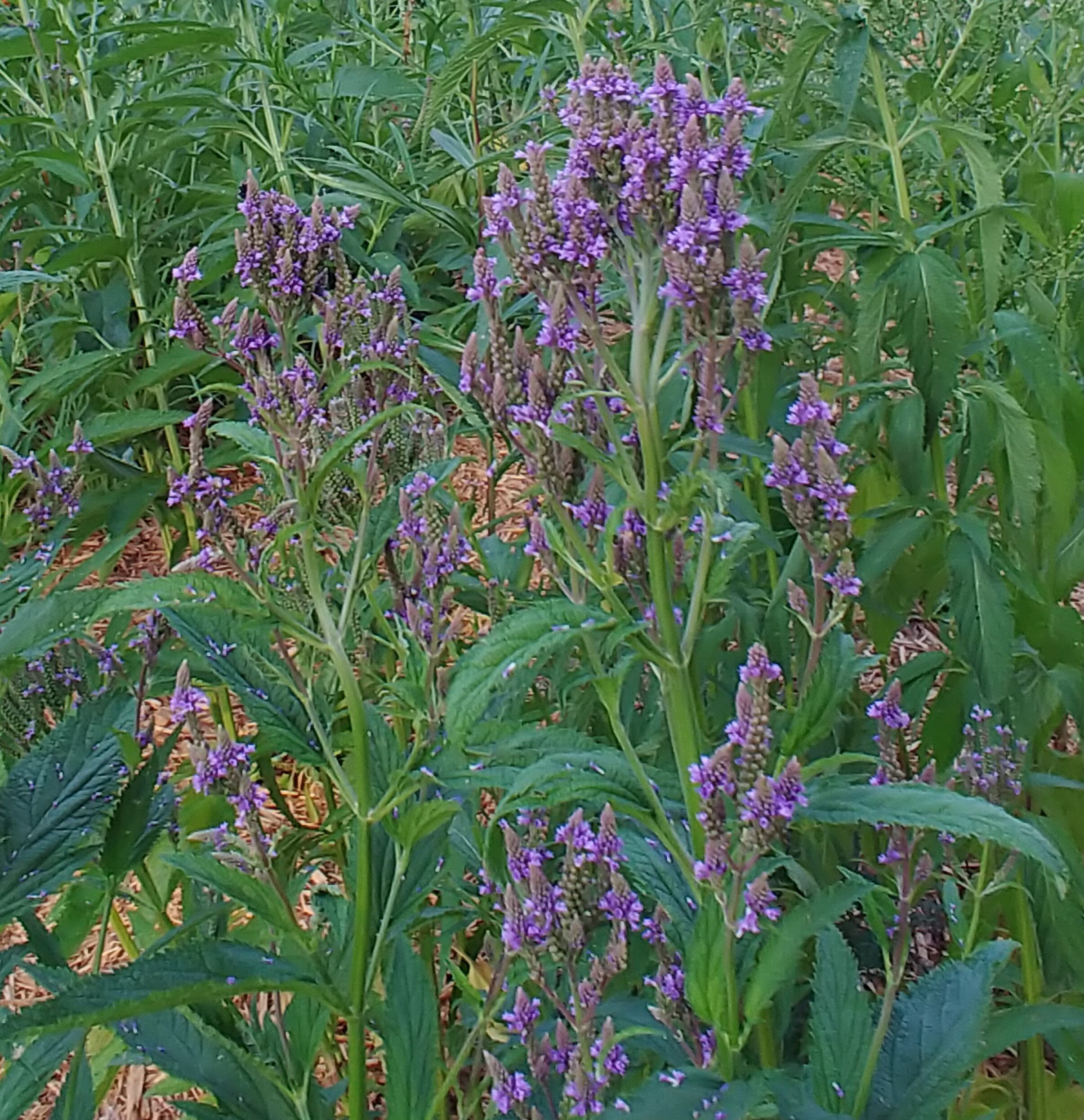 Image 1 of 6
 Image 2 of 6
 Image 3 of 6
 Image 4 of 6
 Image 5 of 6
 Image 6 of 6