Tradescantia ohiensis, Spiderwort
FS-PS, Zone 4, Blooms May-July, 3’ x 1.5’, Medium wet - dry, deer resistant
Tradescantia ohiensis is not typically classified as a keystone plant. It is however considered a valuable native due to its early bloom period and that it attracts so many generalist pollinators. It is unique because it produces pollen only and no nectar. This makes it an essential "grocery store" for bees needing protein to provision their nests.
An interesting and long-blooming perennial for the border, naturalized area, meadow or open spaces of the woodland garden. Easily grown in average, dry to medium, well-drained soil in full sun to part shade. Very tolerant of part shade, but bloom may be less profuse. Prefers moist, acidic, sandy soil. Divide clumps when they become overcrowded. Cut back to 6-12" in mid-summer to encourage new growth and a possible fall bloom.
Ohio Spiderwort flowers are best grown in morning sun as the flowers open in the mornings for insect visitors, then close up during the heat of the day. The attractive blue to purple flowers have a fuzzy appearance due to the fine hairs on the filaments. The flowers have 3 petals and bloom in clusters with each bloom lasting a day. Spiderwort flowers from late April through to July, making the early pollen an important source for emerging bees. The flowers do not produce nectar.
Photos show the first year clumps of growth, second year the plants are at full size. Cut back after blooming.
Attracts a wide variety of insects, but especially bees and bumble bees. When the pollen is released and the sun is out, it is a real show! Is the larval host plant for two species of moths.
DA Planting Notes - If you plant one Spiderwort you will likely be pleased with rhe results as it is adaptable to many different growing conditions. If you plant in a drift you will be amazed a the bee activity on a sunny morning. Bees often practice “floral constancy”. They are drawn to large patches of blooms rather than a single plant. Otherwise they expend more energy on foraging.
Tradescantia ohiensis, Spiderwort
FS-PS, Zone 4, Blooms May-July, 3’ x 1.5’, Medium wet - dry, deer resistant
Tradescantia ohiensis is not typically classified as a keystone plant. It is however considered a valuable native due to its early bloom period and that it attracts so many generalist pollinators. It is unique because it produces pollen only and no nectar. This makes it an essential "grocery store" for bees needing protein to provision their nests.
An interesting and long-blooming perennial for the border, naturalized area, meadow or open spaces of the woodland garden. Easily grown in average, dry to medium, well-drained soil in full sun to part shade. Very tolerant of part shade, but bloom may be less profuse. Prefers moist, acidic, sandy soil. Divide clumps when they become overcrowded. Cut back to 6-12" in mid-summer to encourage new growth and a possible fall bloom.
Ohio Spiderwort flowers are best grown in morning sun as the flowers open in the mornings for insect visitors, then close up during the heat of the day. The attractive blue to purple flowers have a fuzzy appearance due to the fine hairs on the filaments. The flowers have 3 petals and bloom in clusters with each bloom lasting a day. Spiderwort flowers from late April through to July, making the early pollen an important source for emerging bees. The flowers do not produce nectar.
Photos show the first year clumps of growth, second year the plants are at full size. Cut back after blooming.
Attracts a wide variety of insects, but especially bees and bumble bees. When the pollen is released and the sun is out, it is a real show! Is the larval host plant for two species of moths.
DA Planting Notes - If you plant one Spiderwort you will likely be pleased with rhe results as it is adaptable to many different growing conditions. If you plant in a drift you will be amazed a the bee activity on a sunny morning. Bees often practice “floral constancy”. They are drawn to large patches of blooms rather than a single plant. Otherwise they expend more energy on foraging.
 Image 1 of 8
 Image 2 of 8
 Image 3 of 8
 Image 4 of 8
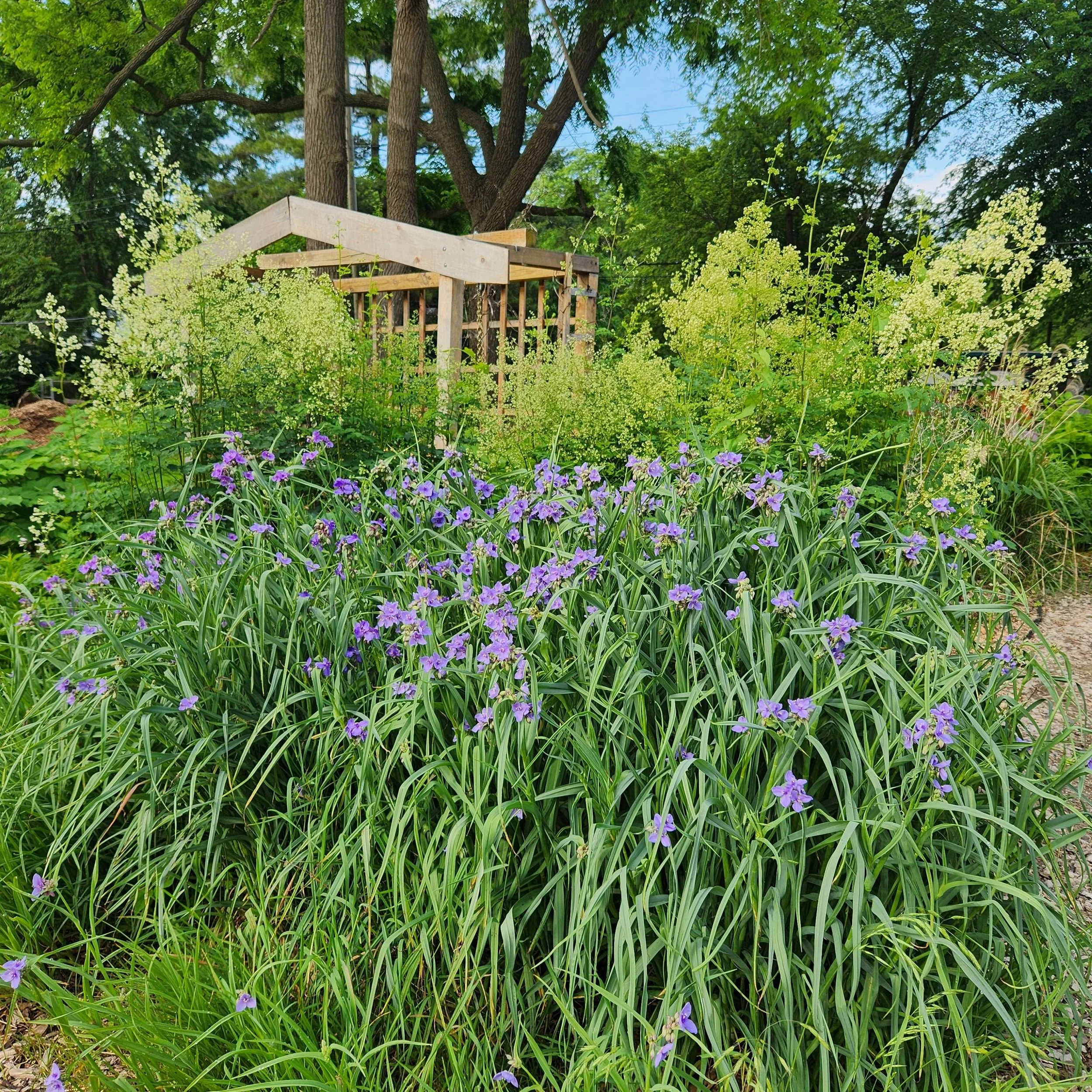 Image 5 of 8
 Image 6 of 8
 Image 7 of 8
 Image 8 of 8