Image 1 of 5
 Image 2 of 5
 Image 3 of 5
 Image 4 of 5
 Image 5 of 5
Thalictrum dasycarpum, Tall Meadow Rue
FS-PS, Zone 3, Blooms June-July, 6’ x 2-3’, Medium wet - medium, deer resistant
Keystone Species - Tall Meadow Rue is the larval-host plant for 15 species of moths and butterflies. The plant acts as a valuable forage resource for several native bees, including: Mining, Sweat, Mason, Carpenter and Cuckoo bees. Because it supports a high number of Lepidoptera species, it indirectly feeds terrestrial birds. Approximately 96% of terrestrial birds rely on these caterpillars as their primary food source for raising young. Due to its height (3–6 feet) and tolerance for wet conditions, it is a critical component for rations and rain gardens.wetland and shoreline restoration.
Also known as Purple meadow rue
Thalictrum dasycarpum is a dense, clump-forming meadow rue that grows 3-5' tall. This perennial wildflower has a central stem that is unbranched below, becoming branched above. Easily grown in average, medium, well-drained soil in full sun to part shade. Prefers moist, rich, humusy soil and dappled sun. Intolerant of hot and humid conditions.
As a largely dioecious species (separate male and female plants), the plant relies on wind to carry pollen from the fluffy, dangling yellow stamens of male flowers to the, typically purple, pistils of female flowers. Even though honeybees and other bees are sometimes attracted to the abundant pollen of male flowers, the flowers of Purple Meadow Rue are not cross-pollinated by insects as its female flowers are devoid of nectar. There are relatively few insects that feed on the foliage, stems, and other parts of this plant.
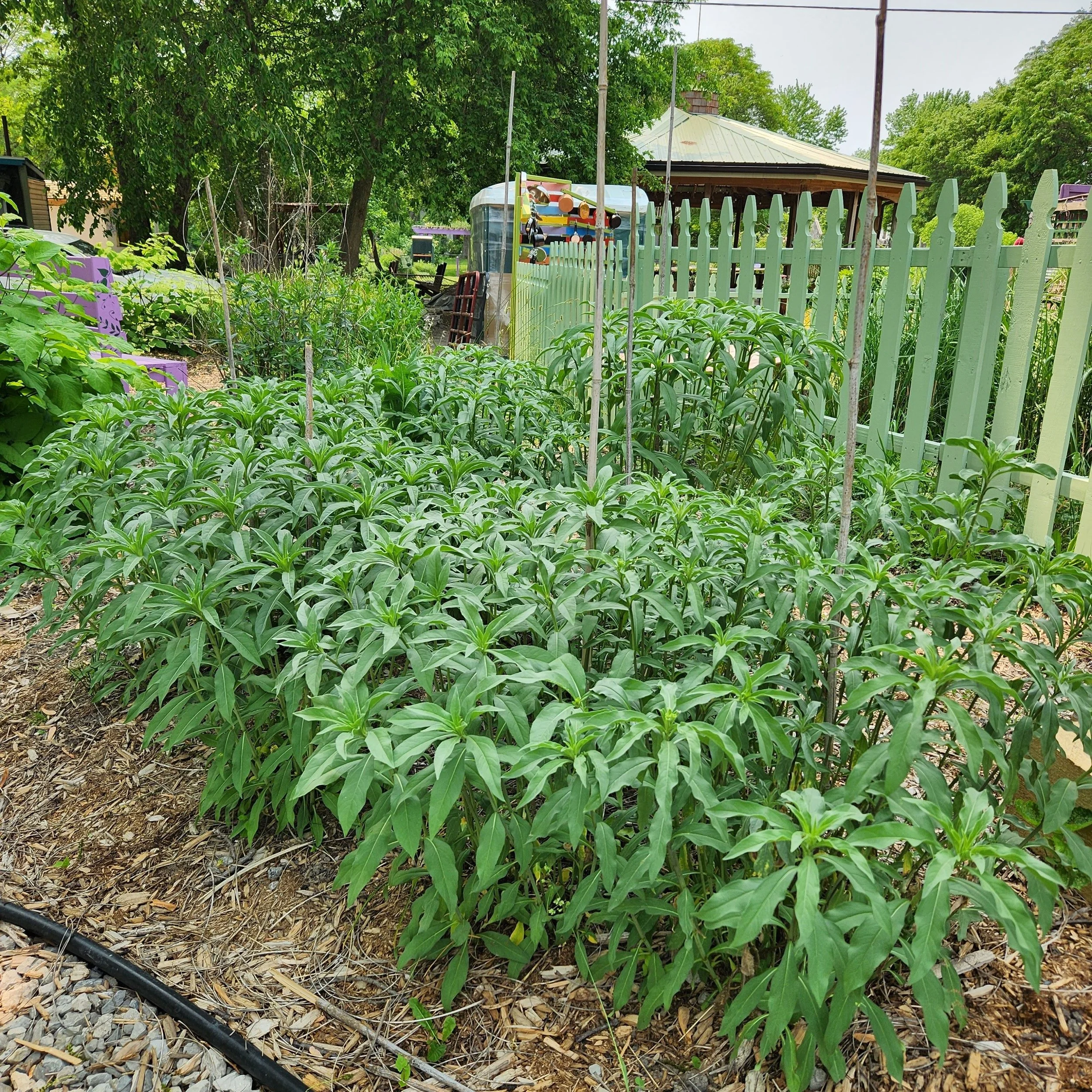
The photos are from early June 2024. I wish I had taken more on a better day! I am so grateful for these early bloomers that help the bees and give us cheer.
Thalictrum dasycarpum, Tall Meadow Rue
FS-PS, Zone 3, Blooms June-July, 6’ x 2-3’, Medium wet - medium, deer resistant
Keystone Species - Tall Meadow Rue is the larval-host plant for 15 species of moths and butterflies. The plant acts as a valuable forage resource for several native bees, including: Mining, Sweat, Mason, Carpenter and Cuckoo bees. Because it supports a high number of Lepidoptera species, it indirectly feeds terrestrial birds. Approximately 96% of terrestrial birds rely on these caterpillars as their primary food source for raising young. Due to its height (3–6 feet) and tolerance for wet conditions, it is a critical component for rations and rain gardens.wetland and shoreline restoration.
Also known as Purple meadow rue
Thalictrum dasycarpum is a dense, clump-forming meadow rue that grows 3-5' tall. This perennial wildflower has a central stem that is unbranched below, becoming branched above. Easily grown in average, medium, well-drained soil in full sun to part shade. Prefers moist, rich, humusy soil and dappled sun. Intolerant of hot and humid conditions.
As a largely dioecious species (separate male and female plants), the plant relies on wind to carry pollen from the fluffy, dangling yellow stamens of male flowers to the, typically purple, pistils of female flowers. Even though honeybees and other bees are sometimes attracted to the abundant pollen of male flowers, the flowers of Purple Meadow Rue are not cross-pollinated by insects as its female flowers are devoid of nectar. There are relatively few insects that feed on the foliage, stems, and other parts of this plant.
The photos are from early June 2024. I wish I had taken more on a better day! I am so grateful for these early bloomers that help the bees and give us cheer.