Swamp Milkweed, Asclepias incarnata,
FS - PS, Hardy to Zone 3, blooms June - August, 4’ x 2’, wet to medium soil conditions, deer resistant.
Keystone Plant - Monarch butterflies rely entirely on milkweed for their life cycle; it is their only food source.
Swamp Milkweed is a perfect plant for a rain garden or fairly moist conditions. We planted a few of them in our native gardens, which are usually not that wet, but they prospered. Best not to plant in conditions that are too dry. First-year plants grow beautifully and get close to 4’ in height. We have Swamp MW growing in several different growing conditions and have found it does produce volunteer seedlings in some of the spots but not all. If you are put off by Common MW and feel Butterfly MW because of appearance or short bloom period, we suggest Swamp MW.
A wide variety of pollinators visit for the nectar. Due to a unique adaptation, Asclepias also develops pollen into sacs which self-pollinate the plant as well. This species of milkweed is extremely sought after by hosts of different species of insects, including the beautiful (and harmless) Great Black and Great Golden Digger Wasps. The blooms have a clear vanilla scent. These large wasps have proven to be the best pollinators for the sticky pollen that milkweed species produces.
Swamp Milkweed is a popular Monarch butterfly host plant. It also attracts bees, beetles, flies, hummingbirds, Clearwing Hummingbird moths and butterflies, including Red Admirals, Pearl Crescents, Sulfurs, Skippers, Fritillaries and Swallowtails.
The large Milkweed bug evolved with this plant and its life cycle is tied to it. You may see yellow aphids on your Milkweeds. They are Oleander Aphids introduced from the Mediterranean area, associated with the Orleander shrub.
Swamp Milkweed, Asclepias incarnata,
FS - PS, Hardy to Zone 3, blooms June - August, 4’ x 2’, wet to medium soil conditions, deer resistant.
Keystone Plant - Monarch butterflies rely entirely on milkweed for their life cycle; it is their only food source.
Swamp Milkweed is a perfect plant for a rain garden or fairly moist conditions. We planted a few of them in our native gardens, which are usually not that wet, but they prospered. Best not to plant in conditions that are too dry. First-year plants grow beautifully and get close to 4’ in height. We have Swamp MW growing in several different growing conditions and have found it does produce volunteer seedlings in some of the spots but not all. If you are put off by Common MW and feel Butterfly MW because of appearance or short bloom period, we suggest Swamp MW.
A wide variety of pollinators visit for the nectar. Due to a unique adaptation, Asclepias also develops pollen into sacs which self-pollinate the plant as well. This species of milkweed is extremely sought after by hosts of different species of insects, including the beautiful (and harmless) Great Black and Great Golden Digger Wasps. The blooms have a clear vanilla scent. These large wasps have proven to be the best pollinators for the sticky pollen that milkweed species produces.
Swamp Milkweed is a popular Monarch butterfly host plant. It also attracts bees, beetles, flies, hummingbirds, Clearwing Hummingbird moths and butterflies, including Red Admirals, Pearl Crescents, Sulfurs, Skippers, Fritillaries and Swallowtails.
The large Milkweed bug evolved with this plant and its life cycle is tied to it. You may see yellow aphids on your Milkweeds. They are Oleander Aphids introduced from the Mediterranean area, associated with the Orleander shrub.
 Image 1 of 9
 Image 2 of 9
 Image 3 of 9
 Image 4 of 9
 Image 5 of 9
 Image 6 of 9
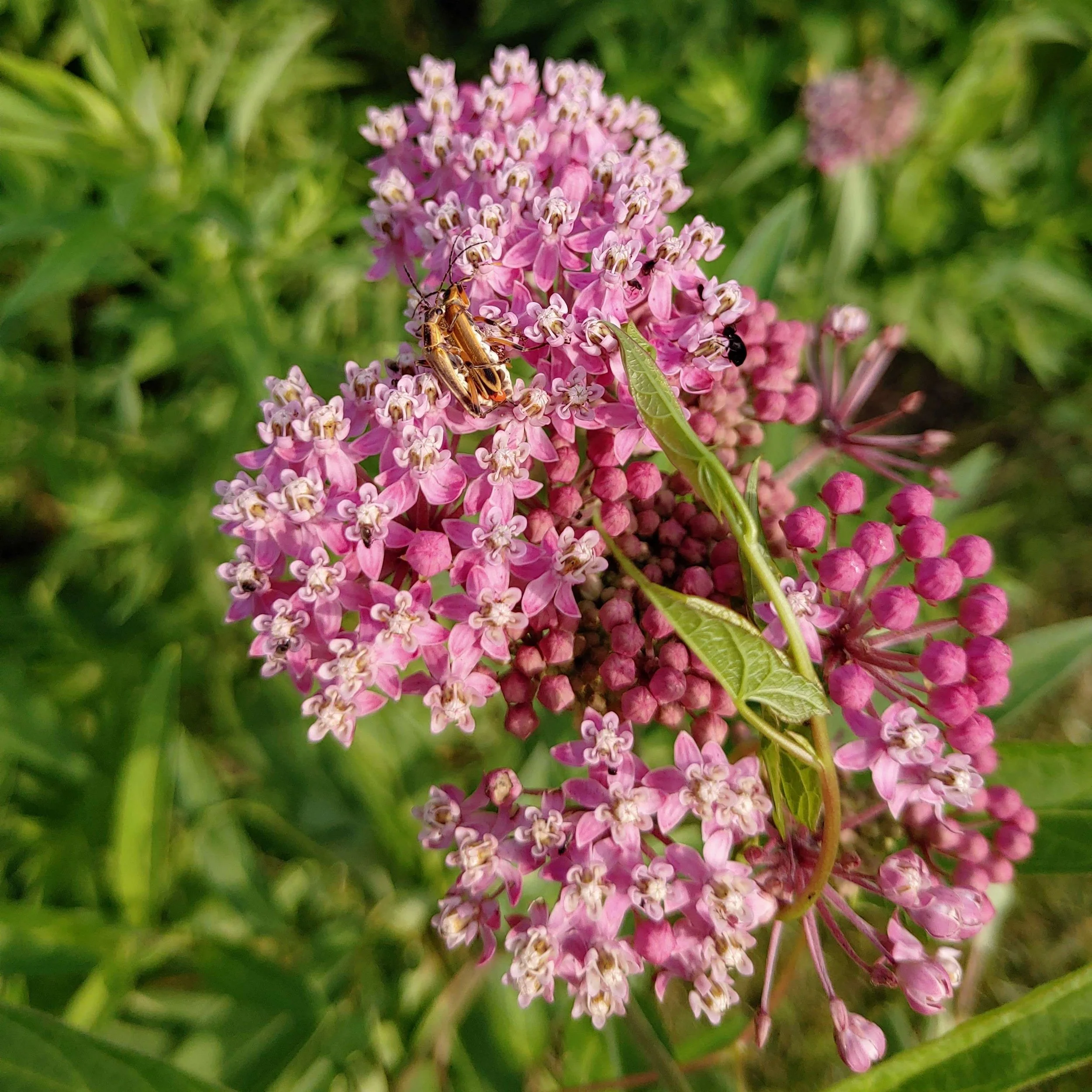 Image 7 of 9
 Image 8 of 9
 Image 9 of 9