Solidago rugosa, Fireworks Goldenrod, Quart pot
FS, Zone 4, Blooms late summer, Sept-Oct., 3-4’ x 3-4’, wet to medium, deer resistant.
Keystone Species - Goldenrods are among the top-ranked plants for supporting biodiversity. Goldenrod is the number one keystone perennial in Michigan. Goldenrod in general for our region supports 135 species of moths and butterflies.These caterpillars are a vital protein source for baby birds. It supports approximately 42 species of pollen specialist bees that rely exclusively on goldenrods for their diet. It blooms from late summer into autumn, providing a "pollinator powerhouse" of nectar and pollen when most other plants have finished blooming. It is an essential energy source for migrating Monarch butterflies, helping them fuel their journey south.In the winter, its seeds feed birds like finches, and its standing stems provide shelter for overwintering insects. This particular variety is highly adaptable and thrives in moist soils, making it excellent for rain gardens or shoreline stabilization.
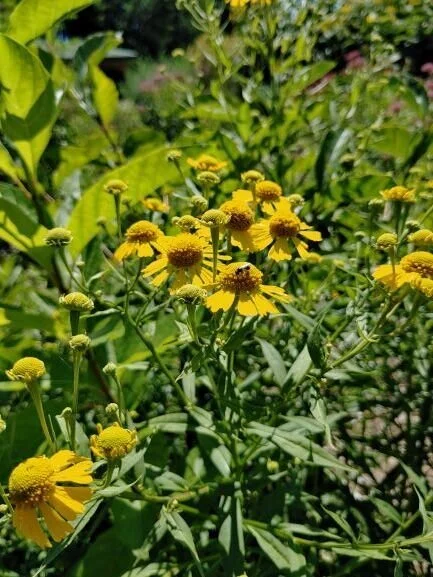
Solidago rugosa “Fireworks” is a striking, clump-forming perennial with stiff lateral electric-yellow inflorescences in early to mid-autumn that are reminiscent of exploding fireworks. With a sensational explosion of golden flowers bursting from the plant like skyrockets, “Fireworks” is not your usual goldenrod. This tough and robust cultivar of a wrinkle-leaf goldenrod, performs very well in full sun and seasonally dry soils, reaching 3-4' tall.
This native plant, found in the wilds of North Carolina in the 1970’s and reintroduced in 1993 by the North Carolina Botanical Garden, is now offered by Native Plant nurseries. We bought one plant in 2019, planted it in early summer and were rewarded with bright yellow sprays by early fall. It has an extremely attractive and strong branching shape. Until it blooms, the plant is covered in a dark green foliage. Unless it’s in a high wind corridor, it should not need staking. A tall sturdy grower, it’s a great companion for ornamental grasses and other late summer blooming perennials such as Asters. Plant among Asters and you will have a curb appeal for passerby’s and pollinators alike. Great cut flower!
Attracts a wide range of native bees, Honey bees and butterflies
DA Planting Notes - This species does produce a manageable amount of volunteers in average to dry conditions and more aggressively in wet conditions. Give them to friends & neighbors for their pollinator gardens. In our opinion it is the best looking goldenrod and does not need staking.
Solidago rugosa, Fireworks Goldenrod, Quart pot
FS, Zone 4, Blooms late summer, Sept-Oct., 3-4’ x 3-4’, wet to medium, deer resistant.
Keystone Species - Goldenrods are among the top-ranked plants for supporting biodiversity. Goldenrod is the number one keystone perennial in Michigan. Goldenrod in general for our region supports 135 species of moths and butterflies.These caterpillars are a vital protein source for baby birds. It supports approximately 42 species of pollen specialist bees that rely exclusively on goldenrods for their diet. It blooms from late summer into autumn, providing a "pollinator powerhouse" of nectar and pollen when most other plants have finished blooming. It is an essential energy source for migrating Monarch butterflies, helping them fuel their journey south.In the winter, its seeds feed birds like finches, and its standing stems provide shelter for overwintering insects. This particular variety is highly adaptable and thrives in moist soils, making it excellent for rain gardens or shoreline stabilization.
Solidago rugosa “Fireworks” is a striking, clump-forming perennial with stiff lateral electric-yellow inflorescences in early to mid-autumn that are reminiscent of exploding fireworks. With a sensational explosion of golden flowers bursting from the plant like skyrockets, “Fireworks” is not your usual goldenrod. This tough and robust cultivar of a wrinkle-leaf goldenrod, performs very well in full sun and seasonally dry soils, reaching 3-4' tall.
This native plant, found in the wilds of North Carolina in the 1970’s and reintroduced in 1993 by the North Carolina Botanical Garden, is now offered by Native Plant nurseries. We bought one plant in 2019, planted it in early summer and were rewarded with bright yellow sprays by early fall. It has an extremely attractive and strong branching shape. Until it blooms, the plant is covered in a dark green foliage. Unless it’s in a high wind corridor, it should not need staking. A tall sturdy grower, it’s a great companion for ornamental grasses and other late summer blooming perennials such as Asters. Plant among Asters and you will have a curb appeal for passerby’s and pollinators alike. Great cut flower!
Attracts a wide range of native bees, Honey bees and butterflies
DA Planting Notes - This species does produce a manageable amount of volunteers in average to dry conditions and more aggressively in wet conditions. Give them to friends & neighbors for their pollinator gardens. In our opinion it is the best looking goldenrod and does not need staking.
 Image 1 of 7
 Image 2 of 7
 Image 3 of 7
 Image 4 of 7
 Image 5 of 7
 Image 6 of 7
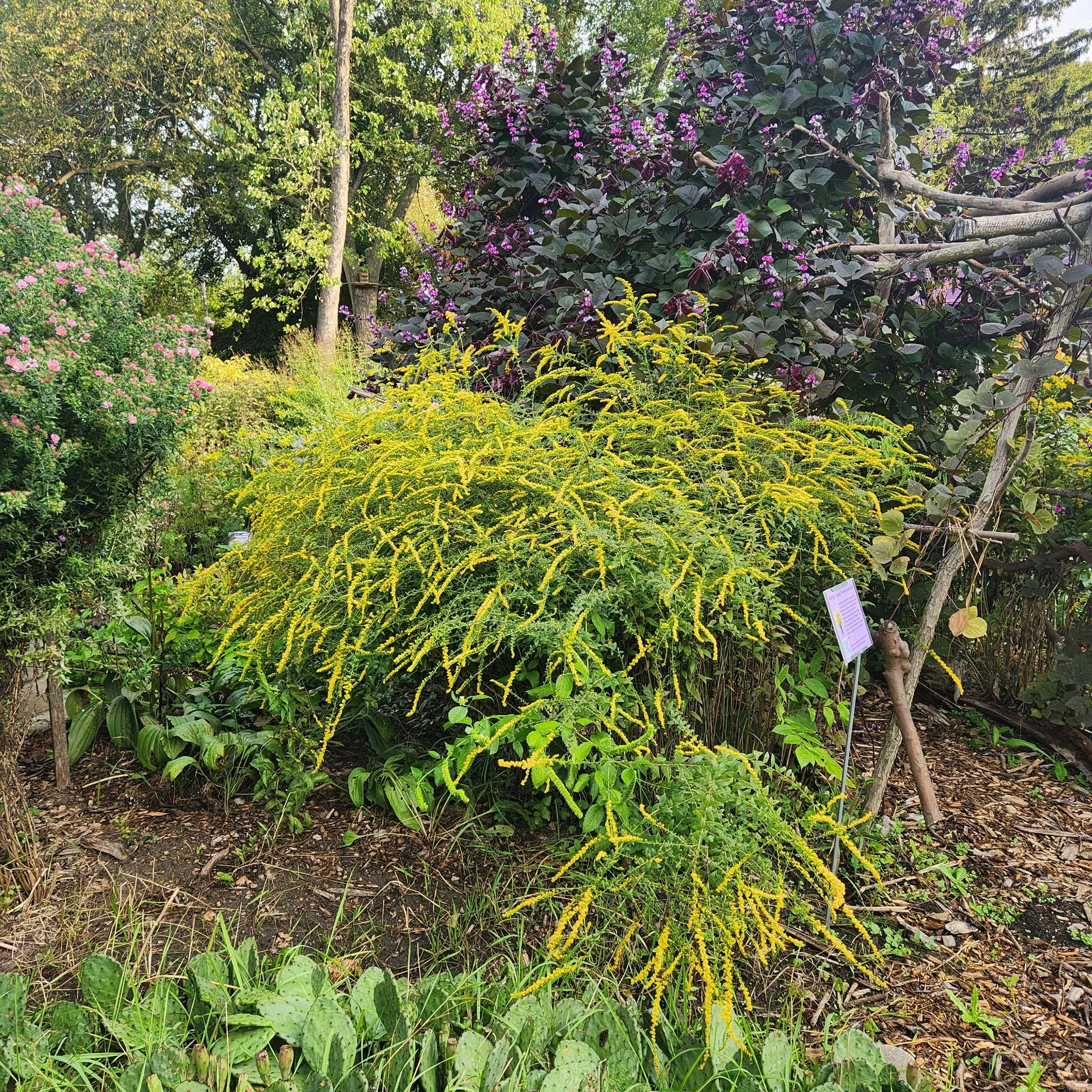 Image 7 of 7