 Image 1 of 2
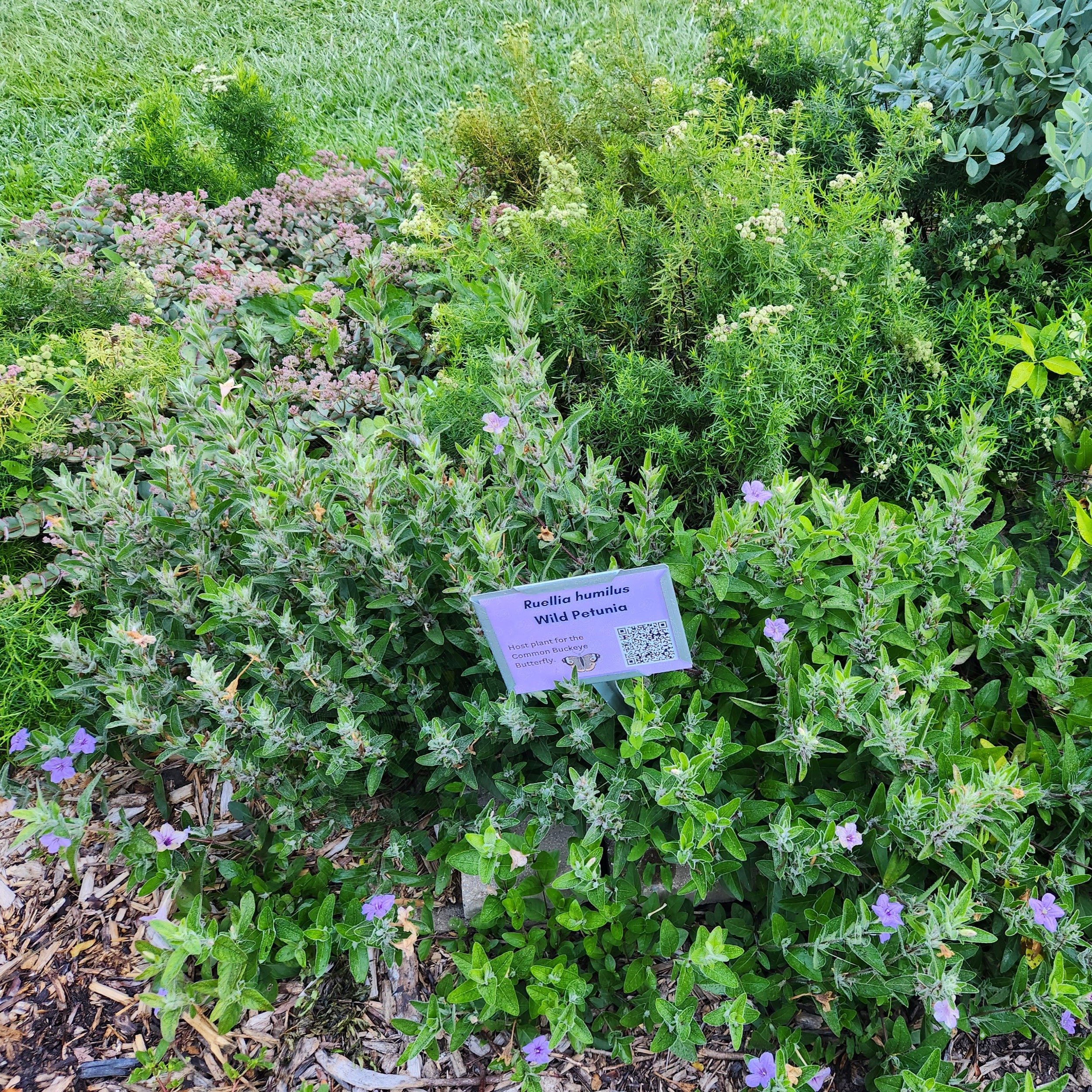 Image 2 of 2
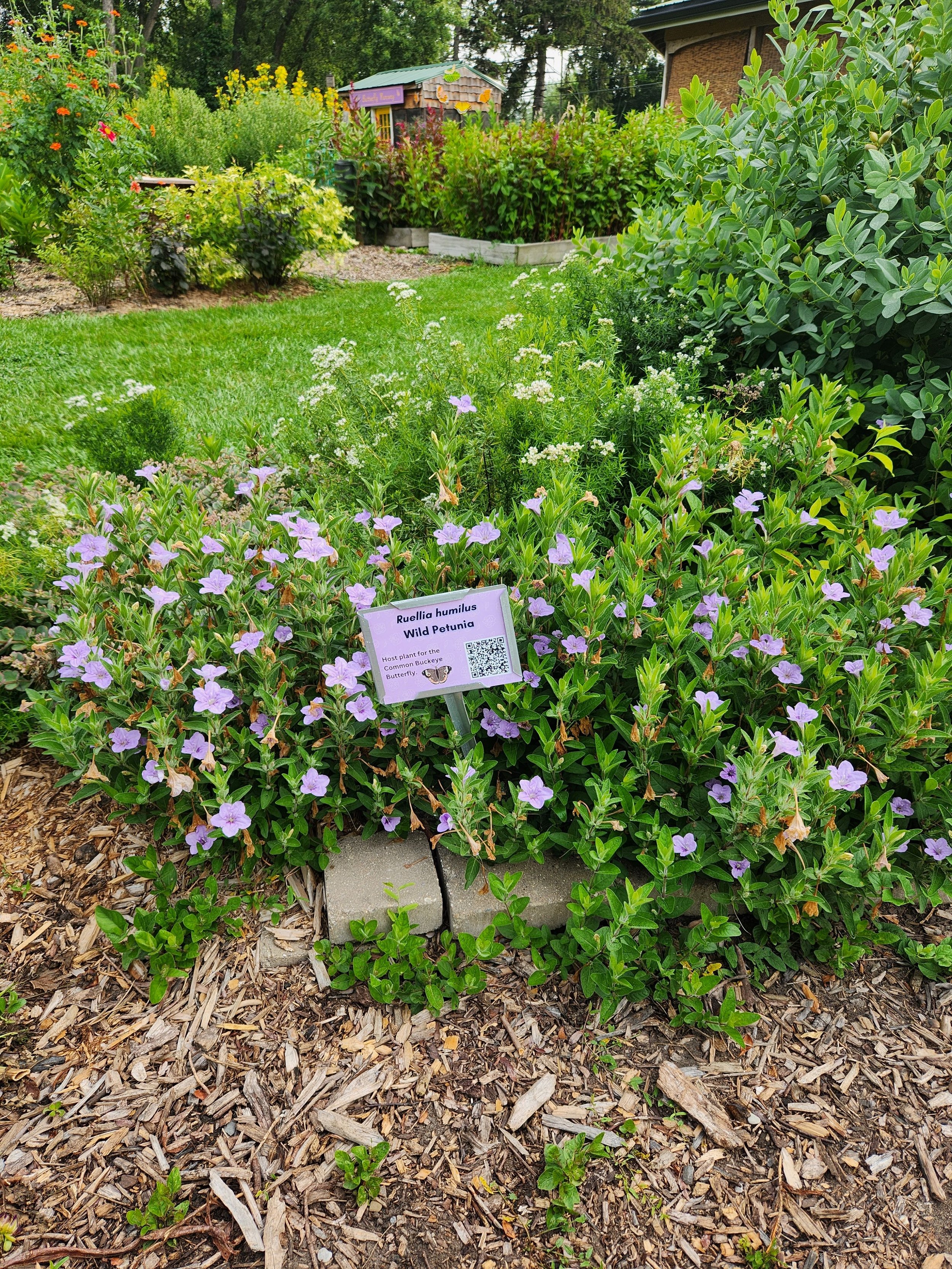
Ruellia humilis, Wild Petunia
FS, Zone 4, Blooms June-Aug., 1’ x 1.5-2’, medium to dry moisture
Keystone Species - It is a primary host plant for the Common Buckeye butterfly (Junonia coenia). Without this specific plant, these butterflies cannot complete their life cycle in many regions. Its long, tubular violet flowers are uniquely adapted to support long-tongued bees, butterflies, and hummingbirds that other flat-flowered plants cannot. As a hardy, drought-tolerant native, it stabilizes soil in dry prairies and rocky glades, providing ground cover and erosion control where more delicate plants might fail. It provides food (nectar and leaves) and shelter for a wide range of wildlife, making it a "heavy lifter" for biodiversity in small-scale native gardens.
Ruellia is part of the Arcanthacae family and not related to Petunias, however the physical resemblence of the flower bloom is striking. One of the postive attributes of this plant is its ability to adjust and thrive to hot drought situations. If it likes the conditions it can be a spreader as it self seeds. If that is the case, control its spreading by placing where there is a border like a sidewalk. Watch the plant as the seed pods emerge and mature, it can literally shoot seeds 10’. The one situation it does not like is shade or too wet. Performs well as a ground cover. Does well in all soils except clay.
After our first two seasons growing this plant here are a couple of observations. It fills in nicely and is a good plant in full sun to use as a ground cover. It stays in bloom for a very long period and looks nice afterwards. It does self seed but so far not aggressively. This can be a good thing if you are trying to utilize Wild Petunia as a living mulch.
Due to its floral structure, it is visited by hummingbirds, long tongued bees and butterflies. Smaller bees like Sweat Bees crawl down the corolla to the nectary. It is a host plant for the Common Buckeye Butterfly.
DA Plant Notes - One of the questions we frequently receive is what native plants are good as ground cover. This is one that would be excellent in that regard. It blooms for a long period and the foliage looks good throughout the season. It does spread by seed, which we love!
Ruellia humilis, Wild Petunia
FS, Zone 4, Blooms June-Aug., 1’ x 1.5-2’, medium to dry moisture
Keystone Species - It is a primary host plant for the Common Buckeye butterfly (Junonia coenia). Without this specific plant, these butterflies cannot complete their life cycle in many regions. Its long, tubular violet flowers are uniquely adapted to support long-tongued bees, butterflies, and hummingbirds that other flat-flowered plants cannot. As a hardy, drought-tolerant native, it stabilizes soil in dry prairies and rocky glades, providing ground cover and erosion control where more delicate plants might fail. It provides food (nectar and leaves) and shelter for a wide range of wildlife, making it a "heavy lifter" for biodiversity in small-scale native gardens.
Ruellia is part of the Arcanthacae family and not related to Petunias, however the physical resemblence of the flower bloom is striking. One of the postive attributes of this plant is its ability to adjust and thrive to hot drought situations. If it likes the conditions it can be a spreader as it self seeds. If that is the case, control its spreading by placing where there is a border like a sidewalk. Watch the plant as the seed pods emerge and mature, it can literally shoot seeds 10’. The one situation it does not like is shade or too wet. Performs well as a ground cover. Does well in all soils except clay.
After our first two seasons growing this plant here are a couple of observations. It fills in nicely and is a good plant in full sun to use as a ground cover. It stays in bloom for a very long period and looks nice afterwards. It does self seed but so far not aggressively. This can be a good thing if you are trying to utilize Wild Petunia as a living mulch.
Due to its floral structure, it is visited by hummingbirds, long tongued bees and butterflies. Smaller bees like Sweat Bees crawl down the corolla to the nectary. It is a host plant for the Common Buckeye Butterfly.
DA Plant Notes - One of the questions we frequently receive is what native plants are good as ground cover. This is one that would be excellent in that regard. It blooms for a long period and the foliage looks good throughout the season. It does spread by seed, which we love!