 Image 1 of 5
 Image 2 of 5
 Image 3 of 5
 Image 4 of 5
 Image 5 of 5
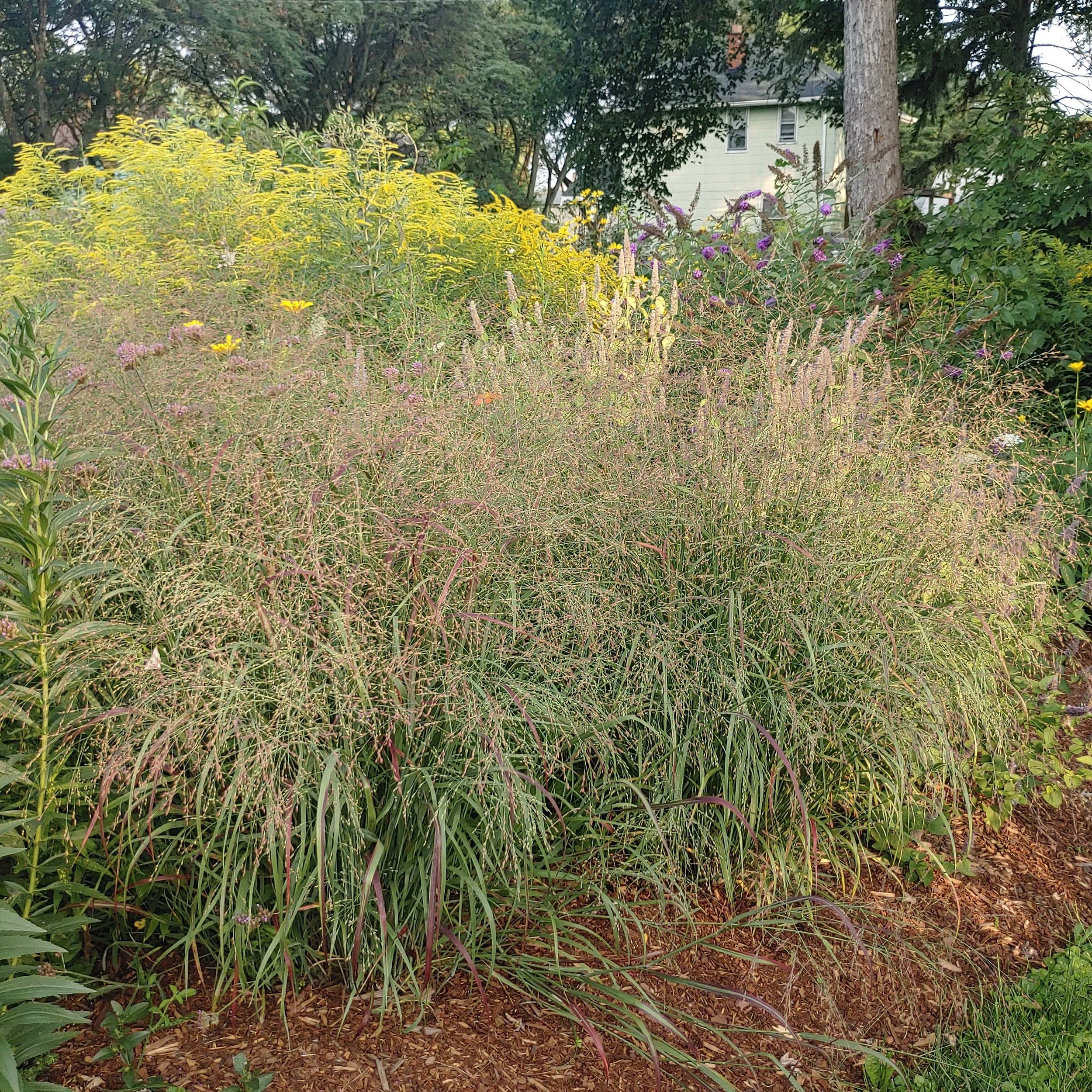
Panicum virgatum, Switch Grass
FS, Zone 4, 3’ x 1.5’, medium to dry, blooms, poor to fertile soils, July - September.
Keystone Species - It is the larval-host plant for 22 species of moths and butterflies including Skippers and the Northern Pearly Eye. It is the host plant for the endangered Ottoe Skipper. Switchgrass is a fundamental component of Michigan's prairie and savanna habitats. Unlike many plants that collapse, Switchgrass remains upright throughout the winter. This provides essential thermal cover for birds and small mammals and ensures its seeds remain accessible as a high-protein food source during heavy snow.
Switchgrass was once one of the dominant species in the tallgrass prairie, but also grows along roadsides where moisture is present. It’s a hardy, deep-rooted, perennial rhizomatous grass that begins growth in late spring. Once established, a switchgrass stand can survive for ten years or longer. It can grow up to 8’ high, but is typically shorter than big bluestem grass or Indian grass. The rich, yellow-colored clumps last throughout the winter. This switch grass, with its attractive vase shape, is good for larger containers. The foliage starts out a blue green and by the end of the summer the entire plant is drenched in a reddish hue. Switch grass gets its common name from the swishing sound the grass makes. The clumps are sturdy and stand up under most winter conditions.
It is the host plant to 22 species of butterflies and moths in our area including the threatened Ottoe Skipper (mnfi.anr.msu.edu/). Host plant for Skippers Butterfly other skipper species and the Northern Pearly Eye butterfly
The seeds of Switch Grass are eaten by a variety of birds, including wetland birds, upland gamebirds, and granivorous songbirds. Provides seed and nesting material for birds. Left intact at season’s end, it will add winter interest to your wildlife garden while providing shelter for insects.
Panicum virgatum, Switch Grass
FS, Zone 4, 3’ x 1.5’, medium to dry, blooms, poor to fertile soils, July - September.
Keystone Species - It is the larval-host plant for 22 species of moths and butterflies including Skippers and the Northern Pearly Eye. It is the host plant for the endangered Ottoe Skipper. Switchgrass is a fundamental component of Michigan's prairie and savanna habitats. Unlike many plants that collapse, Switchgrass remains upright throughout the winter. This provides essential thermal cover for birds and small mammals and ensures its seeds remain accessible as a high-protein food source during heavy snow.
Switchgrass was once one of the dominant species in the tallgrass prairie, but also grows along roadsides where moisture is present. It’s a hardy, deep-rooted, perennial rhizomatous grass that begins growth in late spring. Once established, a switchgrass stand can survive for ten years or longer. It can grow up to 8’ high, but is typically shorter than big bluestem grass or Indian grass. The rich, yellow-colored clumps last throughout the winter. This switch grass, with its attractive vase shape, is good for larger containers. The foliage starts out a blue green and by the end of the summer the entire plant is drenched in a reddish hue. Switch grass gets its common name from the swishing sound the grass makes. The clumps are sturdy and stand up under most winter conditions.
It is the host plant to 22 species of butterflies and moths in our area including the threatened Ottoe Skipper (mnfi.anr.msu.edu/). Host plant for Skippers Butterfly other skipper species and the Northern Pearly Eye butterfly
The seeds of Switch Grass are eaten by a variety of birds, including wetland birds, upland gamebirds, and granivorous songbirds. Provides seed and nesting material for birds. Left intact at season’s end, it will add winter interest to your wildlife garden while providing shelter for insects.