 Image 1 of 3
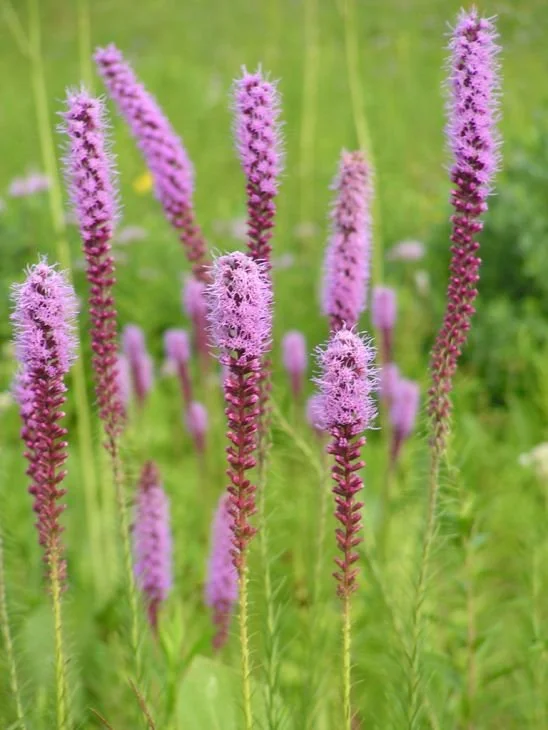 Image 2 of 3
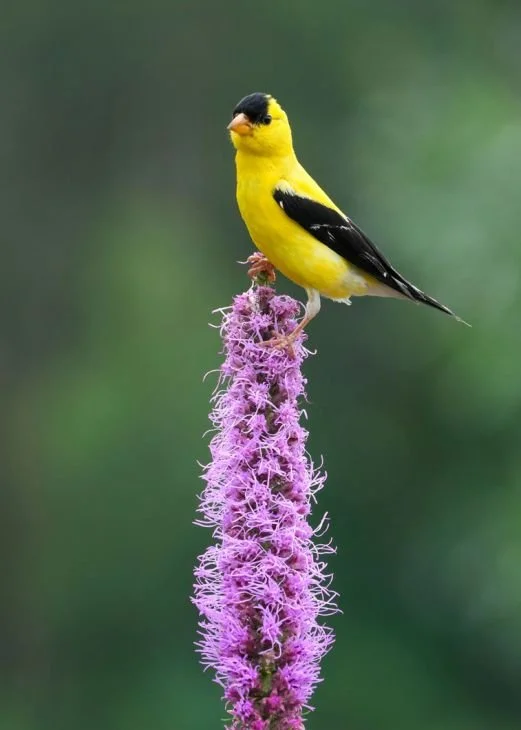 Image 3 of 3
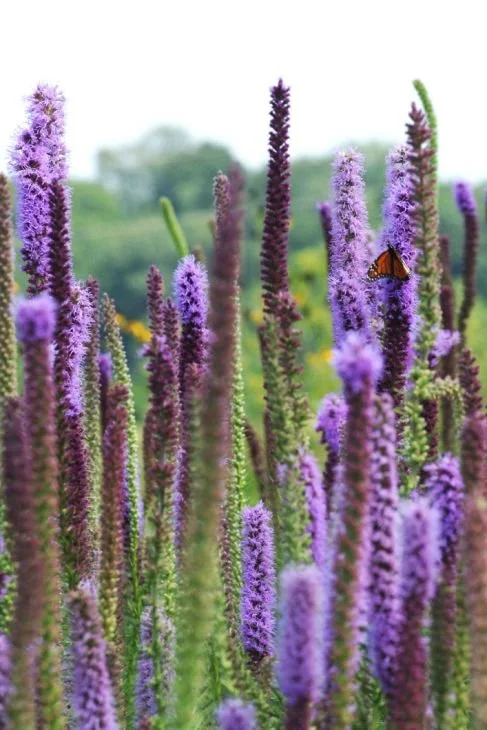
Liatris pycnostachya, Prairie Blazing Star
FS-PS, Zone 3, blooms July - Sept., 4’ x 1.5’, wet to medium
Keystone Species - Latris is the larval-host plant for 6 moths and supports two long-horned specialist bees that rely on the plants pollen for survival. The blooms support a diverse array of insects in part due to the high value of its nectar. As a late-summer to fall bloomer (August–October), it provides vital energy for migrating monarchs and other insects preparing for winter when other food sources are scarce. Due to its deep root system and ability to thrive in tough, moist-to-dry clay soils, it is highly valuable for soil stabilization and prairie restoration efforts.
Like many Liatris species, when it begins to bloom it starts at the top and works its way down. The lower half of the plant is covered in thin, grass-like leaves. This is an excellent Liatris species to plant in wet-medium prairies and perennial gardens or rain gardens. Butterflies, especially monarchs and skippers, bees, and hummingbirds are attracted to it all summer. The roots on Liatris spp. are called corms, which can form offshoots from the mother plant over time. It does not spread much.
It is recognized by The Xerces Society for its exceptional value to native bees and beneficial insects. It also serves as a host plant for several rare moth species, such as the Glorious Flower Moth (Schinia gloriosa).
After its vibrant purple spikes finish blooming, its seeds become a primary food source for American Goldfinches and other songbirds in the fall.
Plants are sourced from Pairie Moon. Photos are from their website.
Liatris pycnostachya, Prairie Blazing Star
FS-PS, Zone 3, blooms July - Sept., 4’ x 1.5’, wet to medium
Keystone Species - Latris is the larval-host plant for 6 moths and supports two long-horned specialist bees that rely on the plants pollen for survival. The blooms support a diverse array of insects in part due to the high value of its nectar. As a late-summer to fall bloomer (August–October), it provides vital energy for migrating monarchs and other insects preparing for winter when other food sources are scarce. Due to its deep root system and ability to thrive in tough, moist-to-dry clay soils, it is highly valuable for soil stabilization and prairie restoration efforts.
Like many Liatris species, when it begins to bloom it starts at the top and works its way down. The lower half of the plant is covered in thin, grass-like leaves. This is an excellent Liatris species to plant in wet-medium prairies and perennial gardens or rain gardens. Butterflies, especially monarchs and skippers, bees, and hummingbirds are attracted to it all summer. The roots on Liatris spp. are called corms, which can form offshoots from the mother plant over time. It does not spread much.
It is recognized by The Xerces Society for its exceptional value to native bees and beneficial insects. It also serves as a host plant for several rare moth species, such as the Glorious Flower Moth (Schinia gloriosa).
After its vibrant purple spikes finish blooming, its seeds become a primary food source for American Goldfinches and other songbirds in the fall.
Plants are sourced from Pairie Moon. Photos are from their website.