Liatris aspera, Rough Blazing Star
FS-PS, Zone 3, Blooms Jul - Aug, 3’ x 1.5’, medium to dry once established
Keystone Species - Latris is the larval-host plant for 6 moths and supports two long-horned specialist bees that rely on the plants pollen for survival. The blooms support a diverse array of insects in part due to the high value of its nectar. As a late-summer to fall bloomer (August–October), it provides vital energy for migrating monarchs and other insects preparing for winter when other food sources are scarce.
You can just picture a stand of Blazing Stars in full bloom in a prairie setting. The vivid color of the blooms is bright and a monarch draw. It is one of the few flowers that opens top to bottom!
Our experience with this essential butterfly and pollinator plant is that it stays fairly short during year one and may not bloom that year. Also, we have found it does not like weed competition, so make sure to keep them in the clear.
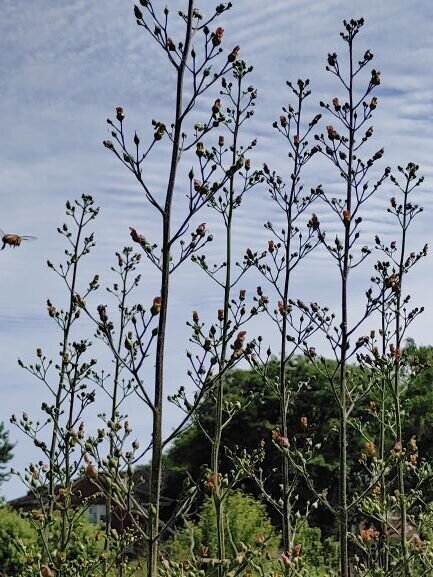
Many insects visit the flowers of Liatris aspera including honeybees, bumblebees, little Carpenter bees, miner bees, and leaf-cutting bees. The monarchs and skippers are the most frequesnt butterfly visitor.
DA Planting Notes - Of all the natives we grow, LIatris seems to take longer to become established. They grow in clumps that expand slowly. We have never seen any volunteers, unfortunately. All liatris species attract butterflies, with Monarchs in September the creshendo!
Liatris aspera, Rough Blazing Star
FS-PS, Zone 3, Blooms Jul - Aug, 3’ x 1.5’, medium to dry once established
Keystone Species - Latris is the larval-host plant for 6 moths and supports two long-horned specialist bees that rely on the plants pollen for survival. The blooms support a diverse array of insects in part due to the high value of its nectar. As a late-summer to fall bloomer (August–October), it provides vital energy for migrating monarchs and other insects preparing for winter when other food sources are scarce.
You can just picture a stand of Blazing Stars in full bloom in a prairie setting. The vivid color of the blooms is bright and a monarch draw. It is one of the few flowers that opens top to bottom!
Our experience with this essential butterfly and pollinator plant is that it stays fairly short during year one and may not bloom that year. Also, we have found it does not like weed competition, so make sure to keep them in the clear.
Many insects visit the flowers of Liatris aspera including honeybees, bumblebees, little Carpenter bees, miner bees, and leaf-cutting bees. The monarchs and skippers are the most frequesnt butterfly visitor.
DA Planting Notes - Of all the natives we grow, LIatris seems to take longer to become established. They grow in clumps that expand slowly. We have never seen any volunteers, unfortunately. All liatris species attract butterflies, with Monarchs in September the creshendo!
 Image 1 of 6
 Image 2 of 6
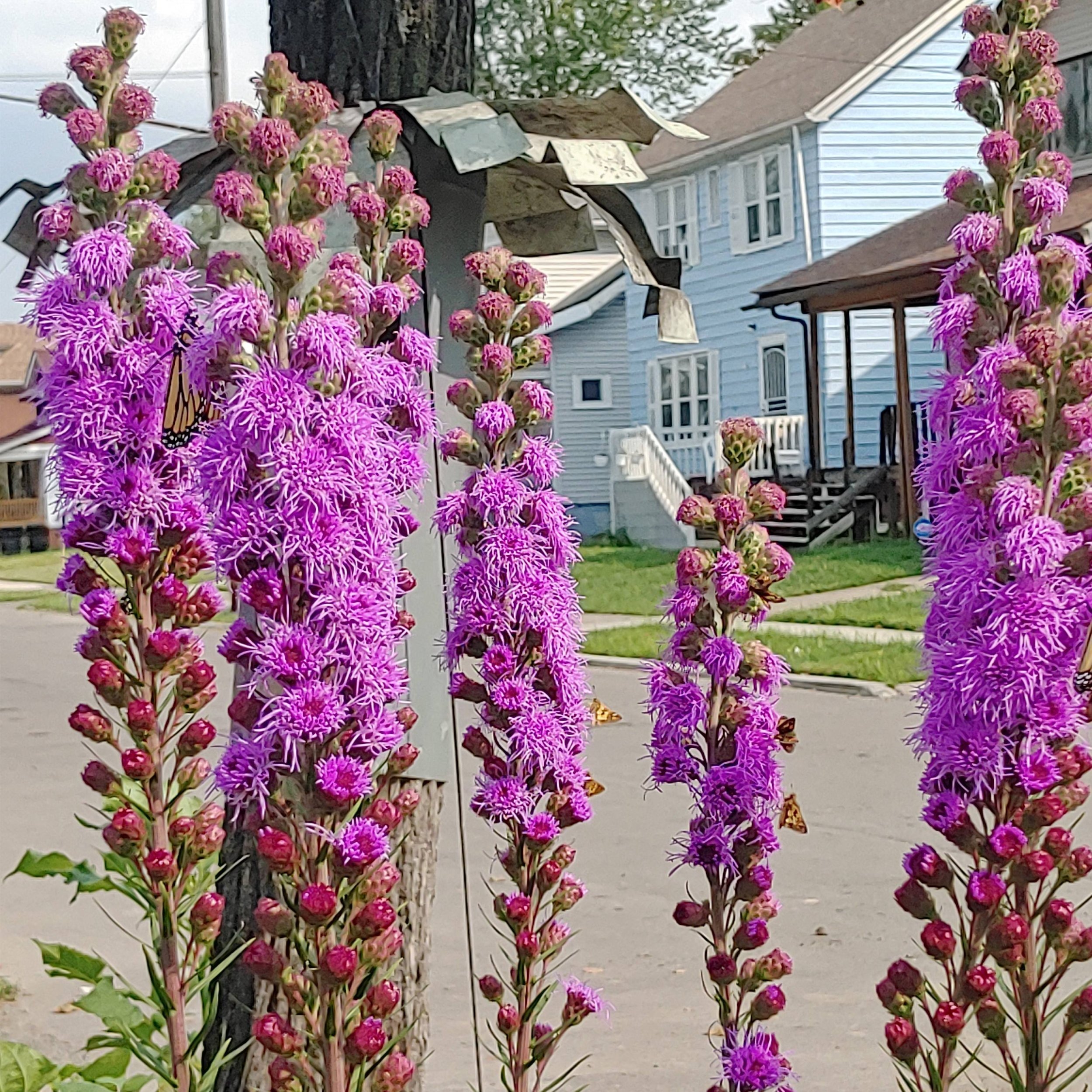 Image 3 of 6
 Image 4 of 6
 Image 5 of 6
 Image 6 of 6