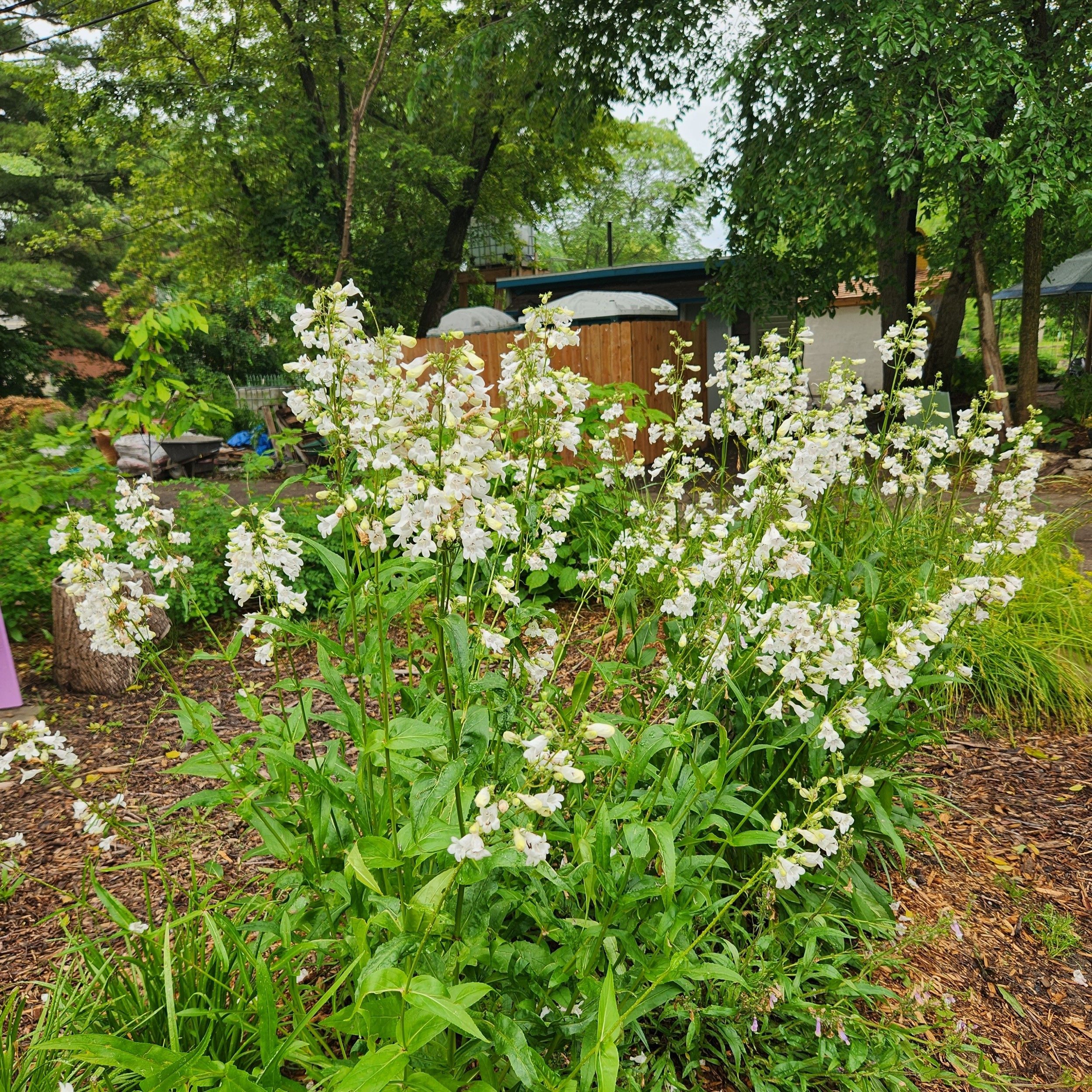
Helianthus maximiliani, Maximilian Sunflower
FS-PS, Zone 3, Blooms Aug-Sept., 7’ x 3-4’, Medium Wet to Med Dry, Deer resistant
Keystone Species - Sunflowers are the #3 keystone perennial in our eastern region. In general they support approximately 66 caterpillar species and 50 specialist bees. Maxililian SF heavy crop of fat- and protein-rich seeds provides a vital winter food source for songbirds, such as goldfinches and doves, and small mammals. Late blooming flowers provide essential food for bees going to ground and migrating Monarchs and birds. Beyond food, its tall, colonial growth habit (reaching 3–12 feet) provides essential cover for wildlife and its deep, rhizomatous root system helps stabilize soil and prevent erosion.
We have had requests for this perennial sunflower over the years and we are pleased to have them as part of our annual stock. We grow them from seed and through division. A stout, upright perennial native through the south and extending north throughout the central plains states. Numerous bright yellow 3 inch flowers are found on the upper half of unbranched stems. The leaves are 4 to 8 inches in length, tapering at both ends. Soil fertility and the amount of moisture will determine the height of the plant. Does not seem to be temperamental about soil conditions but does best in full sun. Provides excellent forage for birds and other wildlife. A true perennial once established. Spreads by rhizomes, but stays very close to the mother plant.
All Helianthus are considered Keystone Plants, essential for preserving our wildlife. They support over 66 species of butterflies and moths and ove 50 specialist bees.
Like most other Sunflower species, Maximilian's Sunflower attracts a number of long-tongued bees, short-tongued bees, butterflies, and moths. It is the host plant for the Silvery Checkerspot andPainted Ladybutterflies and many many moths. Supports many specialist bees, in particular the Sunflower Miner bee and long-horned bees.
DA Planting Notes- We have grown this plant in FS and PS. It is a sturdier plant when grown in FS and most likely will not need staking. Goldfinches love this plant. We observed them extrscting raw seeds and feeding the mixture which they regurgitate to hatchlings. 96% of birds feed their young caterpillars. Goldfinches are vegetarian and use seeds to make a mushy substance. While Max SF is a wet condition plant we have not had to water it during droughts. It seems to handle the dry conditions just fine.
Helianthus maximiliani, Maximilian Sunflower
FS-PS, Zone 3, Blooms Aug-Sept., 7’ x 3-4’, Medium Wet to Med Dry, Deer resistant
Keystone Species - Sunflowers are the #3 keystone perennial in our eastern region. In general they support approximately 66 caterpillar species and 50 specialist bees. Maxililian SF heavy crop of fat- and protein-rich seeds provides a vital winter food source for songbirds, such as goldfinches and doves, and small mammals. Late blooming flowers provide essential food for bees going to ground and migrating Monarchs and birds. Beyond food, its tall, colonial growth habit (reaching 3–12 feet) provides essential cover for wildlife and its deep, rhizomatous root system helps stabilize soil and prevent erosion.
We have had requests for this perennial sunflower over the years and we are pleased to have them as part of our annual stock. We grow them from seed and through division. A stout, upright perennial native through the south and extending north throughout the central plains states. Numerous bright yellow 3 inch flowers are found on the upper half of unbranched stems. The leaves are 4 to 8 inches in length, tapering at both ends. Soil fertility and the amount of moisture will determine the height of the plant. Does not seem to be temperamental about soil conditions but does best in full sun. Provides excellent forage for birds and other wildlife. A true perennial once established. Spreads by rhizomes, but stays very close to the mother plant.
All Helianthus are considered Keystone Plants, essential for preserving our wildlife. They support over 66 species of butterflies and moths and ove 50 specialist bees.
Like most other Sunflower species, Maximilian's Sunflower attracts a number of long-tongued bees, short-tongued bees, butterflies, and moths. It is the host plant for the Silvery Checkerspot andPainted Ladybutterflies and many many moths. Supports many specialist bees, in particular the Sunflower Miner bee and long-horned bees.
DA Planting Notes- We have grown this plant in FS and PS. It is a sturdier plant when grown in FS and most likely will not need staking. Goldfinches love this plant. We observed them extrscting raw seeds and feeding the mixture which they regurgitate to hatchlings. 96% of birds feed their young caterpillars. Goldfinches are vegetarian and use seeds to make a mushy substance. While Max SF is a wet condition plant we have not had to water it during droughts. It seems to handle the dry conditions just fine.
 Image 1 of 8
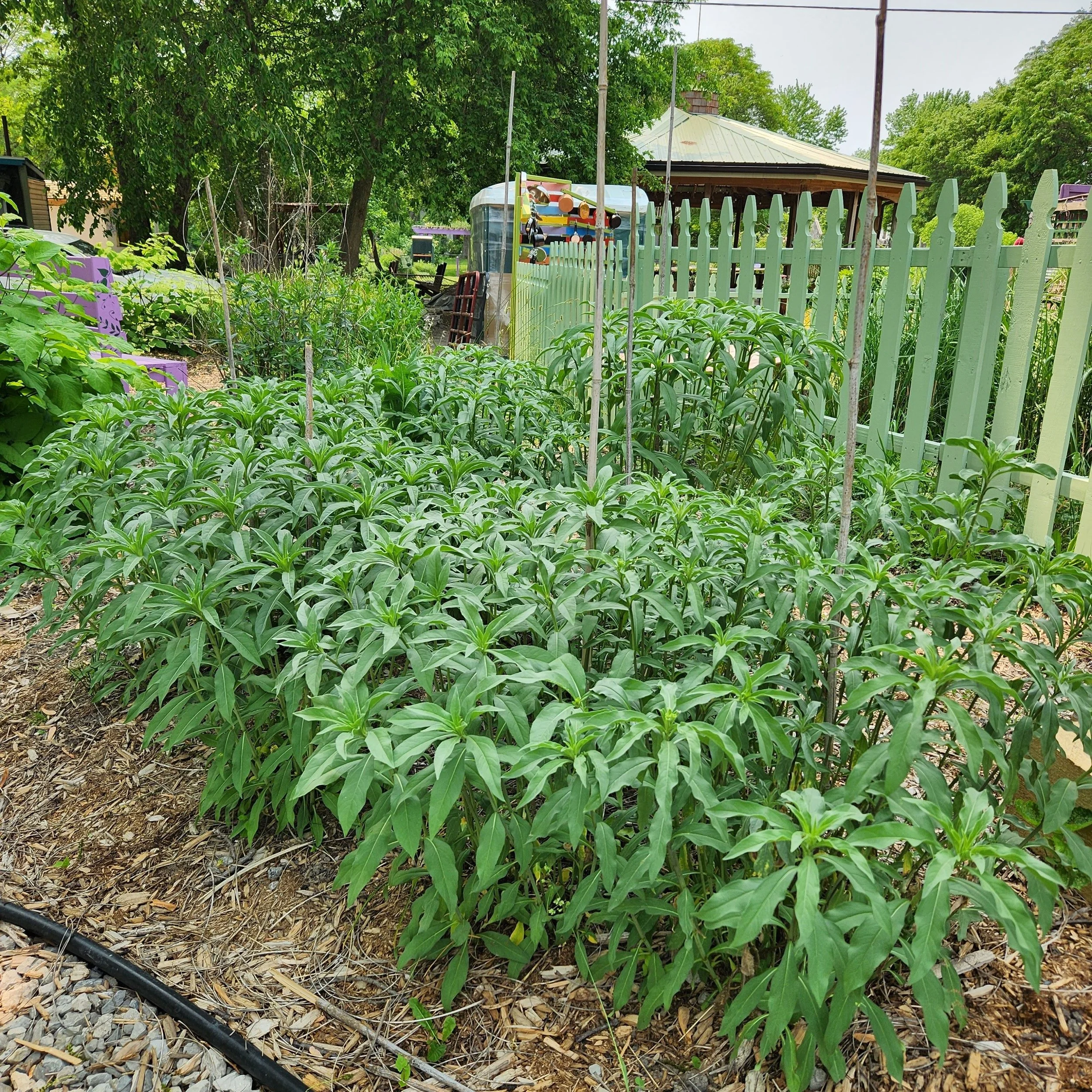 Image 2 of 8
 Image 3 of 8
 Image 4 of 8
 Image 5 of 8
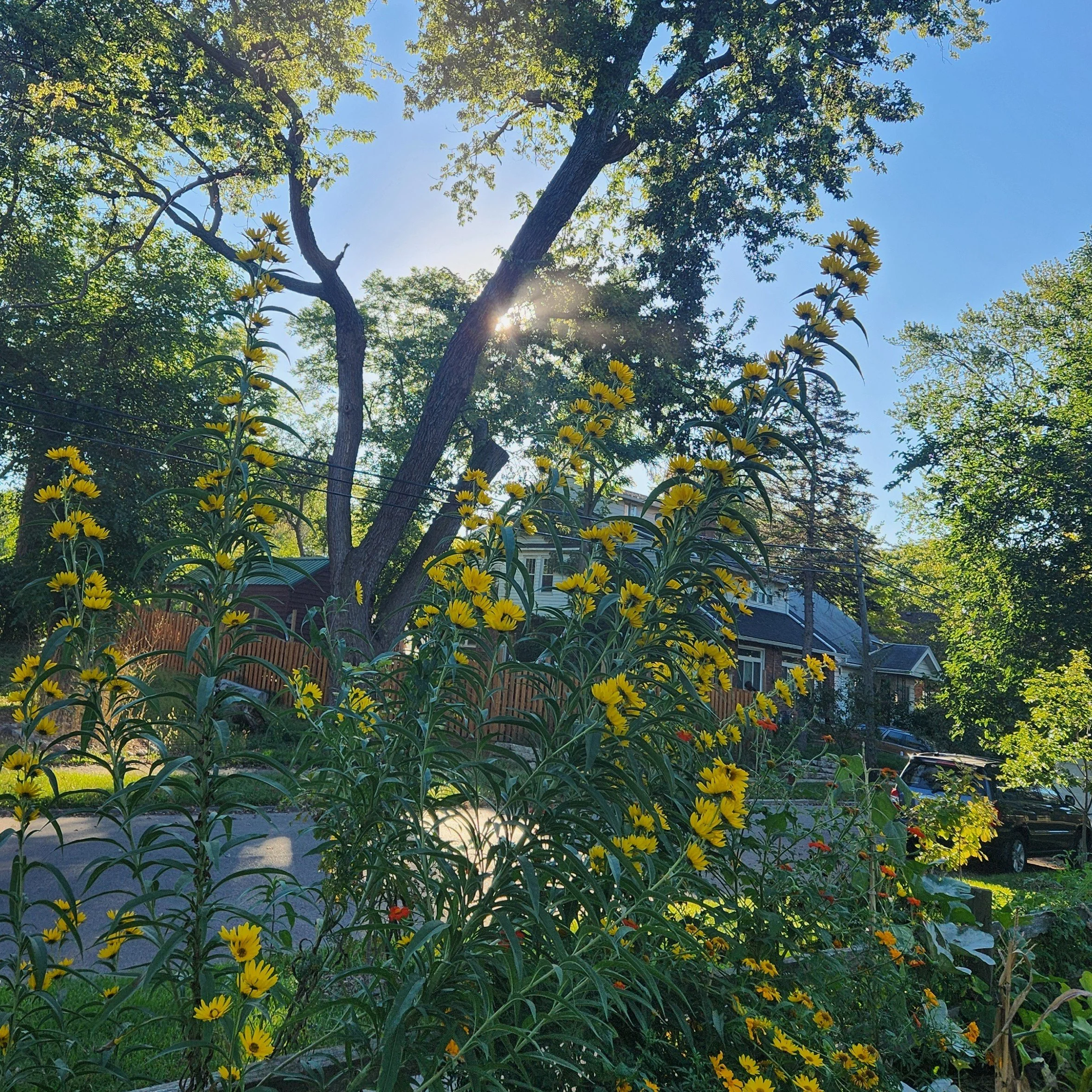 Image 6 of 8
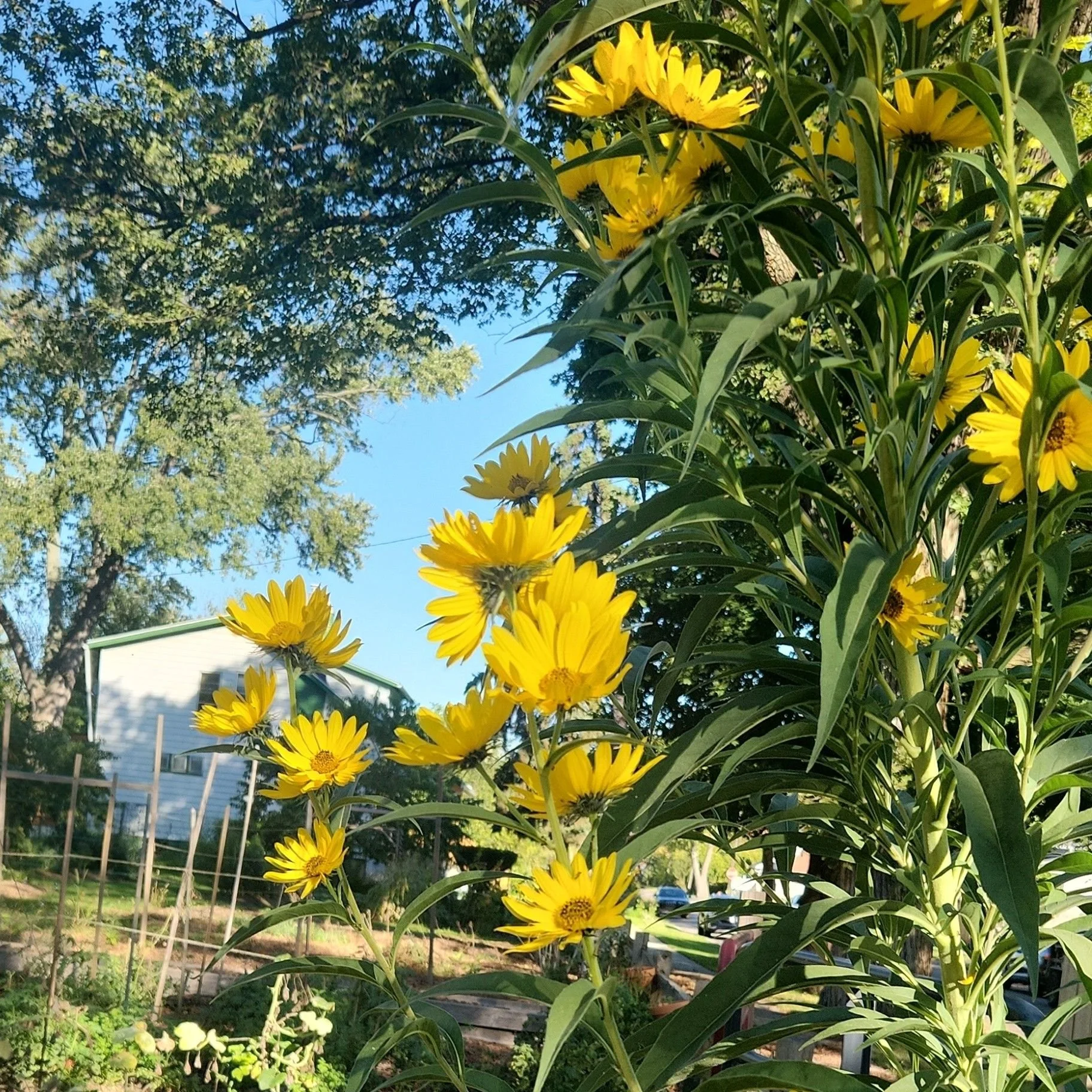 Image 7 of 8
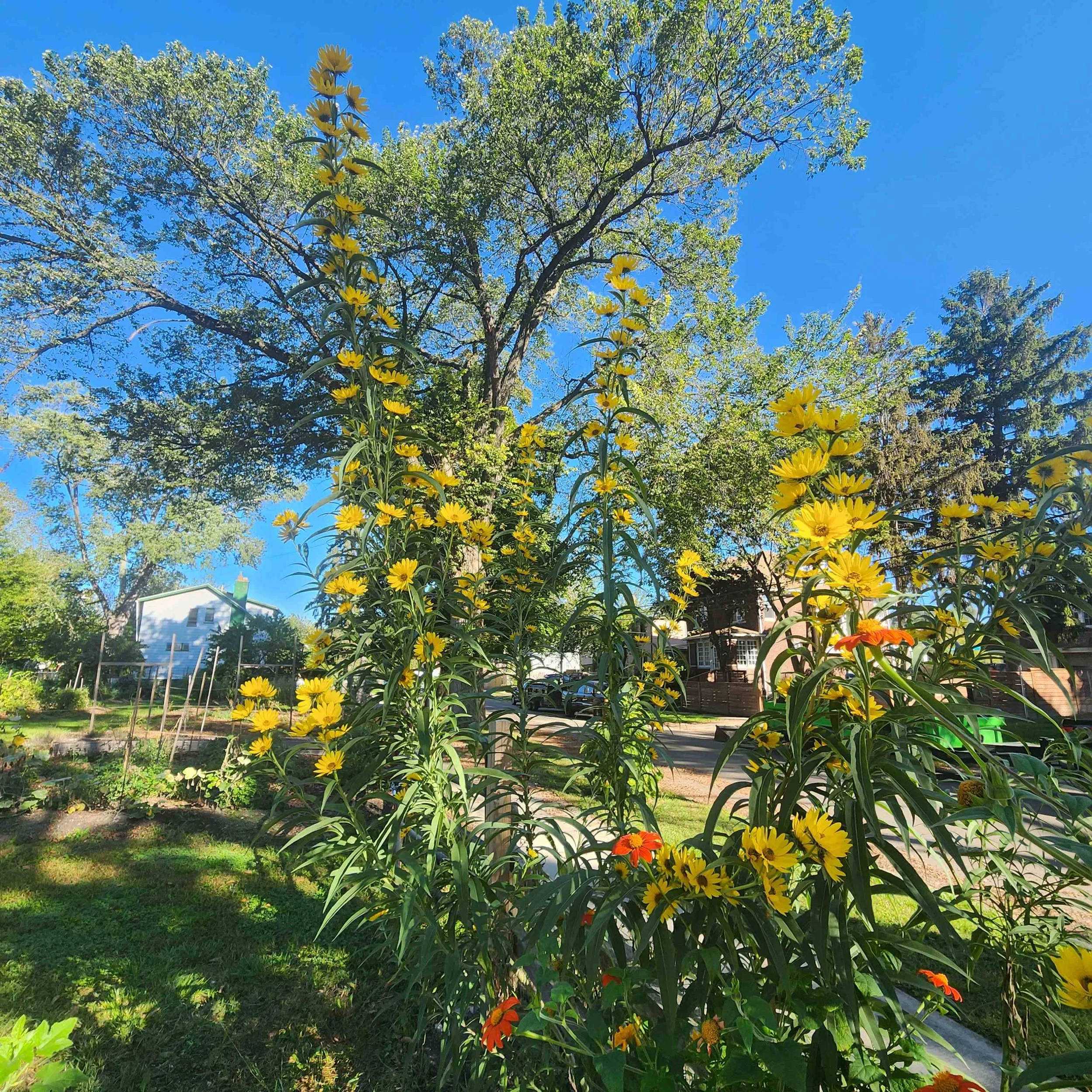 Image 8 of 8