Image 1 of 5
 Image 2 of 5
 Image 3 of 5
 Image 4 of 5
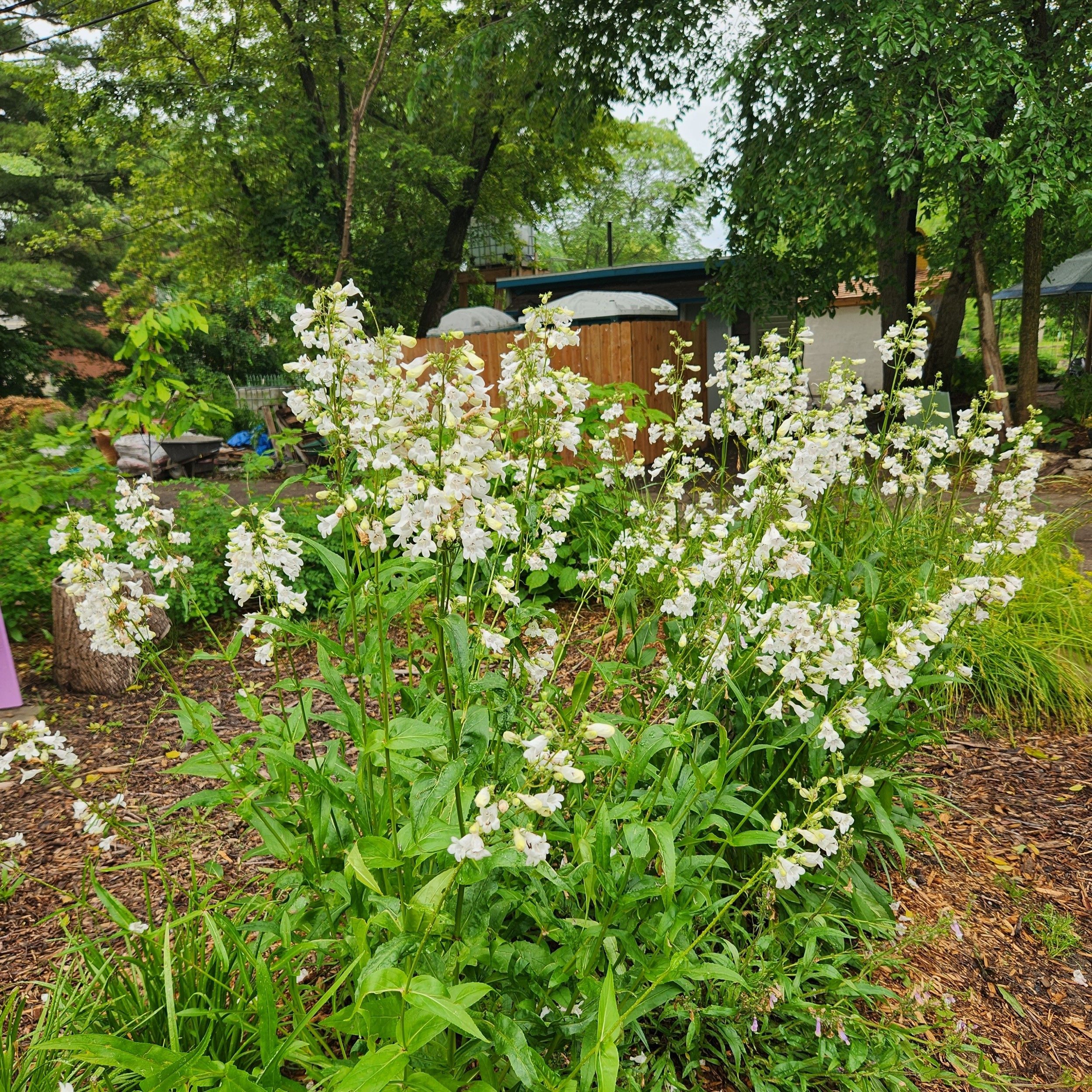 Image 5 of 5
Penstemon digitalis, Foxglove Beard tongue 4” pot
FS-PS, Zone 3, blooms June - July, 4’ x 2’, deer resistant, medium to dry, sand to some clay.
Keystone Species - It provides essential pollen for specialist bees, such as the Osmia distincta aka The Beardtongue Scraper bee (Mason bee), which rely specifically on the Penstemon genus. Mason Bees are one of the first to emerge in early spring. They totally rely on their host plants for that specific pollen to survive. It blooms from late spring to early summer, filling a "nectar gap" when early spring flowers have faded but summer flowers have not yet opened.Noted for Its tubular flowers are primary resources for hummingbirds, bumblebees, and honeybees. Highly recommended for pollinator gardens due to its high ecological return.
Penstemon digitalis is a clump-forming Michigan native perennial which typically grows 3-5' tall. It occurs in prairies, fields, wood margins, open woods and along railroad tracks. It can adapt to many different soil and moisture conditions. Foxglove Beard Tongue blooms during its first year. We have two beautiful stands of this plant, one in partial shade and the other in full sun. A grouping of three individual plants provides an attractive, solid 4-5’ spread. The flowers produce nectar at a time in late spring when earlier nectar sources are drying up, but summer sources have yet to start.
They spread slowly through self-seeding and the parent plant produces small rosettes that can be relocated. They are one of the first long-lasting perennial blooms of the season and even though Nancy cuts some every few days for bouquets, they’re still quite a show.
Bumble bees visit the tubular flowers one by one, from the bottom up, moving pollen as they go, guided by the light violet lines inside the tubular flowers. The common name ‘beardtongue’ comes from the hairs that line the tubular flower structure. They force the bee to dive deeper.
Atracts native bumble bees, honey bees, butterflies, hummingbirds and some specialist bees like the Digger bees. Butterfly host plant for the Common Buckeye and also 13 other moth species.
Penstemon digitalis, Foxglove Beard tongue 4” pot
FS-PS, Zone 3, blooms June - July, 4’ x 2’, deer resistant, medium to dry, sand to some clay.
Keystone Species - It provides essential pollen for specialist bees, such as the Osmia distincta aka The Beardtongue Scraper bee (Mason bee), which rely specifically on the Penstemon genus. Mason Bees are one of the first to emerge in early spring. They totally rely on their host plants for that specific pollen to survive. It blooms from late spring to early summer, filling a "nectar gap" when early spring flowers have faded but summer flowers have not yet opened.Noted for Its tubular flowers are primary resources for hummingbirds, bumblebees, and honeybees. Highly recommended for pollinator gardens due to its high ecological return.
Penstemon digitalis is a clump-forming Michigan native perennial which typically grows 3-5' tall. It occurs in prairies, fields, wood margins, open woods and along railroad tracks. It can adapt to many different soil and moisture conditions. Foxglove Beard Tongue blooms during its first year. We have two beautiful stands of this plant, one in partial shade and the other in full sun. A grouping of three individual plants provides an attractive, solid 4-5’ spread. The flowers produce nectar at a time in late spring when earlier nectar sources are drying up, but summer sources have yet to start.
They spread slowly through self-seeding and the parent plant produces small rosettes that can be relocated. They are one of the first long-lasting perennial blooms of the season and even though Nancy cuts some every few days for bouquets, they’re still quite a show.
Bumble bees visit the tubular flowers one by one, from the bottom up, moving pollen as they go, guided by the light violet lines inside the tubular flowers. The common name ‘beardtongue’ comes from the hairs that line the tubular flower structure. They force the bee to dive deeper.
Atracts native bumble bees, honey bees, butterflies, hummingbirds and some specialist bees like the Digger bees. Butterfly host plant for the Common Buckeye and also 13 other moth species.