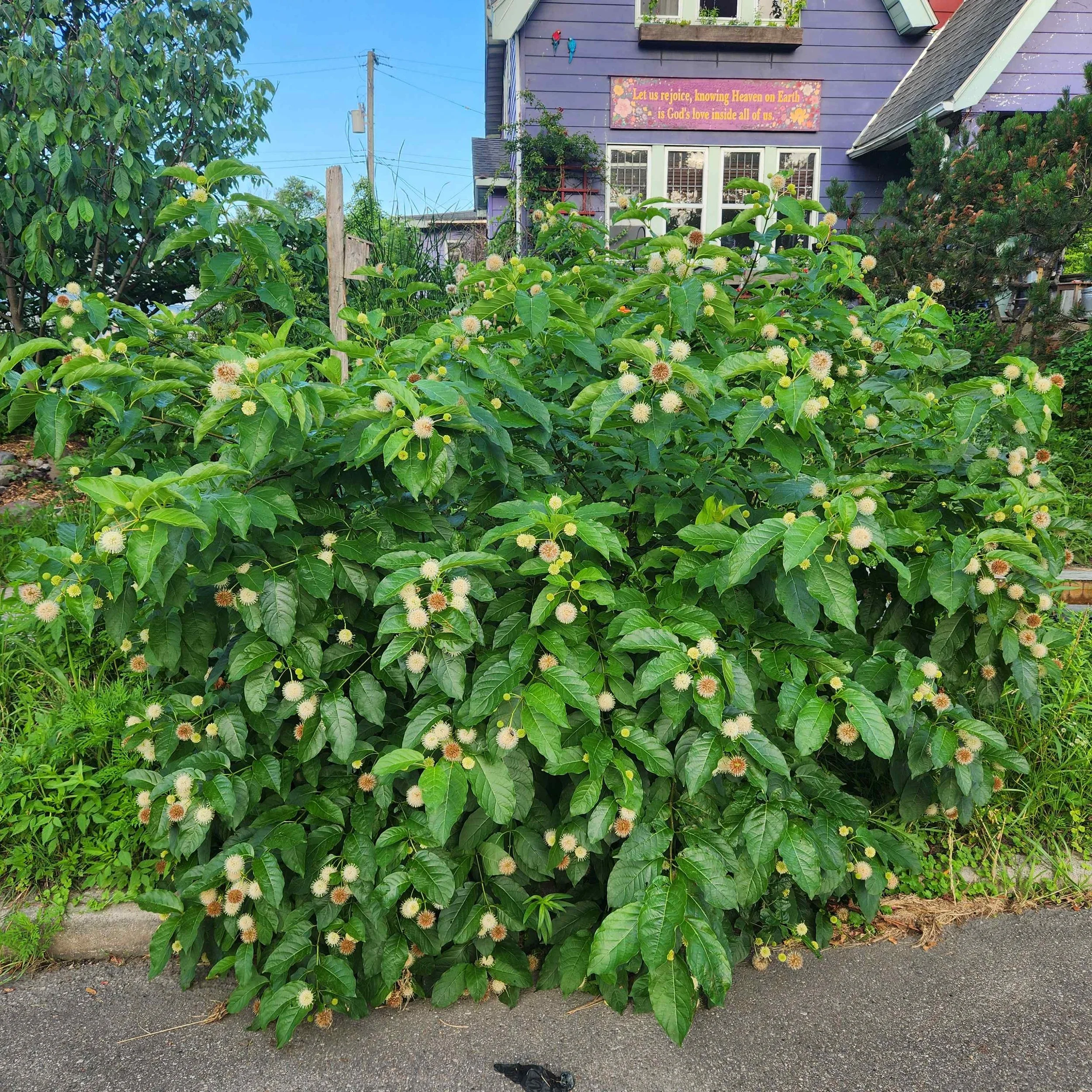
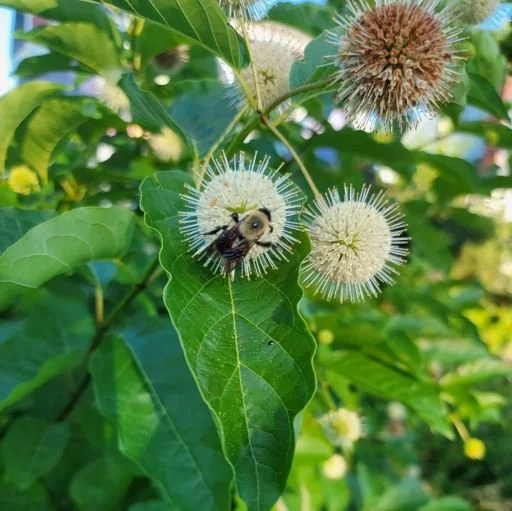
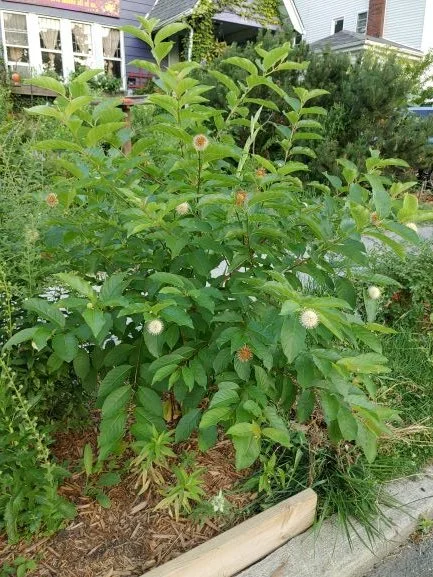
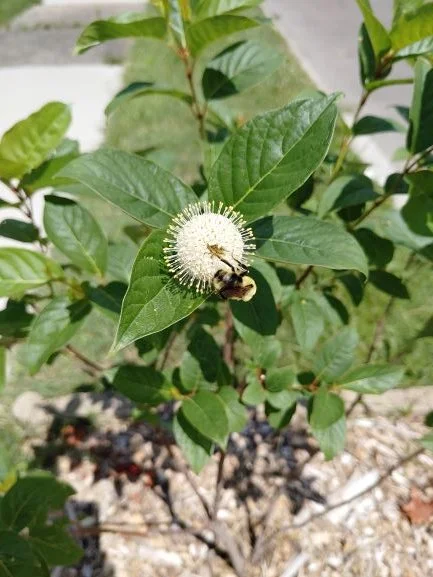
Eutrochium perfolatum, Boneset
FS, Zone 3, blooms July-Sept., 2-5’ x 3-4’, deer resistant, wet to medium, sand to some clay.
Keystone species - It is recognized by organizations like the Xerces Society for its exceptional value to native bees. It acts as a "pollinator magnet," attracting a wide variety of bees, butterflies, moths, and beneficial predatory insects. As a late-summer and autumn bloomer, it provides critical nectar and pollen when other food sources become scarce. Following its bloom, its seed heads serve as "nature's bird feeders" through the winter months. Supports two specialist Mining Bee species. Is the larval-host plant for 32 butterfly and moth species.
This native perennial is found throughout the Eastern and Central U.S. It prefers moist soil conditions, but does fine in a well-drained garden environment. Boneset has been used medicinally since ancient times. The leaves are paired and perforated by the hairy stem. It’s related to Joe Pye Weed, but the blooms on Boneset last longer and are tighter than those of Joe Pye. A very good rain garden plant.
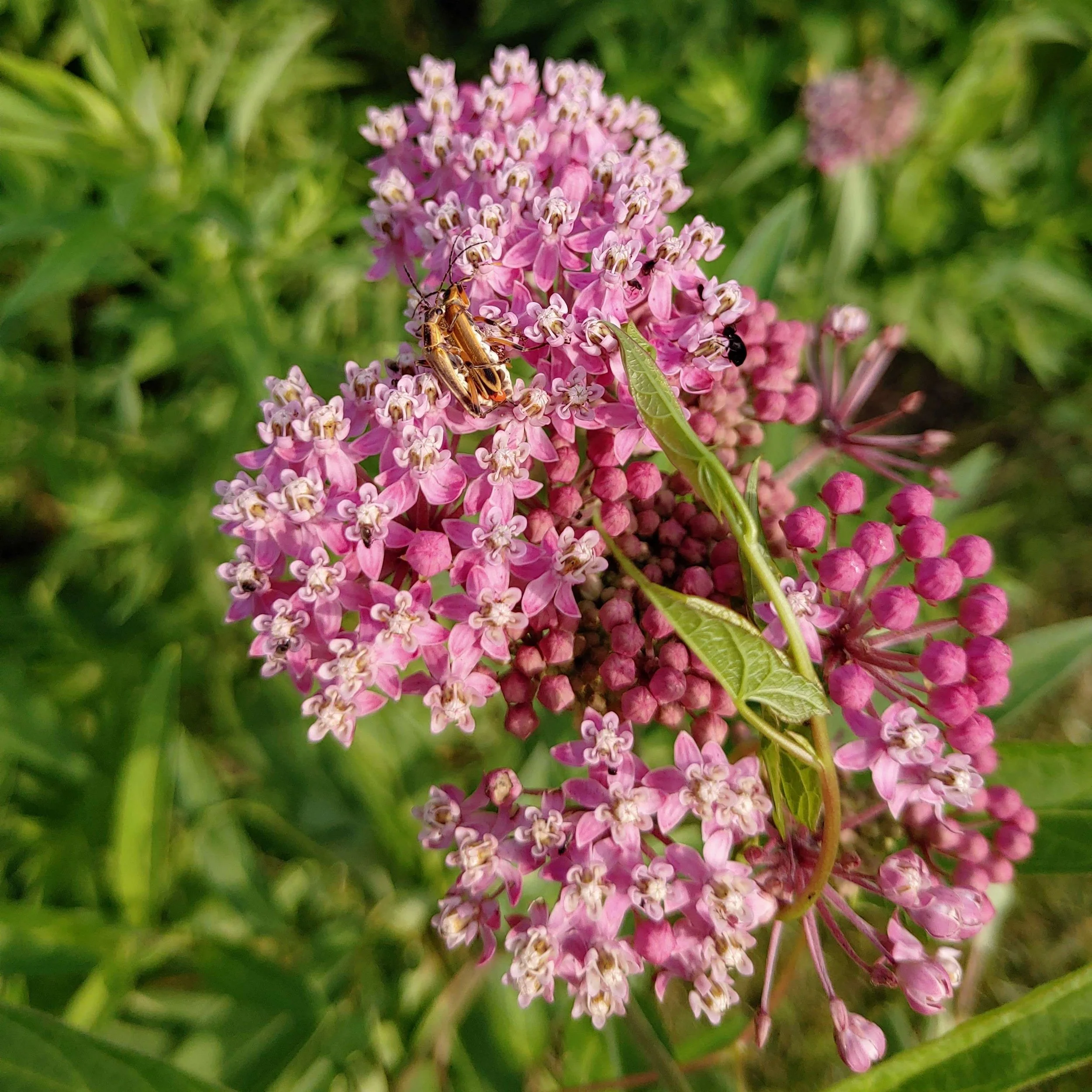
Attracts native bees, wasps, honey bees, butterflies, flies and the Hummingbird Moth. In general, this plant attracts a multitude of different pollinators and supports many native insects.
It’s also the host plant for the caterpillars of various moth species, including the Clymene Moth, Lined Ruby Tiger Moth, Burdock Borer Moth, Three-Lined Flower Moth and Blackberry Looper Moth and Spring Azure Butterfly.
DA Plant Notes - This is one plant we have lost during a long drought. We usually do not water our natives once they are established. This one we would recommend watering during extended dry periods. Halei and Nancy use the flower heads in bouquets.
Eutrochium perfolatum, Boneset
FS, Zone 3, blooms July-Sept., 2-5’ x 3-4’, deer resistant, wet to medium, sand to some clay.
Keystone species - It is recognized by organizations like the Xerces Society for its exceptional value to native bees. It acts as a "pollinator magnet," attracting a wide variety of bees, butterflies, moths, and beneficial predatory insects. As a late-summer and autumn bloomer, it provides critical nectar and pollen when other food sources become scarce. Following its bloom, its seed heads serve as "nature's bird feeders" through the winter months. Supports two specialist Mining Bee species. Is the larval-host plant for 32 butterfly and moth species.
This native perennial is found throughout the Eastern and Central U.S. It prefers moist soil conditions, but does fine in a well-drained garden environment. Boneset has been used medicinally since ancient times. The leaves are paired and perforated by the hairy stem. It’s related to Joe Pye Weed, but the blooms on Boneset last longer and are tighter than those of Joe Pye. A very good rain garden plant.
Attracts native bees, wasps, honey bees, butterflies, flies and the Hummingbird Moth. In general, this plant attracts a multitude of different pollinators and supports many native insects.
It’s also the host plant for the caterpillars of various moth species, including the Clymene Moth, Lined Ruby Tiger Moth, Burdock Borer Moth, Three-Lined Flower Moth and Blackberry Looper Moth and Spring Azure Butterfly.
DA Plant Notes - This is one plant we have lost during a long drought. We usually do not water our natives once they are established. This one we would recommend watering during extended dry periods. Halei and Nancy use the flower heads in bouquets.
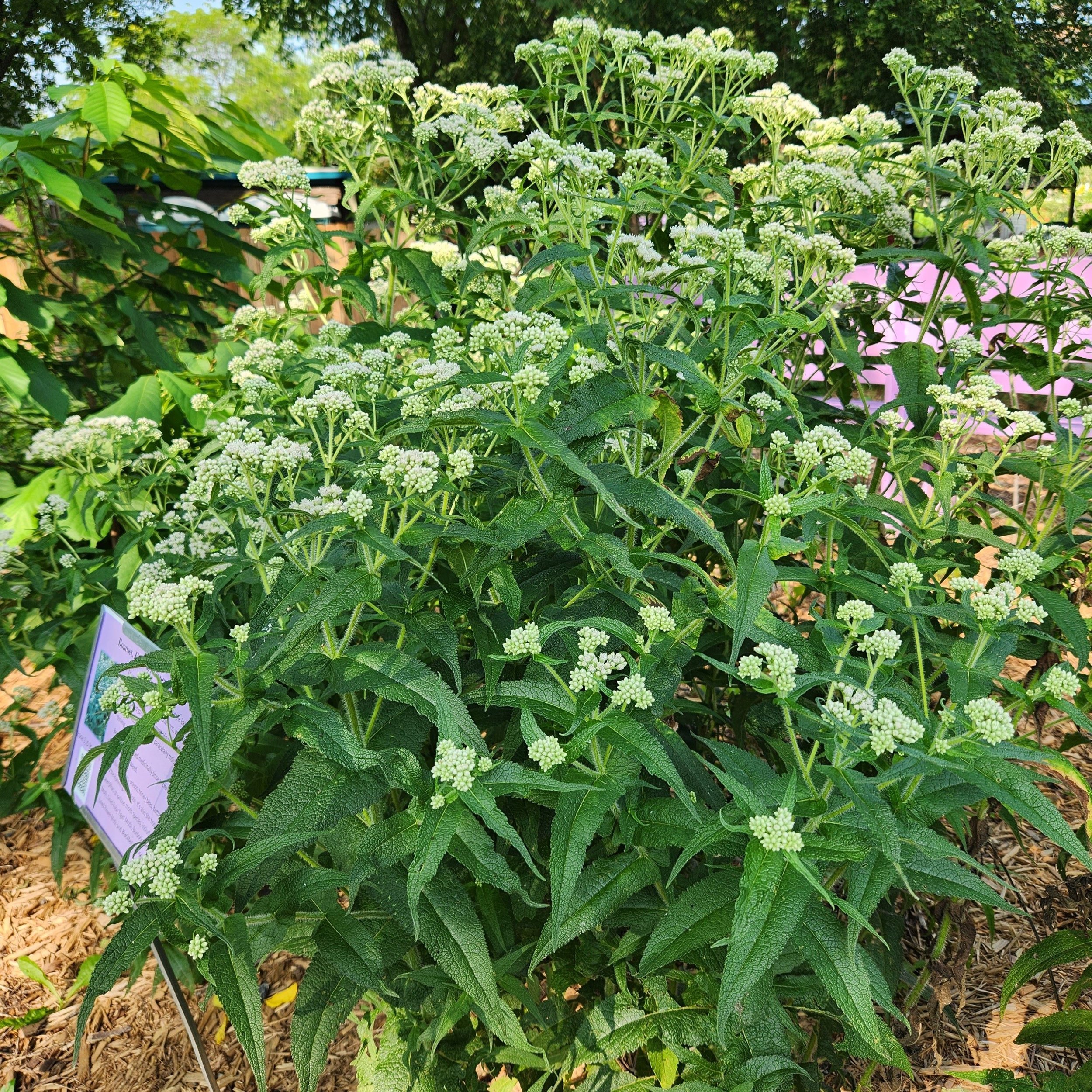 Image 1 of 7
 Image 2 of 7
 Image 3 of 7
 Image 4 of 7
 Image 5 of 7
 Image 6 of 7
 Image 7 of 7