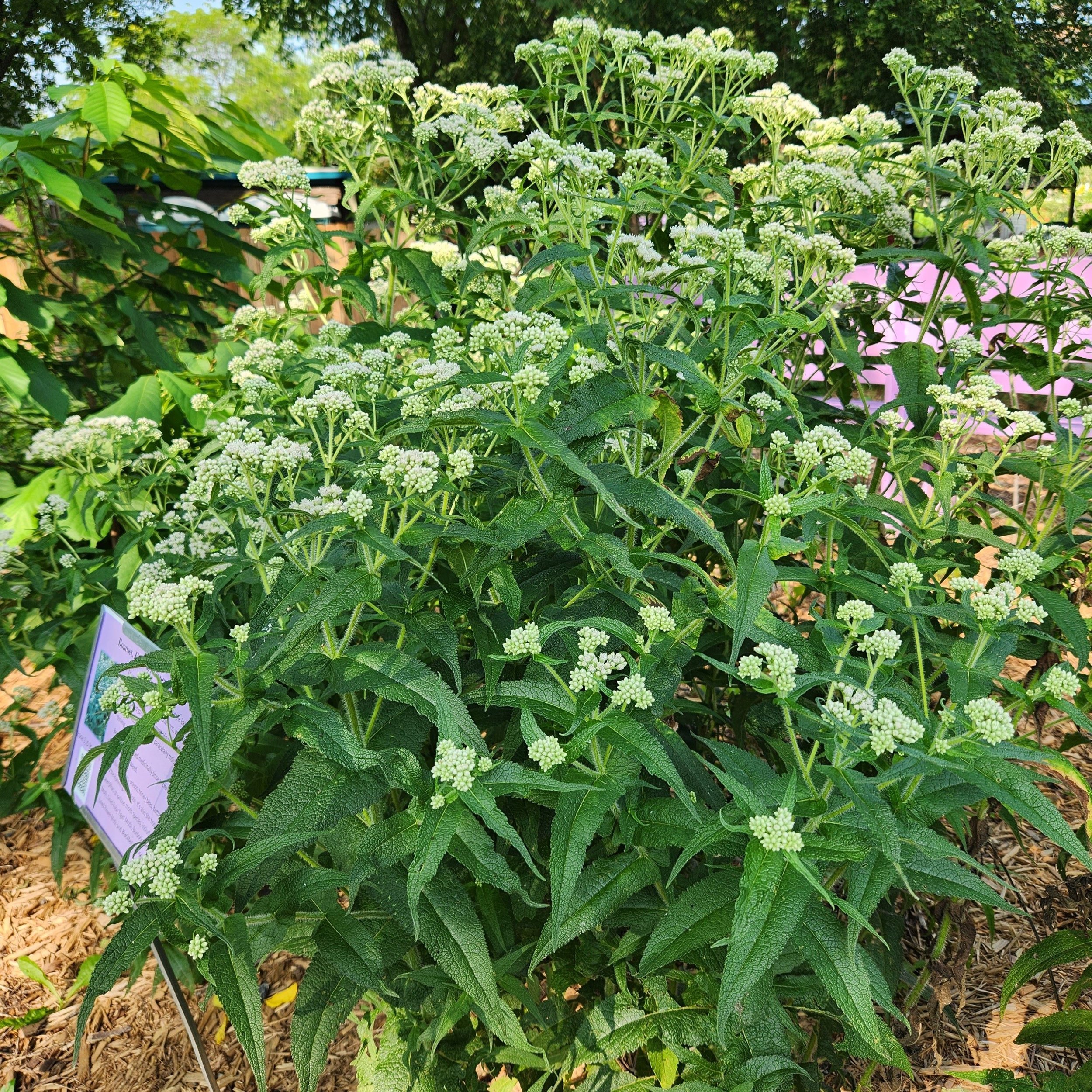
Eutrochium maculatum, Spotted Joe Pye Weed
FS, Zone 3, blooms July - August, wet to medium wet, rich moist soil, 4-6’ x 3-4’, deer resistant.
Keystone Species - it is the larval=host for 42 species in our eastern region. Its large, nectar-rich clusters bloom from late summer into early fall, providing critical energy for migrating butterflies. Its extensive, deep root system helps prevent soil erosion, especially along waterways and in wetlands. By supporting a high volume of insects, it provides a primary food source for birds.
Formerly classified as Eupatorium. In its favored conditions, this plant can reach 6’ and will spread. It grows on straight, strong stems and rarely needs to be staked, in spite of its height. it does best in full sun or at least 5 hours. It is a terrific rain garden plant. The flower heads take a long time to open, which prolongs the show. Boneset, which is closely related, is more tolerant of shade and dry conditions.
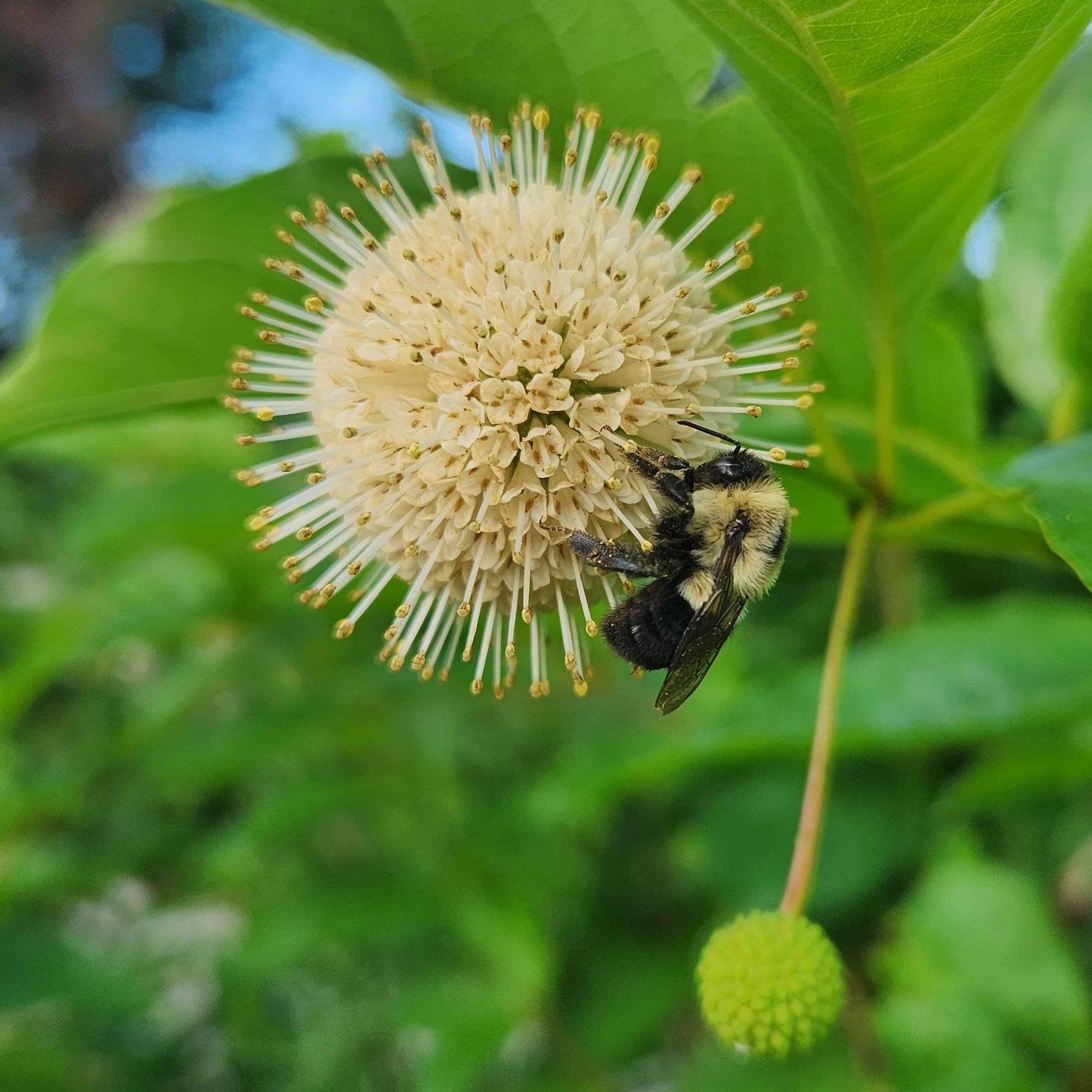
The many tiny disc florals offer large amounts of nectar. Pollen is collected by bumble bees and long-horned bees. Rusty Patched Bumble Bees, who are currently on the Xerces threatened species list, are attracted to Joe Pye, so please try to grow some in your garden! We can attest that it is a magnet for many kinds of butterflies. It is a larval host plant for Pearl Crescent Butterfly and many moths.
DA Plant Notes - This is a terrific plant! We have it in 4 different locations at the farm. None of the spots is very moist. Nevertheless, it still does well. In those settings it does not spread much, but does occasionally produce volunteers. One of the photos shows a Joe Pye of just three stems. This is in our Rose Garden which is PS. Halei and Nancy use the flower heads in bouquets. During 2023, when we had an abundance of moisture the plants looked fantastic all the way through. The blooms also lasted longer.
Eutrochium maculatum, Spotted Joe Pye Weed
FS, Zone 3, blooms July - August, wet to medium wet, rich moist soil, 4-6’ x 3-4’, deer resistant.
Keystone Species - it is the larval=host for 42 species in our eastern region. Its large, nectar-rich clusters bloom from late summer into early fall, providing critical energy for migrating butterflies. Its extensive, deep root system helps prevent soil erosion, especially along waterways and in wetlands. By supporting a high volume of insects, it provides a primary food source for birds.
Formerly classified as Eupatorium. In its favored conditions, this plant can reach 6’ and will spread. It grows on straight, strong stems and rarely needs to be staked, in spite of its height. it does best in full sun or at least 5 hours. It is a terrific rain garden plant. The flower heads take a long time to open, which prolongs the show. Boneset, which is closely related, is more tolerant of shade and dry conditions.
The many tiny disc florals offer large amounts of nectar. Pollen is collected by bumble bees and long-horned bees. Rusty Patched Bumble Bees, who are currently on the Xerces threatened species list, are attracted to Joe Pye, so please try to grow some in your garden! We can attest that it is a magnet for many kinds of butterflies. It is a larval host plant for Pearl Crescent Butterfly and many moths.
DA Plant Notes - This is a terrific plant! We have it in 4 different locations at the farm. None of the spots is very moist. Nevertheless, it still does well. In those settings it does not spread much, but does occasionally produce volunteers. One of the photos shows a Joe Pye of just three stems. This is in our Rose Garden which is PS. Halei and Nancy use the flower heads in bouquets. During 2023, when we had an abundance of moisture the plants looked fantastic all the way through. The blooms also lasted longer.
 Image 1 of 11
 Image 2 of 11
 Image 3 of 11
 Image 4 of 11
 Image 5 of 11
 Image 6 of 11
 Image 7 of 11
 Image 8 of 11
 Image 9 of 11
 Image 10 of 11
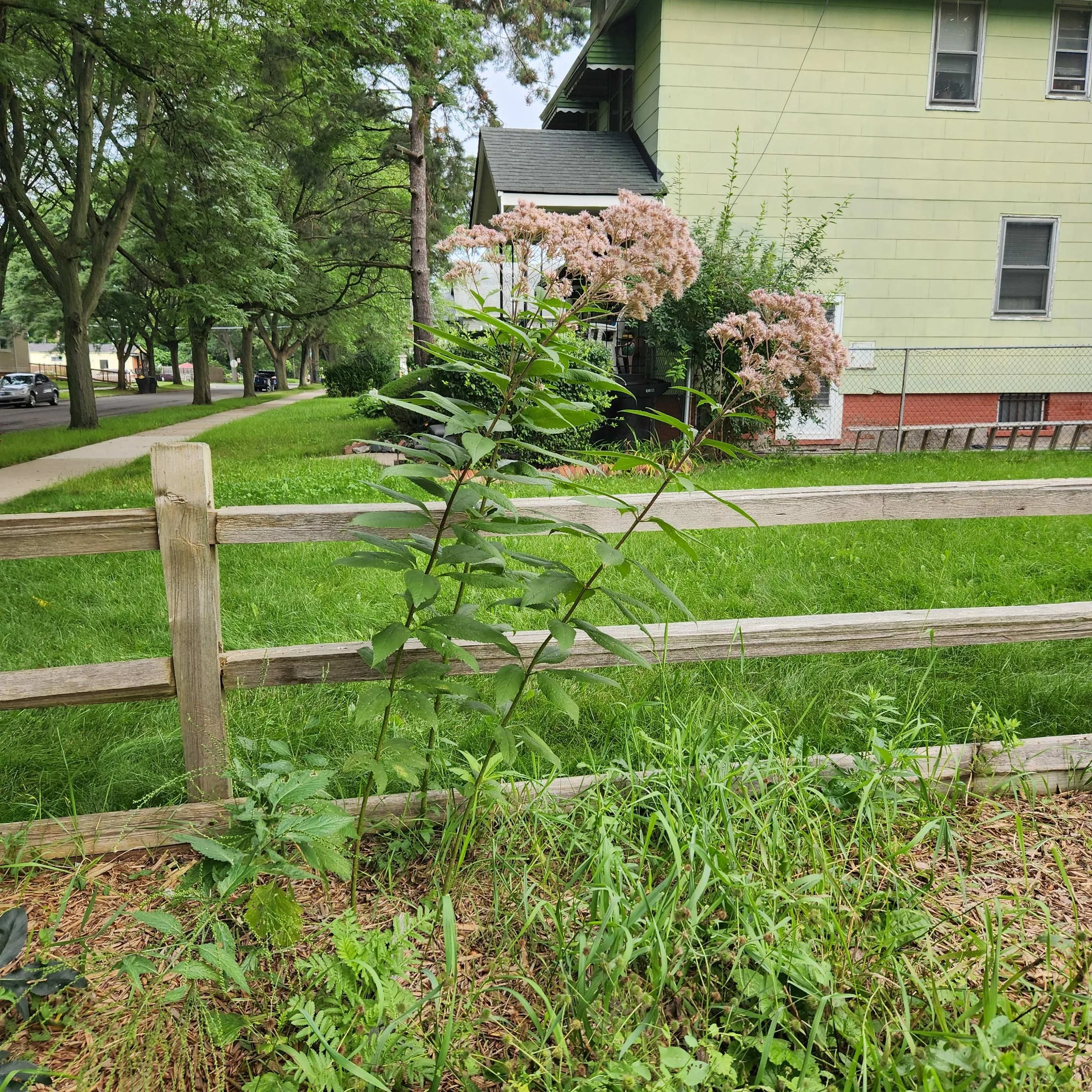 Image 11 of 11