 Image 1 of 4
 Image 2 of 4
 Image 3 of 4
 Image 4 of 4
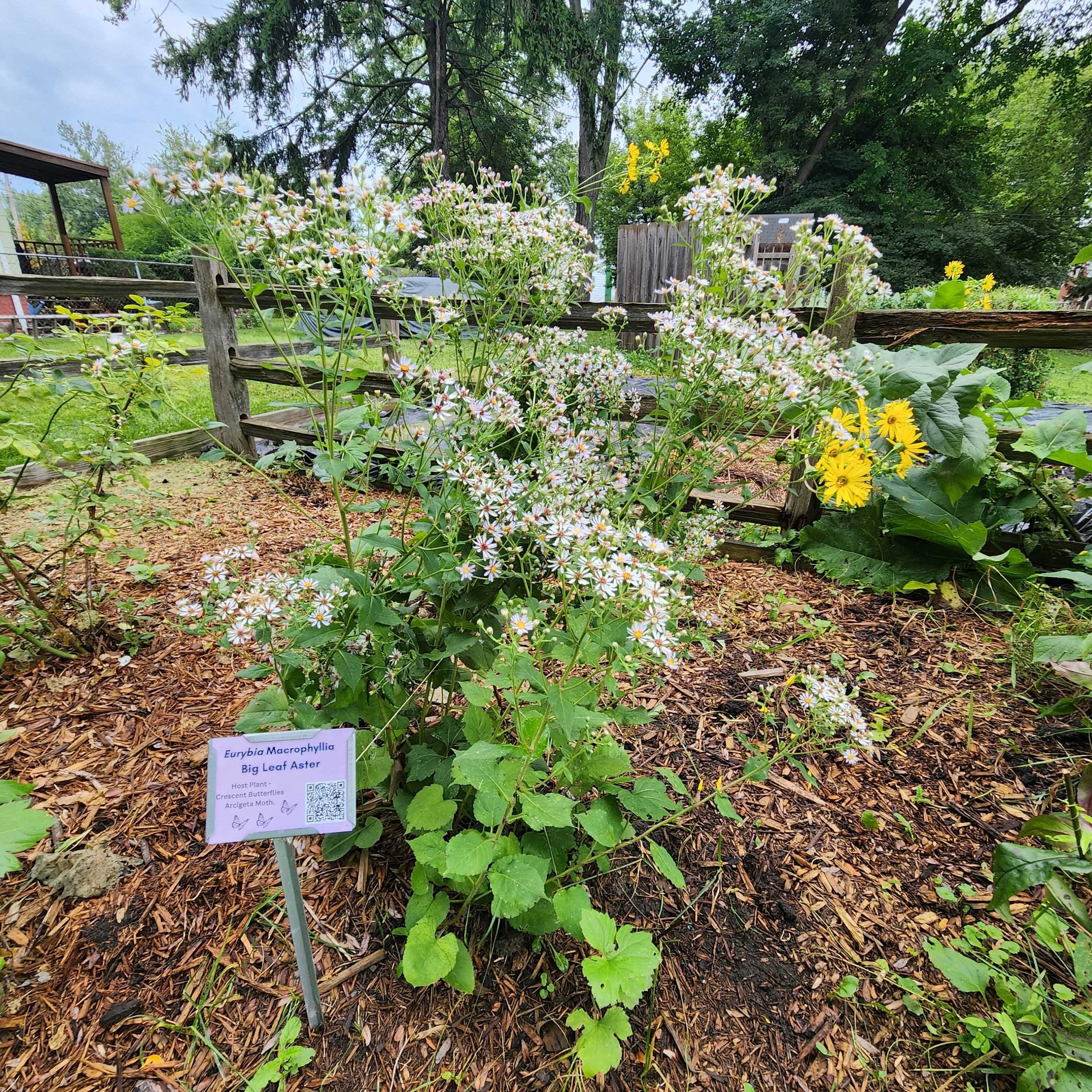
Eurybia macrophylla, Big Leaf Aster
PS-Shade, Zone 3, Blooms Aug-Oct, 1’-2’ x 2-3’, Med wet - Dry
Keystone Species - Asters are the number 2 keystone perennial in our region. In general they can support 112 species of caterpillars as host plant and more than 30 species of Specialist Bees rely on the pollen Asters produce. Big-Leaf Aster in our region supports at least 10 species of butterflies and moths and 10 specialist bees. They have late season nectar crucial to native pollinators. By hosting a high diversity of caterpillars, it provides the essential protein source needed by 96% of terrestrial birds to raise their young.
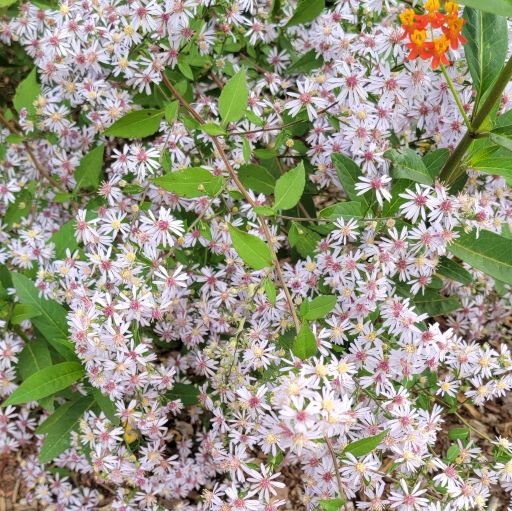
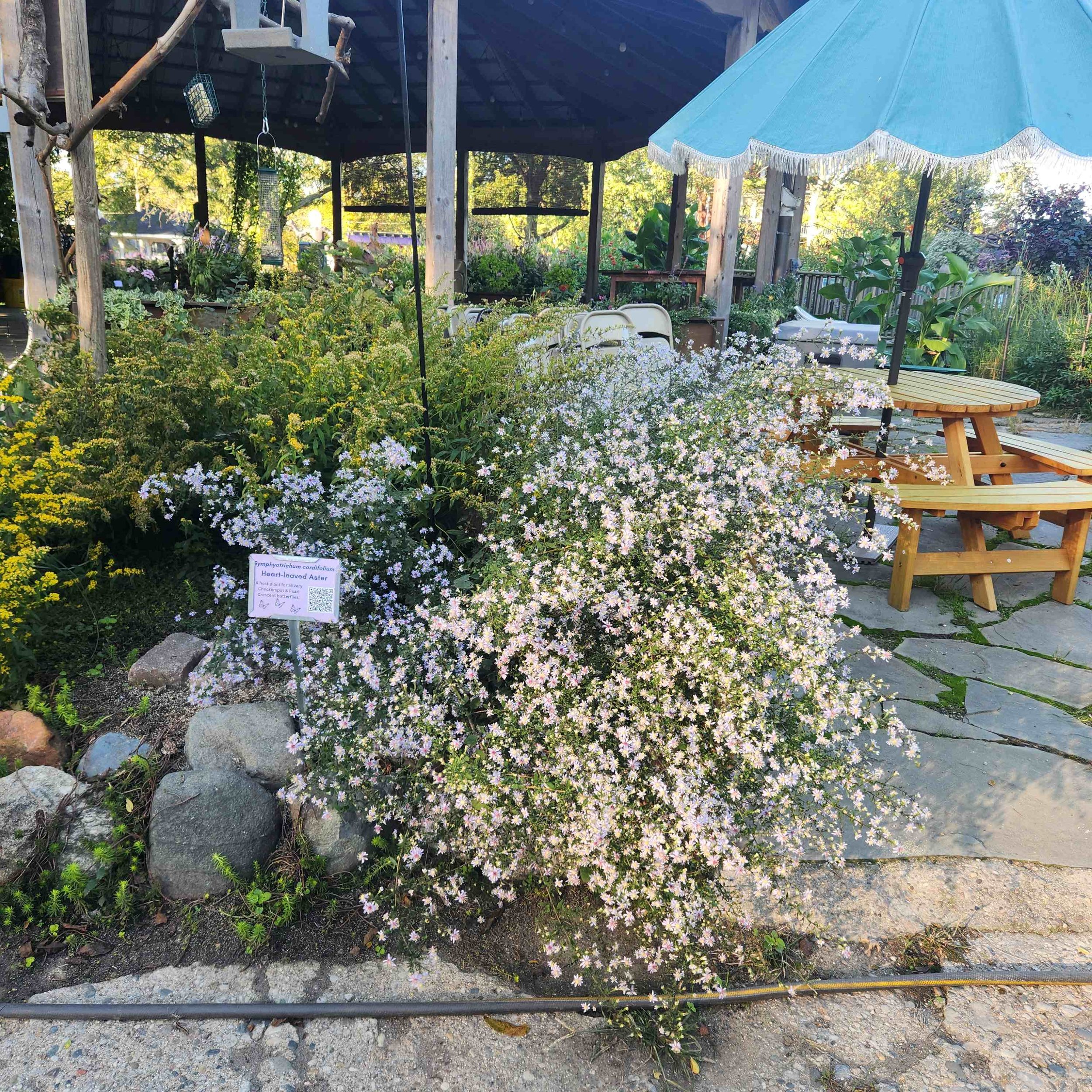
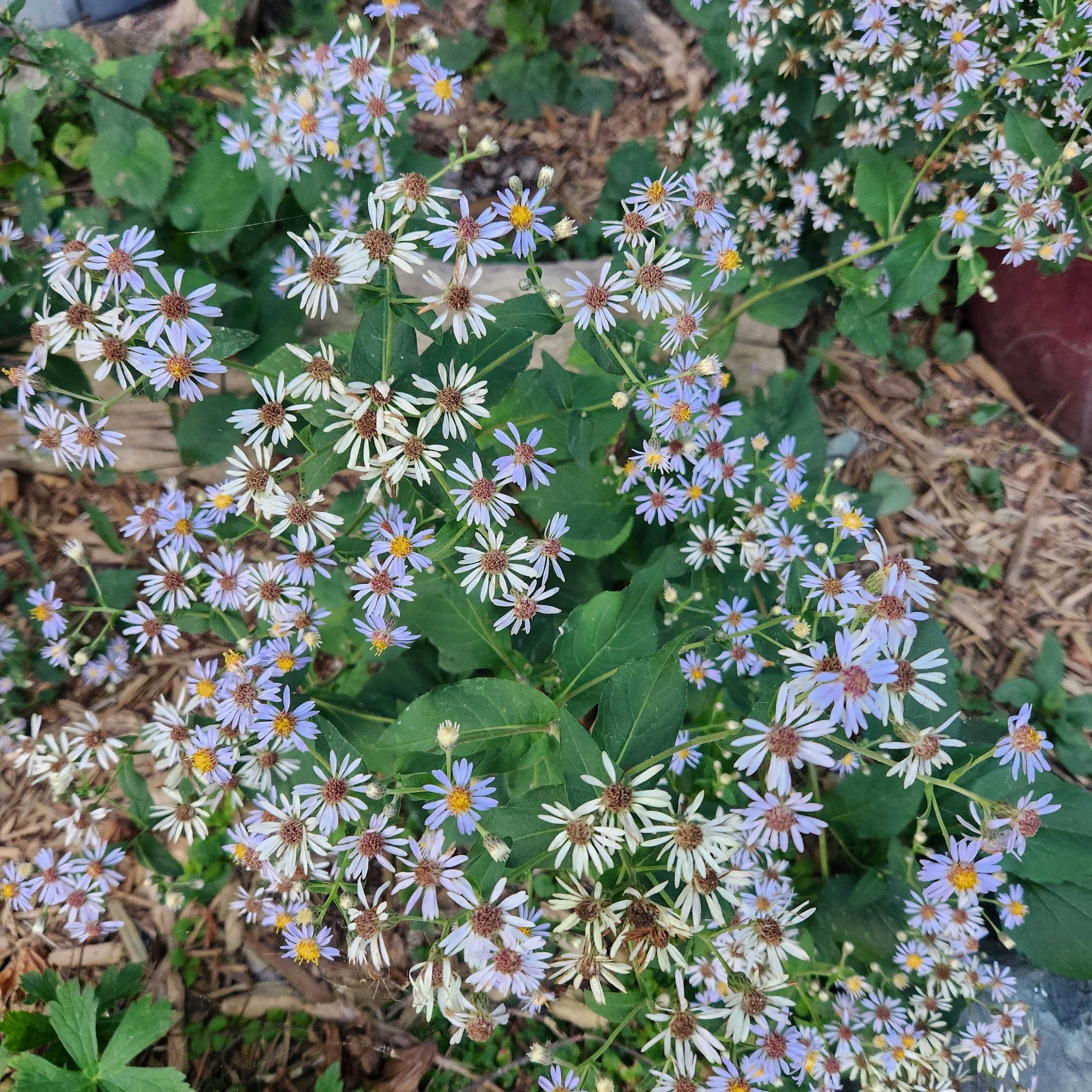
Big-Leaved Aster gets its common name from its large, heart-shaped foliage, which has coarse-toothed edges reaching 8" across.. It's often planted for these large leaves as a shaded ground cover rather than for the fall flowers. The flowering stems reach one to two feet in height, topped by blossoms with 9 to 20 thin, white-violet rays surrounding a yellow center. Eurybia macrophylla is common to northern woodlands, where it often forms a dense ground cover, spreading by rhizomes.
Best grown in moist, well-drained, sandy loams in part shade. This is a woodland species that will grow in shade, but best flowering and growth is in part shade. Blooms earlier than other asters.
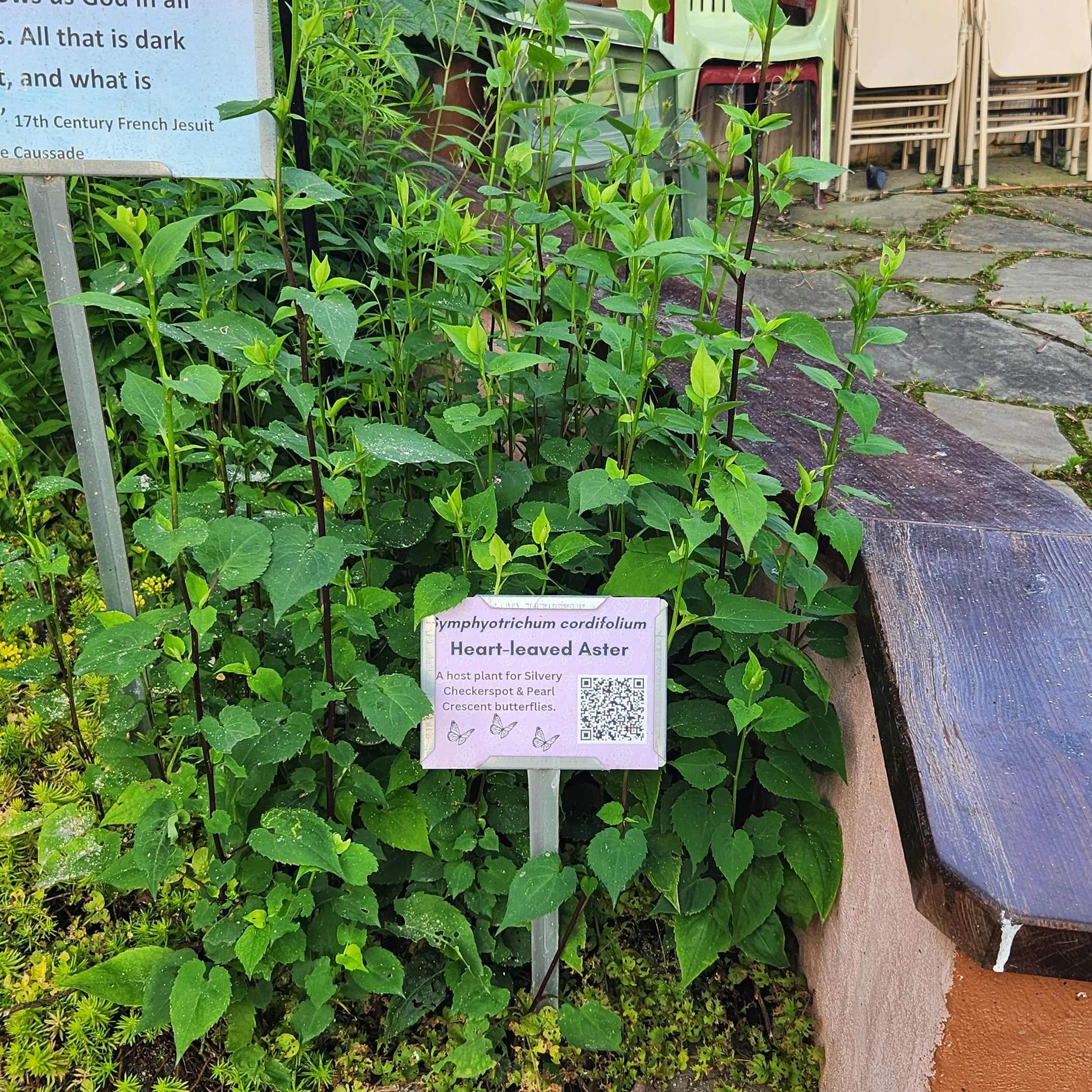
Attracts bumble bees,mining bees,and the long-horned bee. Host plant for caterpillars of the Pearl Crescent, Silvery Checkerspot, Harris Checkerspot, Dainty Sulphurand the Northern Crescent Butterflies and the Arcigeta Flower moth.
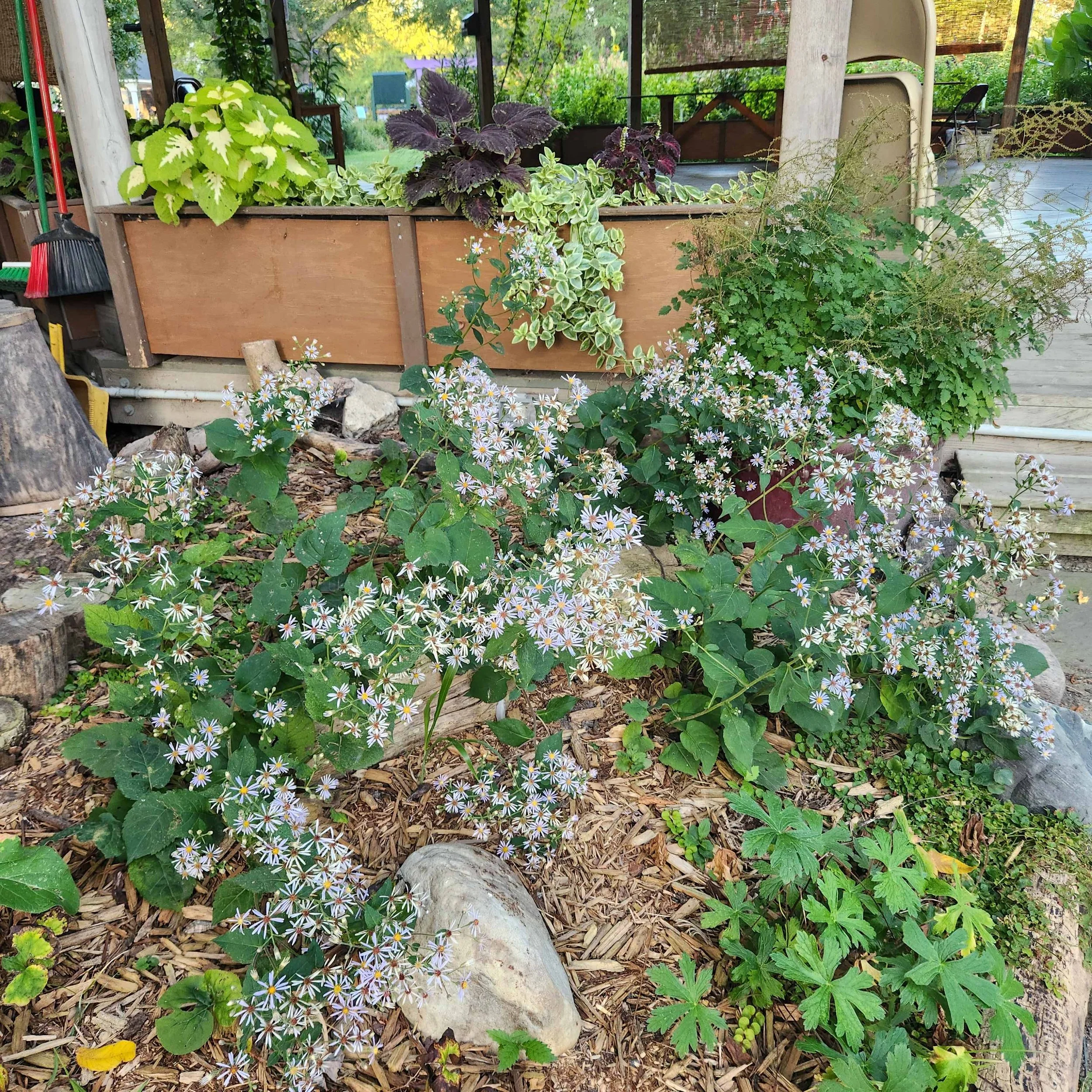
DA Planting Notes - This a sweet plant, not particulary showy but it draws pollinators to shady areas. We have it planted in 2 partial shade areas that are not moist. Once established it can make through drought situations. It does not spread much.
Eurybia macrophylla, Big Leaf Aster
PS-Shade, Zone 3, Blooms Aug-Oct, 1’-2’ x 2-3’, Med wet - Dry
Keystone Species - Asters are the number 2 keystone perennial in our region. In general they can support 112 species of caterpillars as host plant and more than 30 species of Specialist Bees rely on the pollen Asters produce. Big-Leaf Aster in our region supports at least 10 species of butterflies and moths and 10 specialist bees. They have late season nectar crucial to native pollinators. By hosting a high diversity of caterpillars, it provides the essential protein source needed by 96% of terrestrial birds to raise their young.
Big-Leaved Aster gets its common name from its large, heart-shaped foliage, which has coarse-toothed edges reaching 8" across.. It's often planted for these large leaves as a shaded ground cover rather than for the fall flowers. The flowering stems reach one to two feet in height, topped by blossoms with 9 to 20 thin, white-violet rays surrounding a yellow center. Eurybia macrophylla is common to northern woodlands, where it often forms a dense ground cover, spreading by rhizomes.
Best grown in moist, well-drained, sandy loams in part shade. This is a woodland species that will grow in shade, but best flowering and growth is in part shade. Blooms earlier than other asters.
Attracts bumble bees,mining bees,and the long-horned bee. Host plant for caterpillars of the Pearl Crescent, Silvery Checkerspot, Harris Checkerspot, Dainty Sulphurand the Northern Crescent Butterflies and the Arcigeta Flower moth.
DA Planting Notes - This a sweet plant, not particulary showy but it draws pollinators to shady areas. We have it planted in 2 partial shade areas that are not moist. Once established it can make through drought situations. It does not spread much.