Scrophularia lanceolata, Early Figwort
PS, Zone 4, PS to Shade, Avg soil, medium wet to medium dry, blooms May - July, 5’ x 2-3’.
Keystone Species - This larval-host plant supports 6 species of moths and butterflies including the Baltimore Checkerspot. While Scrophularia lanceolata (Early Figwort) is not formally classified as a "keystone species" in the strictest ecological sense it is widely recognized by conservationists as a crucial pollinator plant. It is often described as a "pollinator powerhouse" due to its disproportionately large contribution to its ecosystem relative to its inconspicuous appearance. It is among the most prolific nectar producers in the plant world. A single acre was once claimed by beekeepers to produce up to 800 pounds of honey. The Xerces Society notes its "special value" to native bees and its ability to attract beneficial predatory wasps that help control garden pests.
Figworts are nectar-rich plants. Perhaps they’re not known for their beauty, but they’re very abundant in nectar! One of the best species for attracting butterflies, bees, other insects and birds - especially the Ruby-throated Hummingbird! Not the most eye-catching plant, but certainly very interesting. There’s two types: an early and a late figwort. What’s fascinating is that both kinds of figworts are very sought after by insects because of their abundance of nectar, and as soon as the early figwort slows down, by God’s divine arrangement the late figwort kicks in. Their bloom times rarely overlap. In this way they provide nectar all season long! Being new to us, we grew both types from seed in 2019 and the Late figwort bloomed abundantly in the later part of the summer. We’re looking forward to seeing how the Early Figwort blooms this spring. Rarely available from nurseries, planting these fascinating figworts will surely bring joy and novelty to any native landscape.
Attracts a wide variety of native bees, honey bees, beetles, wasps, butterflies and flies. The Xerces Group says, “it literally drips with nectar,” and because of its early production of nectar, it’s a boon for the Ruby-Throated Hummingbird.
DA Plant Notes - This is a hard to find plant. We originally grew them from seed and now we pot up the volunteers.
Scrophularia lanceolata, Early Figwort
PS, Zone 4, PS to Shade, Avg soil, medium wet to medium dry, blooms May - July, 5’ x 2-3’.
Keystone Species - This larval-host plant supports 6 species of moths and butterflies including the Baltimore Checkerspot. While Scrophularia lanceolata (Early Figwort) is not formally classified as a "keystone species" in the strictest ecological sense it is widely recognized by conservationists as a crucial pollinator plant. It is often described as a "pollinator powerhouse" due to its disproportionately large contribution to its ecosystem relative to its inconspicuous appearance. It is among the most prolific nectar producers in the plant world. A single acre was once claimed by beekeepers to produce up to 800 pounds of honey. The Xerces Society notes its "special value" to native bees and its ability to attract beneficial predatory wasps that help control garden pests.
Figworts are nectar-rich plants. Perhaps they’re not known for their beauty, but they’re very abundant in nectar! One of the best species for attracting butterflies, bees, other insects and birds - especially the Ruby-throated Hummingbird! Not the most eye-catching plant, but certainly very interesting. There’s two types: an early and a late figwort. What’s fascinating is that both kinds of figworts are very sought after by insects because of their abundance of nectar, and as soon as the early figwort slows down, by God’s divine arrangement the late figwort kicks in. Their bloom times rarely overlap. In this way they provide nectar all season long! Being new to us, we grew both types from seed in 2019 and the Late figwort bloomed abundantly in the later part of the summer. We’re looking forward to seeing how the Early Figwort blooms this spring. Rarely available from nurseries, planting these fascinating figworts will surely bring joy and novelty to any native landscape.
Attracts a wide variety of native bees, honey bees, beetles, wasps, butterflies and flies. The Xerces Group says, “it literally drips with nectar,” and because of its early production of nectar, it’s a boon for the Ruby-Throated Hummingbird.
DA Plant Notes - This is a hard to find plant. We originally grew them from seed and now we pot up the volunteers.
 Image 1 of 8
 Image 2 of 8
 Image 3 of 8
 Image 4 of 8
 Image 5 of 8
 Image 6 of 8
 Image 7 of 8
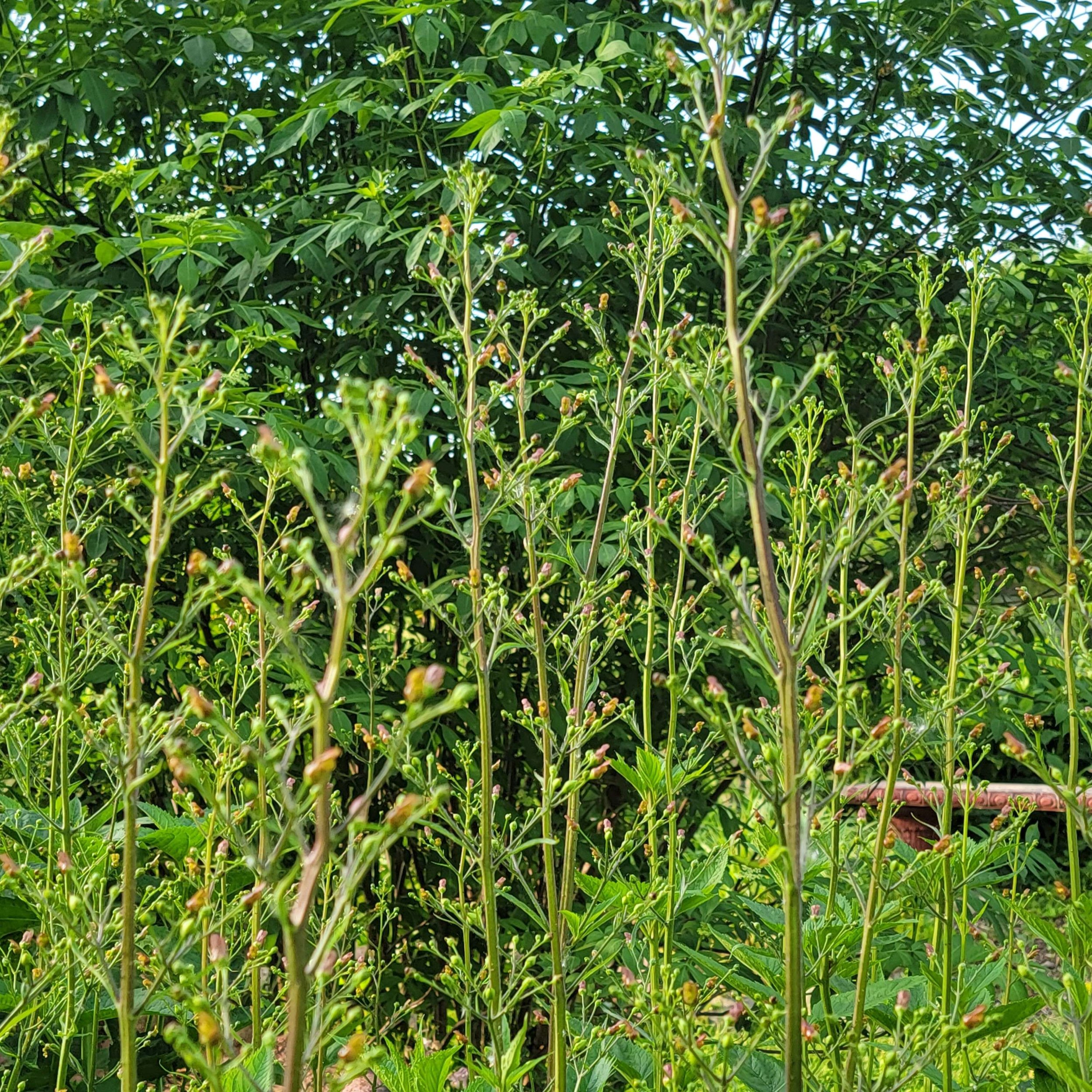 Image 8 of 8