Doellingeria umbellata, Tall Flat-Top Aster
FS-PS, Zone 3, Blooms July-Sept, Wet - Medium, 5’ x 1-3’
Keystone Species - Asters are the number 2 keystone perennial in our region. In general they can support 112 species of caterpillars as host plant and more than 30 species of Specialist Bees rely on the pollen Asters produce. Tall Flat-Top Aster in our region supports 18 species of butterflies and moths and 4 specialist bees. They have late season nectar crucial to native pollinators. By hosting a high diversity of caterpillars, it provides the essential protein source needed by 96% of terrestrial birds to raise their young. Its seeds feed birds like goldfinches and juncos during the winter, while its dried stalks provide nesting and overwintering sites for beneficial insects.
Tall Flat-Top Aster in our region supports 18 species of butterflies and moths and is a critical host plant for the Pearl Crescent andHarris Checkerspot and Silvery Checkerspot Butterflies and 4 specialist bee species.
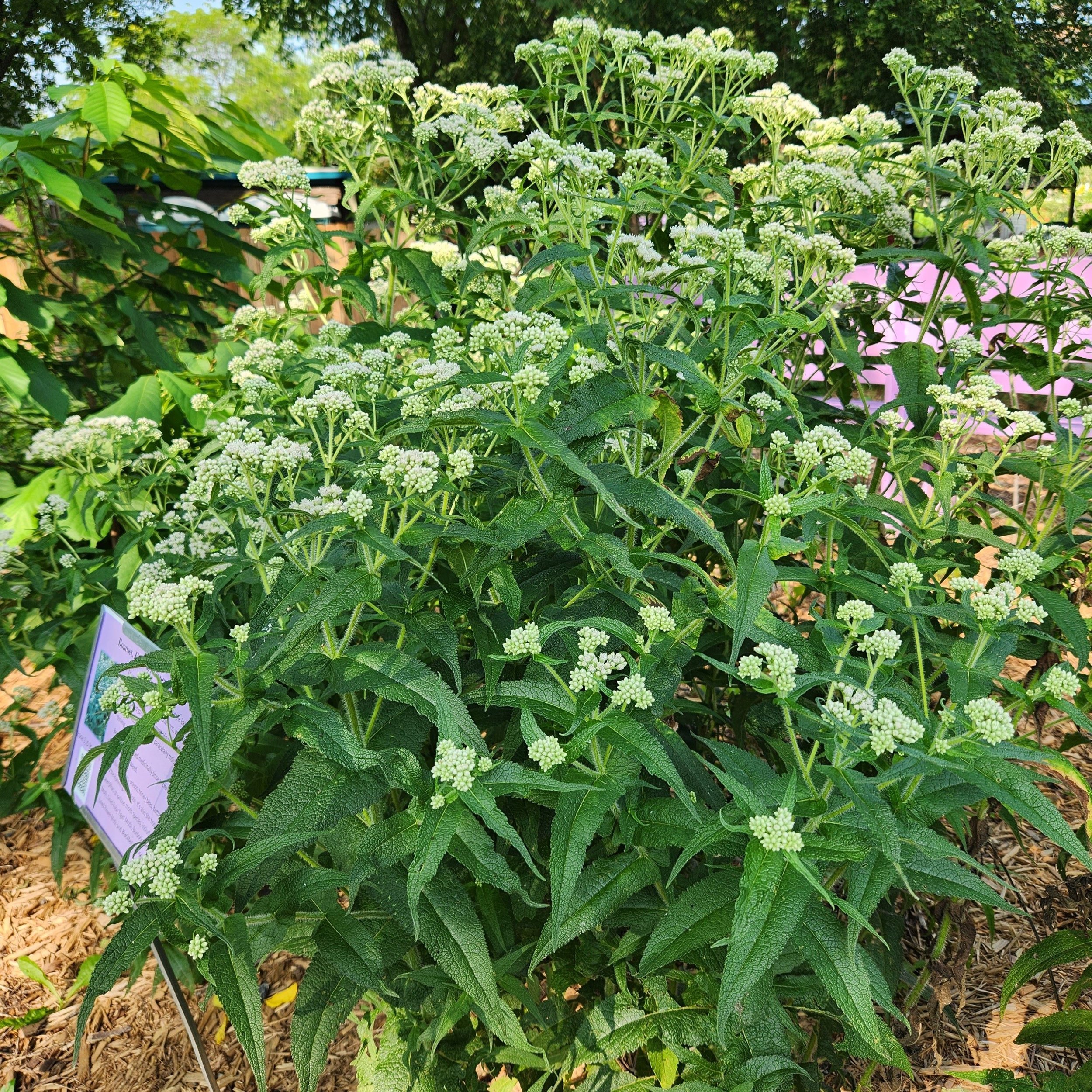
Flat-topped Aster, Doellingeria umbellata, formerly Aster umbellatus, is a perennial, early bloomer in the Aster family, flowering in July with clusters of white petals and yellow center disks. As a plant ages, the color will dull, paling to a yellowish tan. The alternately-attached leaves are simple, rounded, toothless spears with short hairs that add texture. Flat-topped Aster begins to bloom in July, much earlier than most Asters, and is rhizomatous, meaning it spreads by underground rhizomes as well as by seed.
This beautiful plant enjoys wet to medium, sandy prairies in full sunlight. The folige is eaten by deer and rabbits.
A wide variety of pollinators are attracted to the nectar and pollen of the flowers. These species include long- and short-tongued bees, wasps, flies, beetles and butterflies.
DA Planting Note - During 2025 our Tall Flat-Tops grew to about 6’. They did pretty well in inclement weather and we did not have to stake them. The bloomss are not showy, but the plant is interesting. The tiny flowers start opening and producing nectar in July. The blooms on the clusters open slowly through early September. We used some in bouquets this year! Love this plant!
Doellingeria umbellata, Tall Flat-Top Aster
FS-PS, Zone 3, Blooms July-Sept, Wet - Medium, 5’ x 1-3’
Keystone Species - Asters are the number 2 keystone perennial in our region. In general they can support 112 species of caterpillars as host plant and more than 30 species of Specialist Bees rely on the pollen Asters produce. Tall Flat-Top Aster in our region supports 18 species of butterflies and moths and 4 specialist bees. They have late season nectar crucial to native pollinators. By hosting a high diversity of caterpillars, it provides the essential protein source needed by 96% of terrestrial birds to raise their young. Its seeds feed birds like goldfinches and juncos during the winter, while its dried stalks provide nesting and overwintering sites for beneficial insects.
Tall Flat-Top Aster in our region supports 18 species of butterflies and moths and is a critical host plant for the Pearl Crescent andHarris Checkerspot and Silvery Checkerspot Butterflies and 4 specialist bee species.
Flat-topped Aster, Doellingeria umbellata, formerly Aster umbellatus, is a perennial, early bloomer in the Aster family, flowering in July with clusters of white petals and yellow center disks. As a plant ages, the color will dull, paling to a yellowish tan. The alternately-attached leaves are simple, rounded, toothless spears with short hairs that add texture. Flat-topped Aster begins to bloom in July, much earlier than most Asters, and is rhizomatous, meaning it spreads by underground rhizomes as well as by seed.
This beautiful plant enjoys wet to medium, sandy prairies in full sunlight. The folige is eaten by deer and rabbits.
A wide variety of pollinators are attracted to the nectar and pollen of the flowers. These species include long- and short-tongued bees, wasps, flies, beetles and butterflies.
DA Planting Note - During 2025 our Tall Flat-Tops grew to about 6’. They did pretty well in inclement weather and we did not have to stake them. The bloomss are not showy, but the plant is interesting. The tiny flowers start opening and producing nectar in July. The blooms on the clusters open slowly through early September. We used some in bouquets this year! Love this plant!
 Image 1 of 8
 Image 2 of 8
 Image 3 of 8
 Image 4 of 8
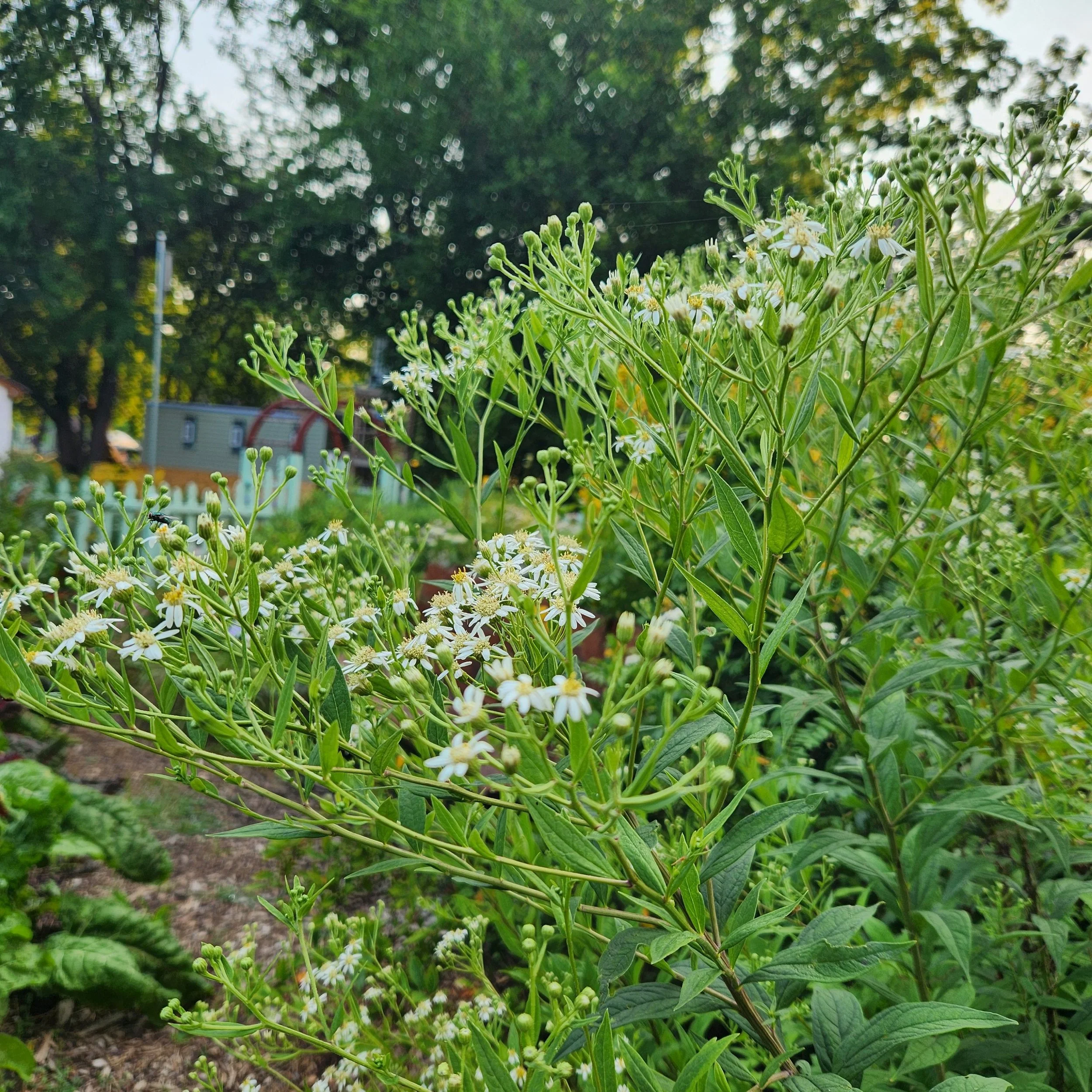 Image 5 of 8
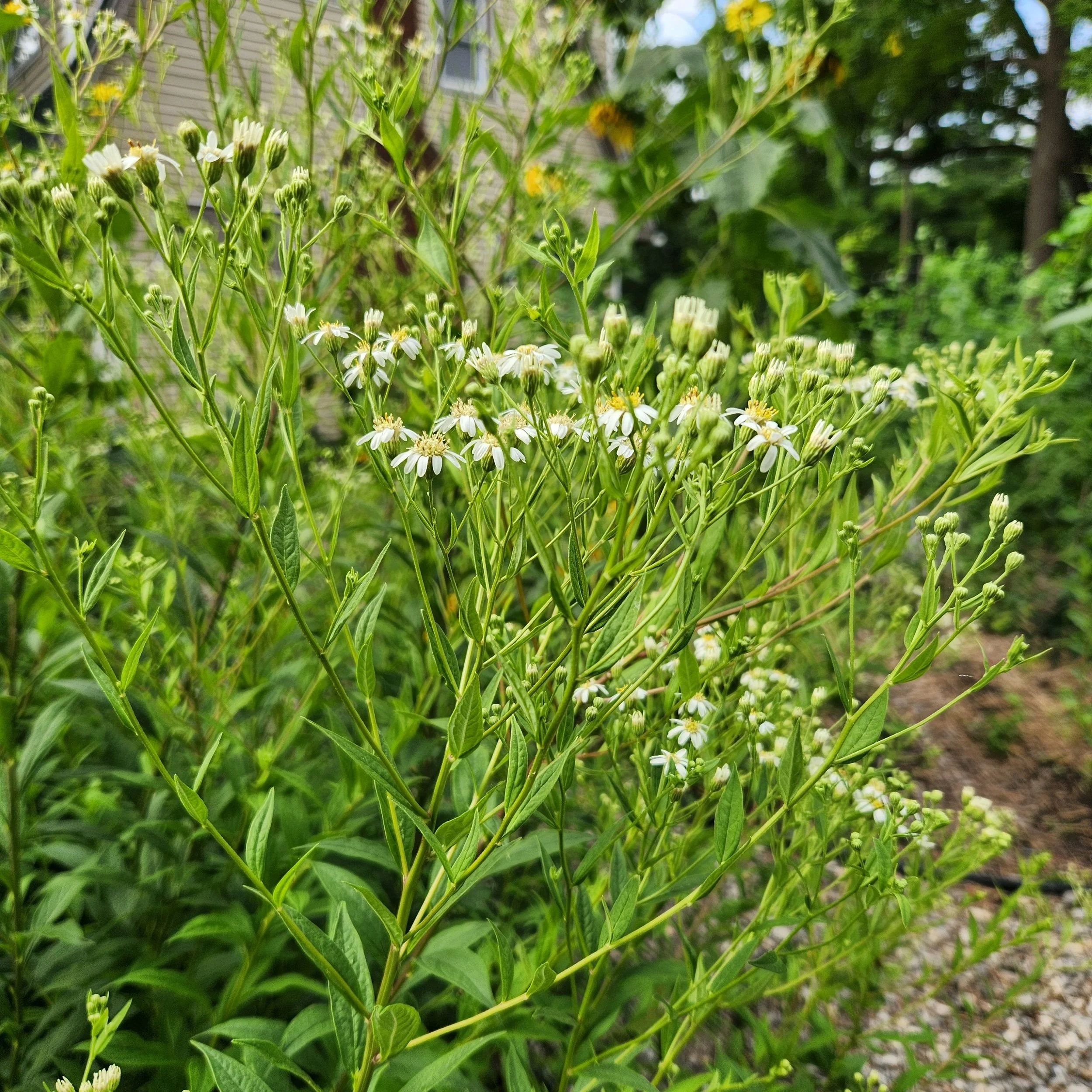 Image 6 of 8
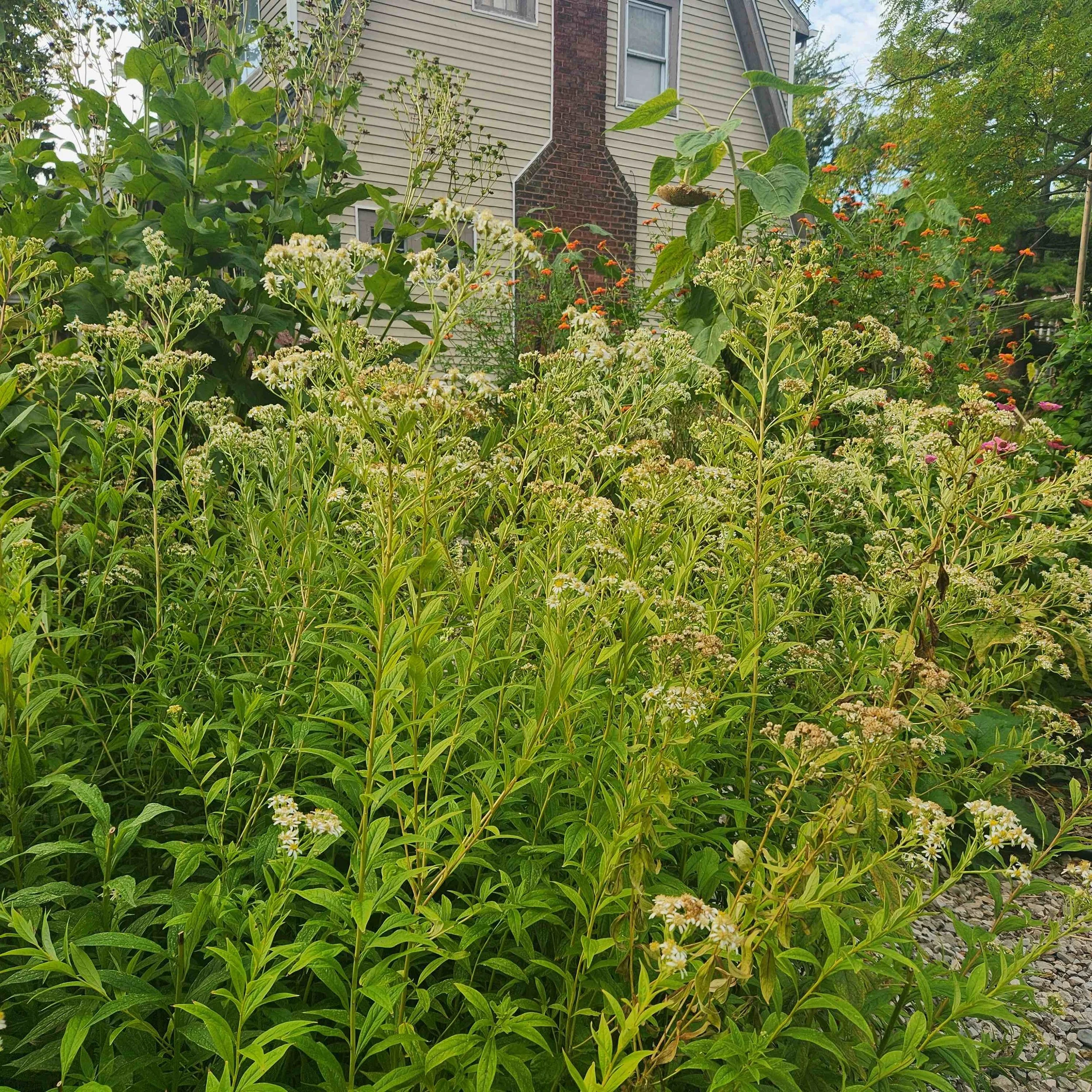 Image 7 of 8
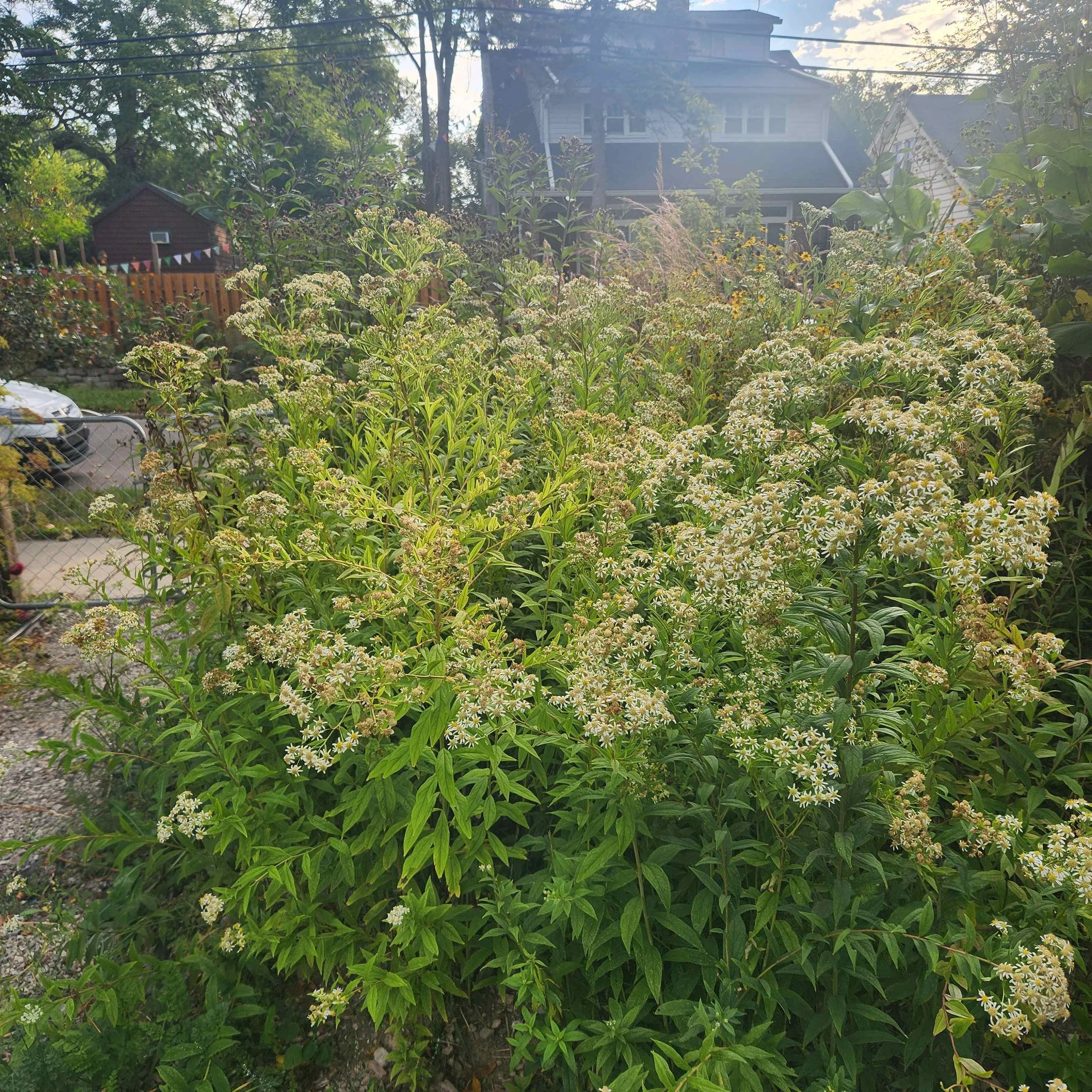 Image 8 of 8