Asclepias syriaca, Common Milkweedgallon pot
FS, Zone 3, blooms June - September, 3-4’ x 1’ tolerates most soils and even some clay
Keystone Plant - Monarch butterflies rely entirely on milkweed for their life cycle; it is their only food source.
Common Milkweed is an essential host plant for the caterpillars of Monarch butterflies. They spread via rhizomes and tend to colonize small areas, which is what we want, because the plant is so important for the long-term survival of the Monarch butterfly (see photo of rhizomes). It used to grow abundantly throughout the U.S., especially the Midwest, but because of urban sprawl, the widespread use of herbicides, and harmful farming methods, it’s far less abundant nowadays.
Like Swamp Milkweed and Butterfly weed, Common Milkweed is also a great source of nectar and pollen for a wide range of pollinating insects. We grow this plant by seed and often rescue their rhizomes from vacant land in Detroit that is being developed. We prefer to sell them in quart - gallon containers so that the plants will be large enough to bear blossoms their first year. Common Milkweed can take a while to emerge every spring.
Besides being the most common Monarch host plant, the Common Milkweed attracts a wide variety of bees, beetles, wasps, butterflies, and the Ruby Throated hummingbird. Monarch butterflies will lay only one egg on the undersides of each of the plants’ most tender leaves.
The large Milkweed bug evolved with this plant and its life cycle is tied to it. You may see yellow aphids on your Milkweeds. They are Oleander Aphids introduced from the Mediterranean area, associated with the Orleander shrub.
Asclepias syriaca, Common Milkweedgallon pot
FS, Zone 3, blooms June - September, 3-4’ x 1’ tolerates most soils and even some clay
Keystone Plant - Monarch butterflies rely entirely on milkweed for their life cycle; it is their only food source.
Common Milkweed is an essential host plant for the caterpillars of Monarch butterflies. They spread via rhizomes and tend to colonize small areas, which is what we want, because the plant is so important for the long-term survival of the Monarch butterfly (see photo of rhizomes). It used to grow abundantly throughout the U.S., especially the Midwest, but because of urban sprawl, the widespread use of herbicides, and harmful farming methods, it’s far less abundant nowadays.
Like Swamp Milkweed and Butterfly weed, Common Milkweed is also a great source of nectar and pollen for a wide range of pollinating insects. We grow this plant by seed and often rescue their rhizomes from vacant land in Detroit that is being developed. We prefer to sell them in quart - gallon containers so that the plants will be large enough to bear blossoms their first year. Common Milkweed can take a while to emerge every spring.
Besides being the most common Monarch host plant, the Common Milkweed attracts a wide variety of bees, beetles, wasps, butterflies, and the Ruby Throated hummingbird. Monarch butterflies will lay only one egg on the undersides of each of the plants’ most tender leaves.
The large Milkweed bug evolved with this plant and its life cycle is tied to it. You may see yellow aphids on your Milkweeds. They are Oleander Aphids introduced from the Mediterranean area, associated with the Orleander shrub.
 Image 1 of 8
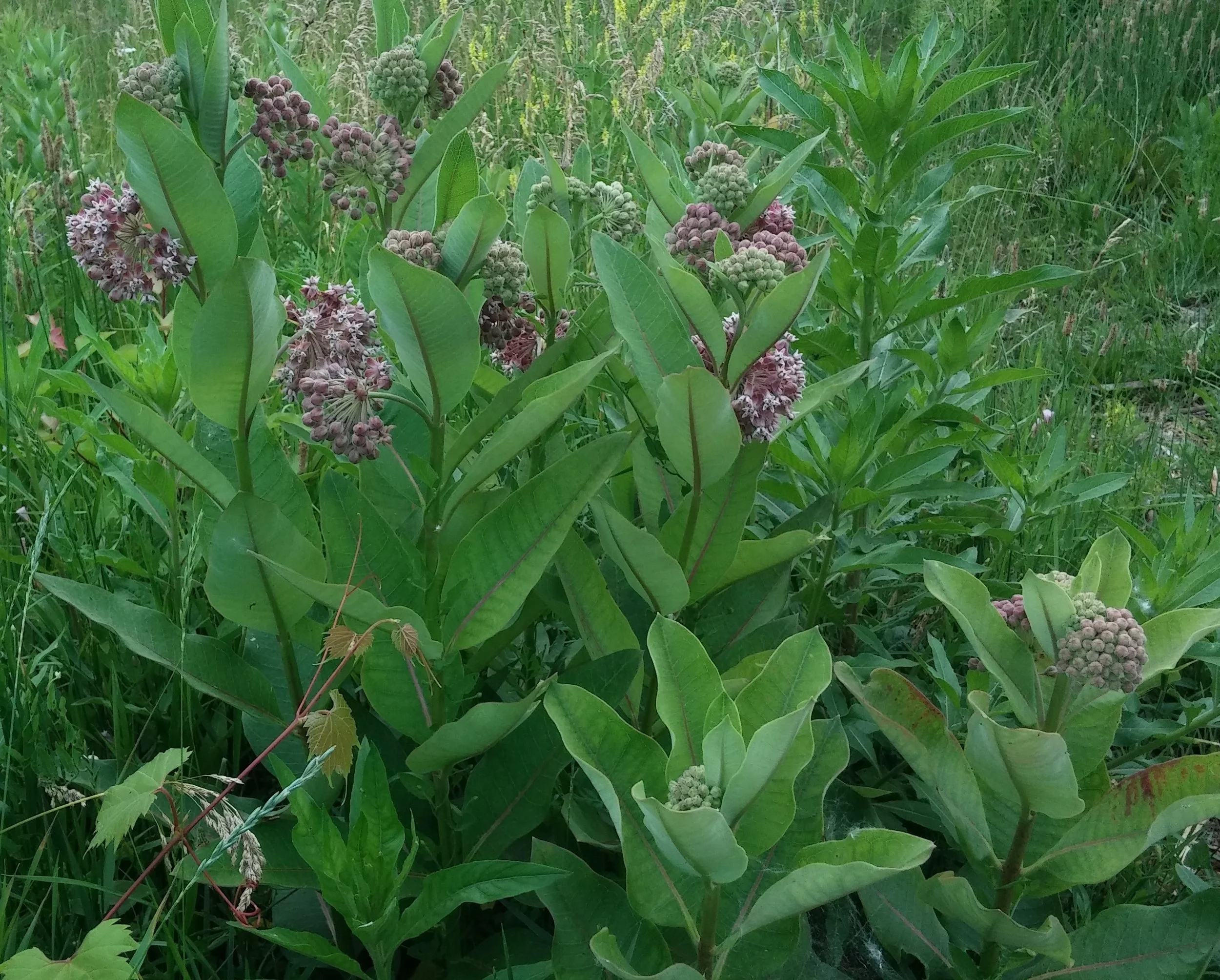 Image 2 of 8
 Image 3 of 8
 Image 4 of 8
 Image 5 of 8
 Image 6 of 8
 Image 7 of 8
 Image 8 of 8