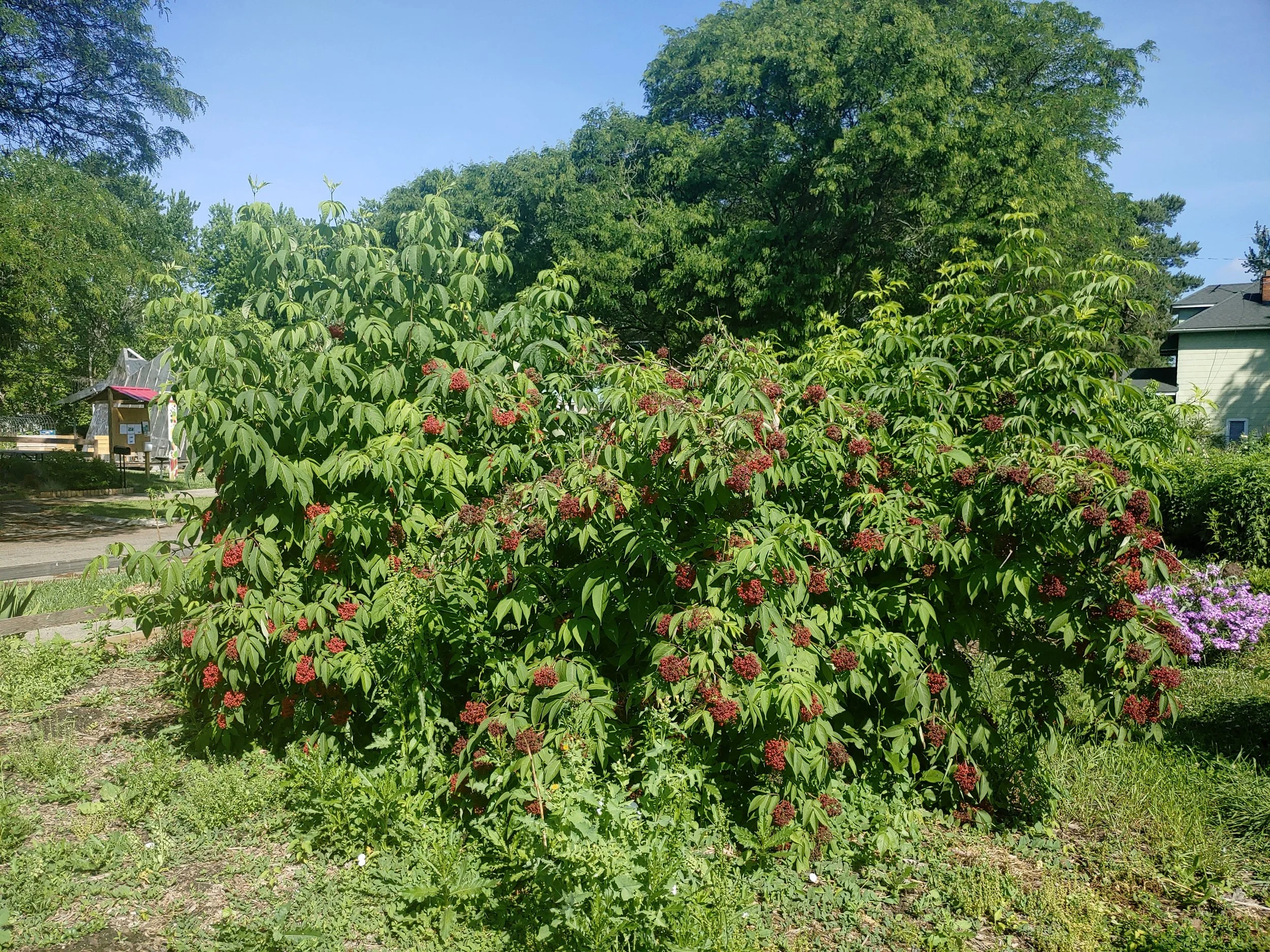
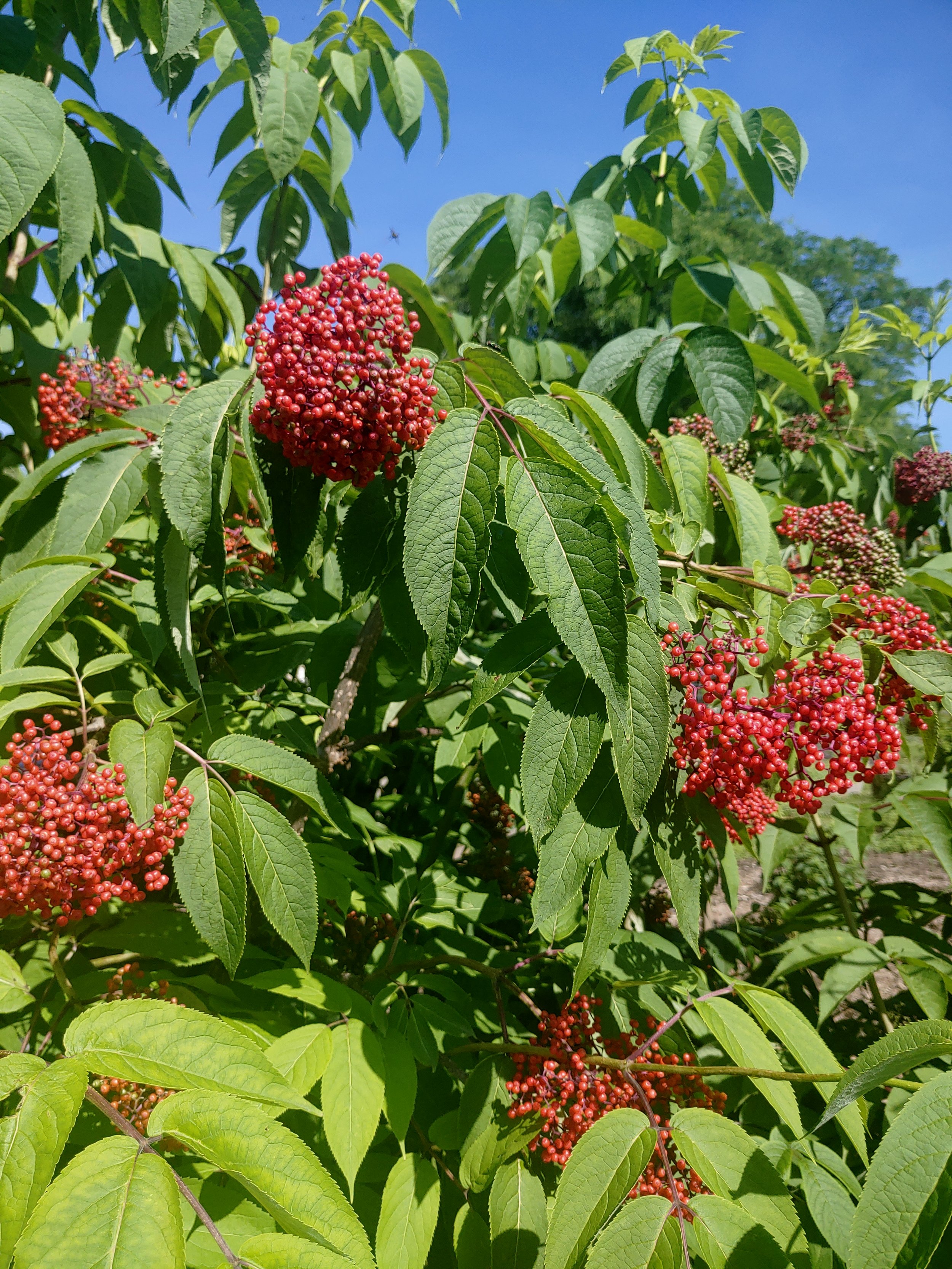
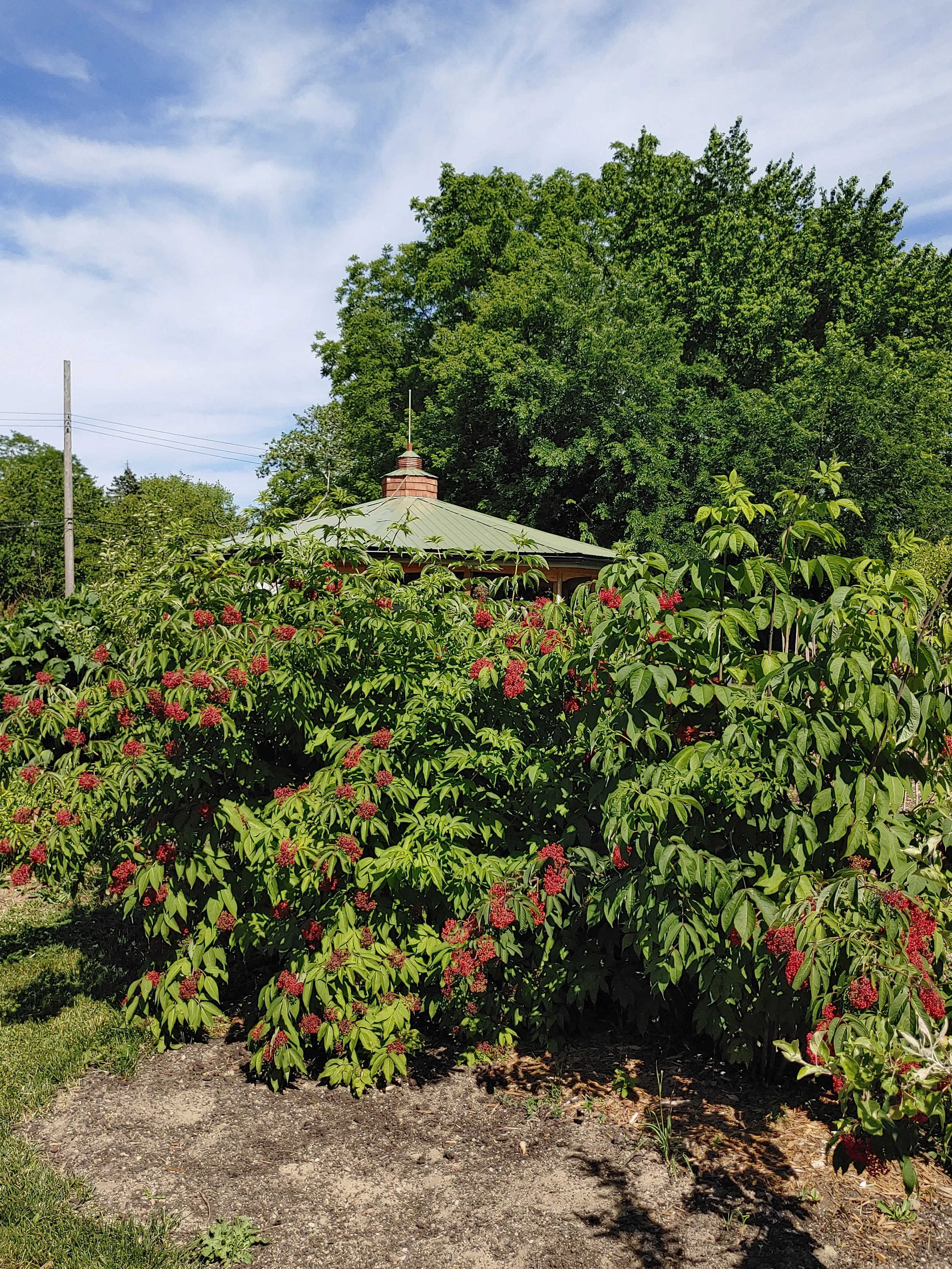
Cephalanthus occidentalis, Button Bush, Shrub.
FS-PS, Zone 4, 12’ x 3-4’, blooms June-August, wet to medium, deer and rabbit resistant.
Keystone Species - It is the larval-host plant for 21 species of moths including two large moths - the Titan Sphinx and Hydrangea Sphinx moth. Buttonbush supports the entire life cycle of native insects by feeding their larvae. Buttonbush blooms in mid-to-late summer, often when few other shrubs are in flower, providing a vital, high-quality, and abundant nectar and pollen source for bees (including bumblebees, honeybees, and specialized native bees), butterflies, and hummingbirds. The seeds (nutlets) produced in the fall persist into the winter, offering crucial nourishment to at least 24 species of birds.
Buttonbush has one of the most unique flowers of any shrub, and butterflies think so too. Skippers, monarchs, and virtually any butterflies that happen to be passing by love the white flowers. In addition to its appeal for butterflies, buttonbush also serves as a host plant for some of our largest and showiest moths including the titan sphinx and the hydrangea sphinx. Bees also love buttonbush, giving it the second nickname “honeyball.” This nickname started in the early 1700s when it was introduced commercially by beekeepers.
Considering the showy blooms, glossy green leaves, fall color, and red “buttons,” buttonbush is a 4-season beauty. It can tolerate shade and a variety of soils, and is the perfect plant for rain gardens because it thrives in wet spots and flooded areas. For a shrub that has a very long bloom and nectar-providing period, you’d be hard pressed to find a more valuable or versatile native shrub for your wildlife garden.
Buttonbush is a fast-growing, short-lived shrub. It spreads to form thickets by suckering, which results in individual plants arising from its roots. Can be cut back to control growth. It emerges later than other native shrubs.
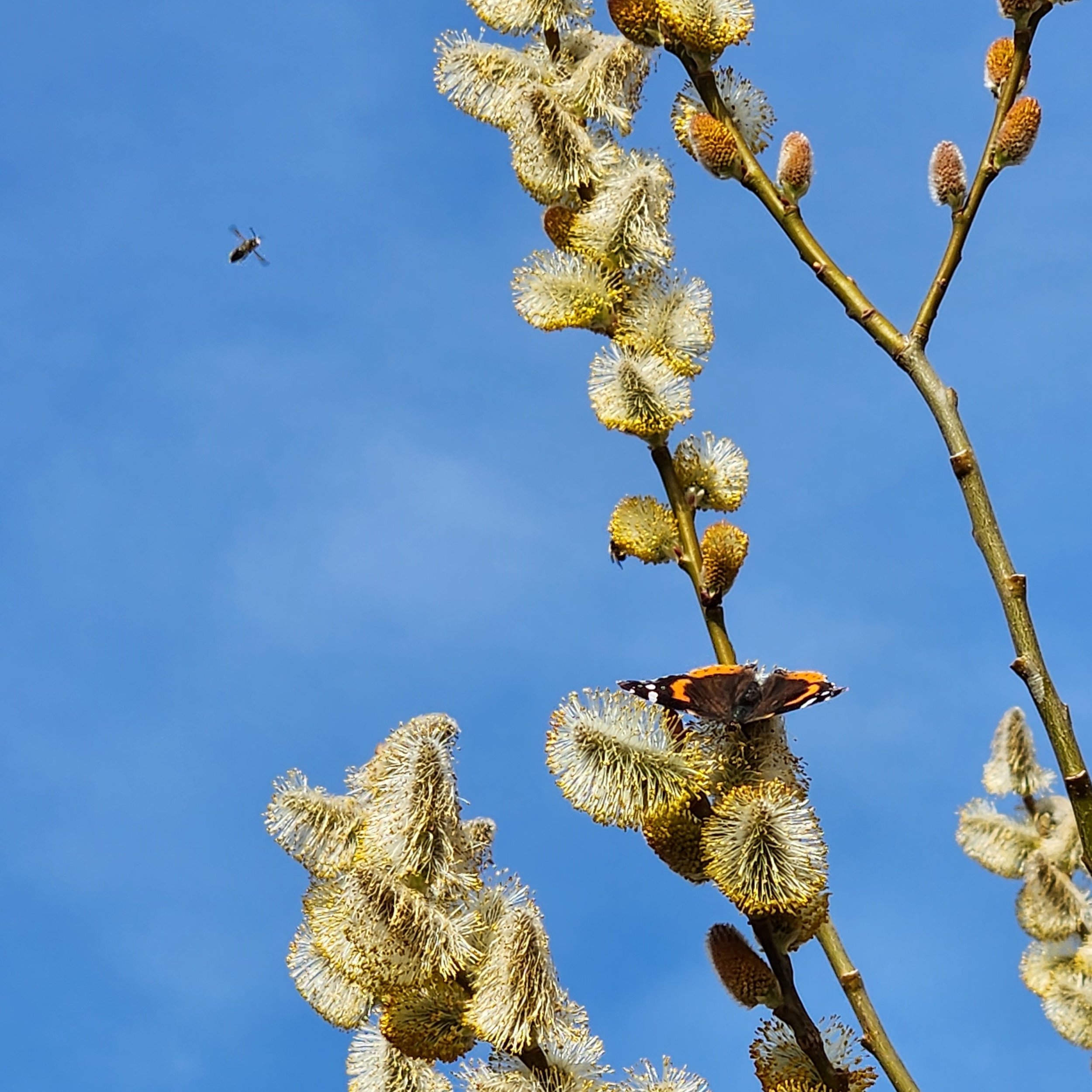
Attracts native bees, honey bees, wasps, butterflies and hummingbirds. It is the host plant for some of the largest moths including the sphinx moth.
Cephalanthus occidentalis, Button Bush, Shrub.
FS-PS, Zone 4, 12’ x 3-4’, blooms June-August, wet to medium, deer and rabbit resistant.
Keystone Species - It is the larval-host plant for 21 species of moths including two large moths - the Titan Sphinx and Hydrangea Sphinx moth. Buttonbush supports the entire life cycle of native insects by feeding their larvae. Buttonbush blooms in mid-to-late summer, often when few other shrubs are in flower, providing a vital, high-quality, and abundant nectar and pollen source for bees (including bumblebees, honeybees, and specialized native bees), butterflies, and hummingbirds. The seeds (nutlets) produced in the fall persist into the winter, offering crucial nourishment to at least 24 species of birds.
Buttonbush has one of the most unique flowers of any shrub, and butterflies think so too. Skippers, monarchs, and virtually any butterflies that happen to be passing by love the white flowers. In addition to its appeal for butterflies, buttonbush also serves as a host plant for some of our largest and showiest moths including the titan sphinx and the hydrangea sphinx. Bees also love buttonbush, giving it the second nickname “honeyball.” This nickname started in the early 1700s when it was introduced commercially by beekeepers.
Considering the showy blooms, glossy green leaves, fall color, and red “buttons,” buttonbush is a 4-season beauty. It can tolerate shade and a variety of soils, and is the perfect plant for rain gardens because it thrives in wet spots and flooded areas. For a shrub that has a very long bloom and nectar-providing period, you’d be hard pressed to find a more valuable or versatile native shrub for your wildlife garden.
Buttonbush is a fast-growing, short-lived shrub. It spreads to form thickets by suckering, which results in individual plants arising from its roots. Can be cut back to control growth. It emerges later than other native shrubs.
Attracts native bees, honey bees, wasps, butterflies and hummingbirds. It is the host plant for some of the largest moths including the sphinx moth.
 Image 1 of 17
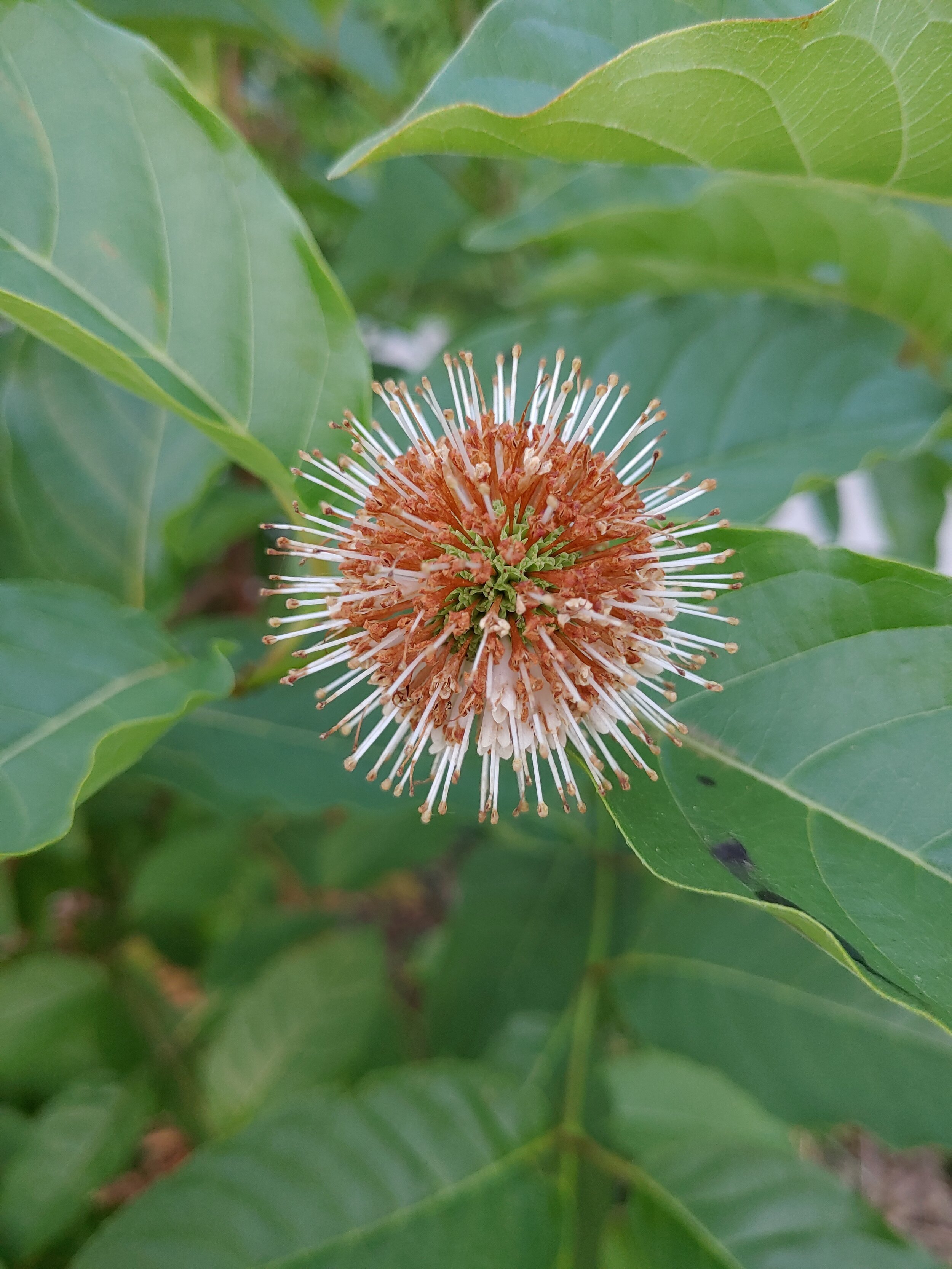 Image 2 of 17
 Image 3 of 17
 Image 4 of 17
 Image 5 of 17
 Image 6 of 17
 Image 7 of 17
 Image 8 of 17
 Image 9 of 17
 Image 10 of 17
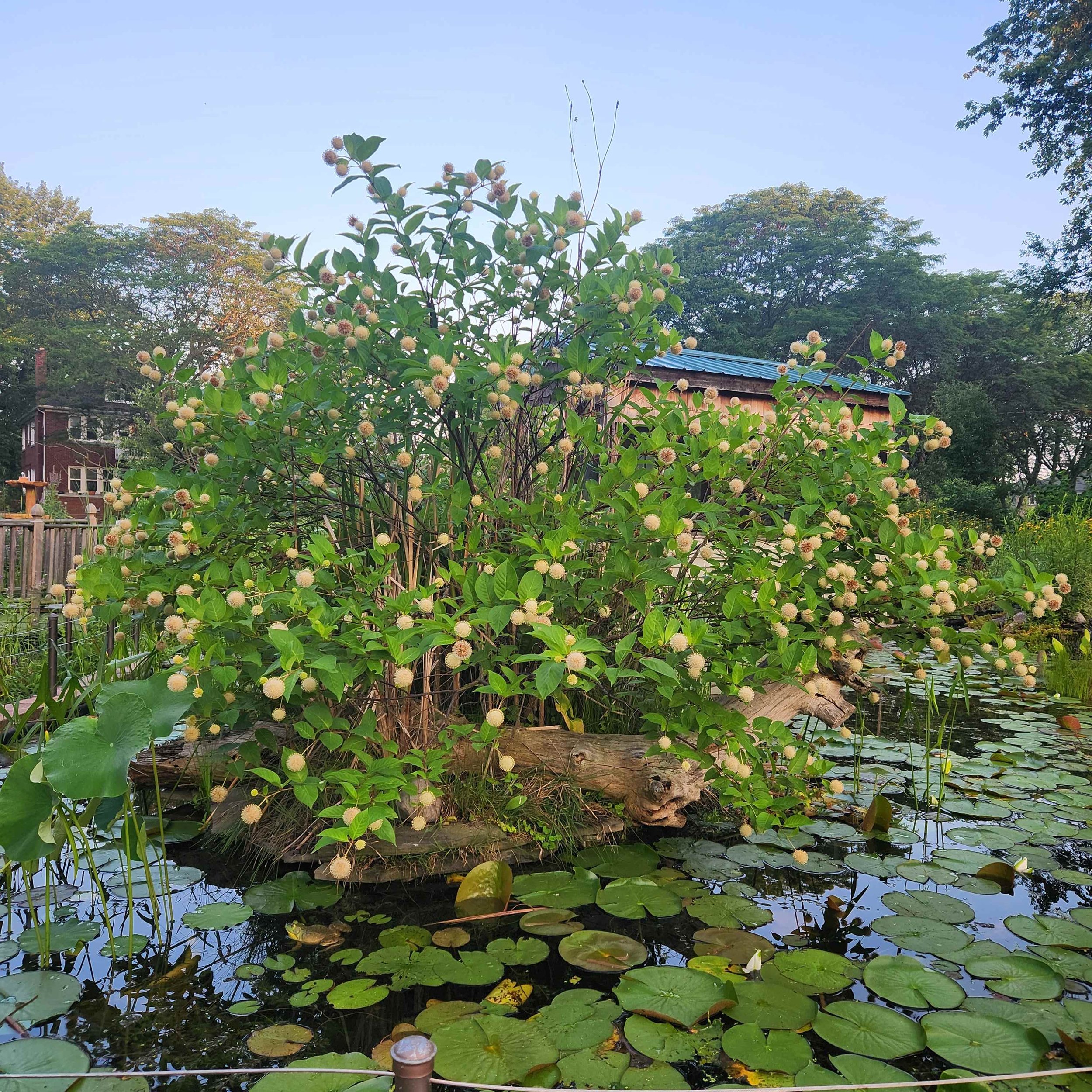 Image 11 of 17
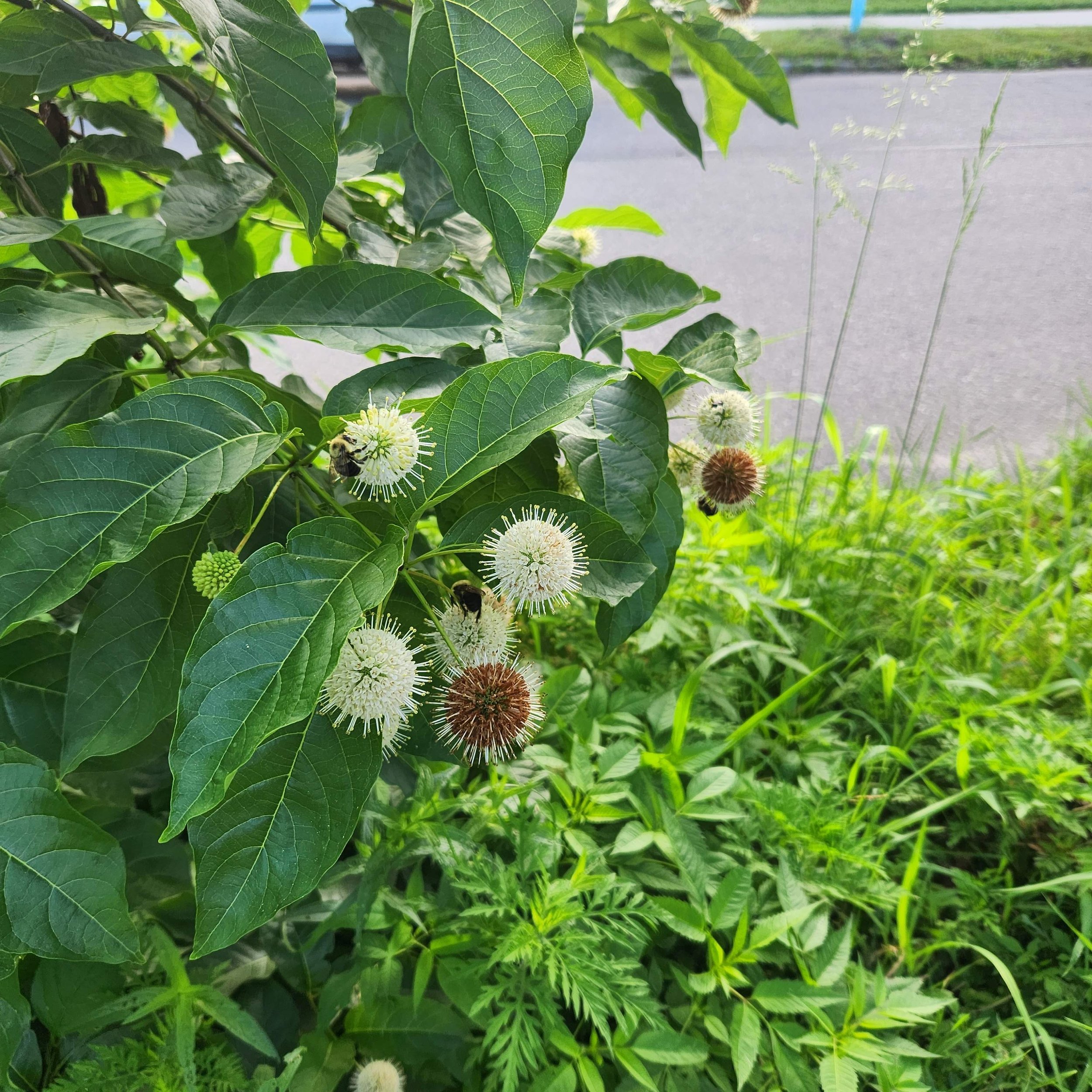 Image 12 of 17
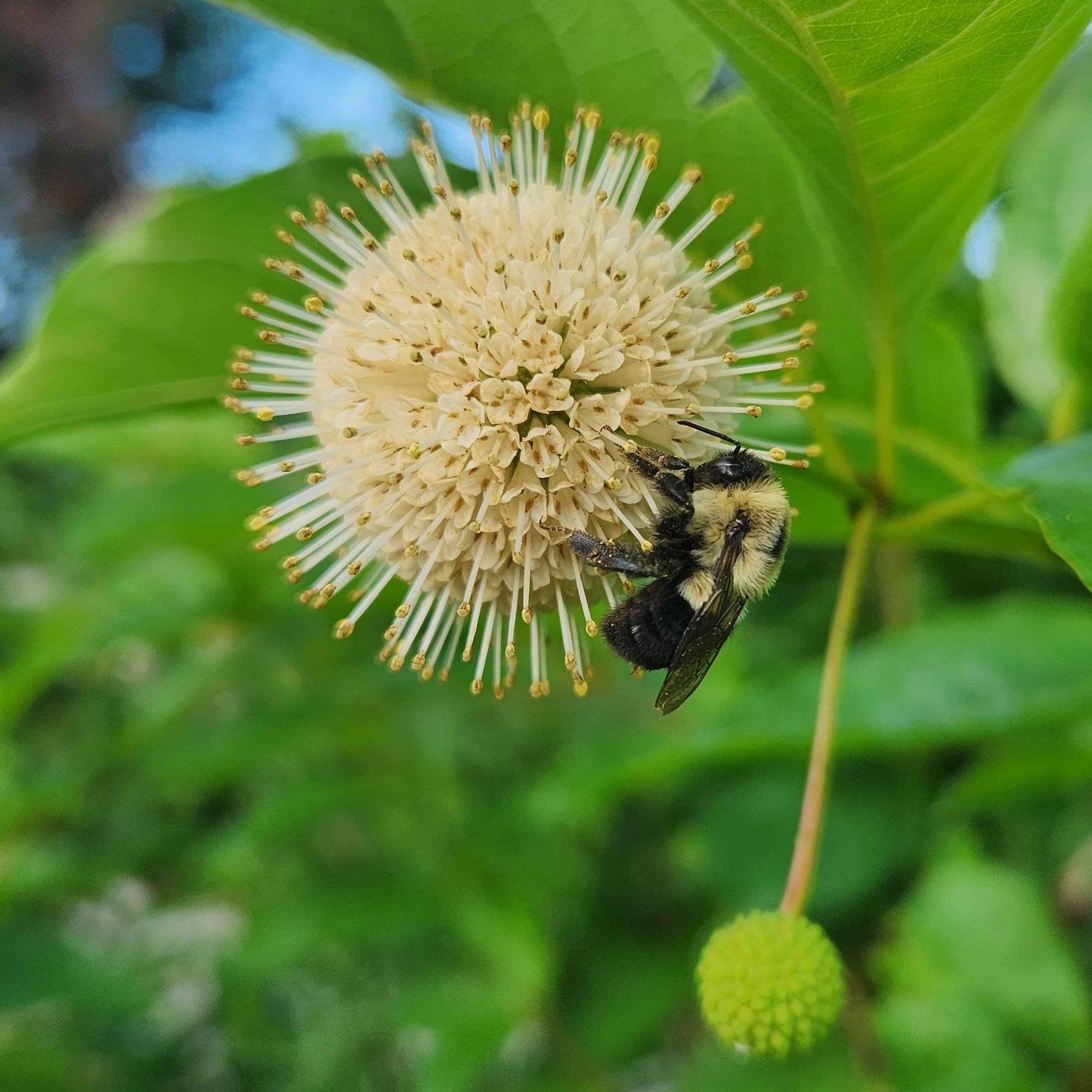 Image 13 of 17
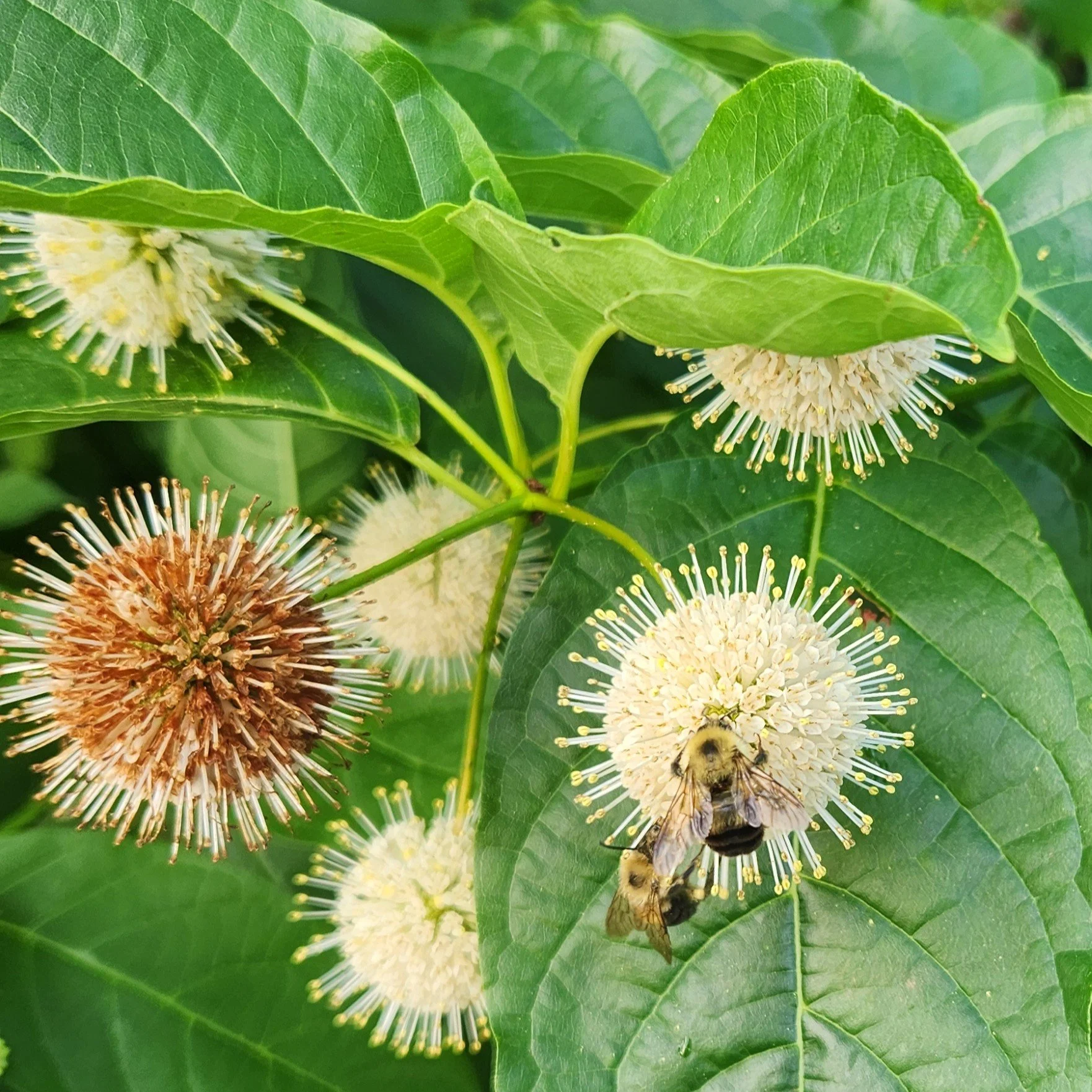 Image 14 of 17
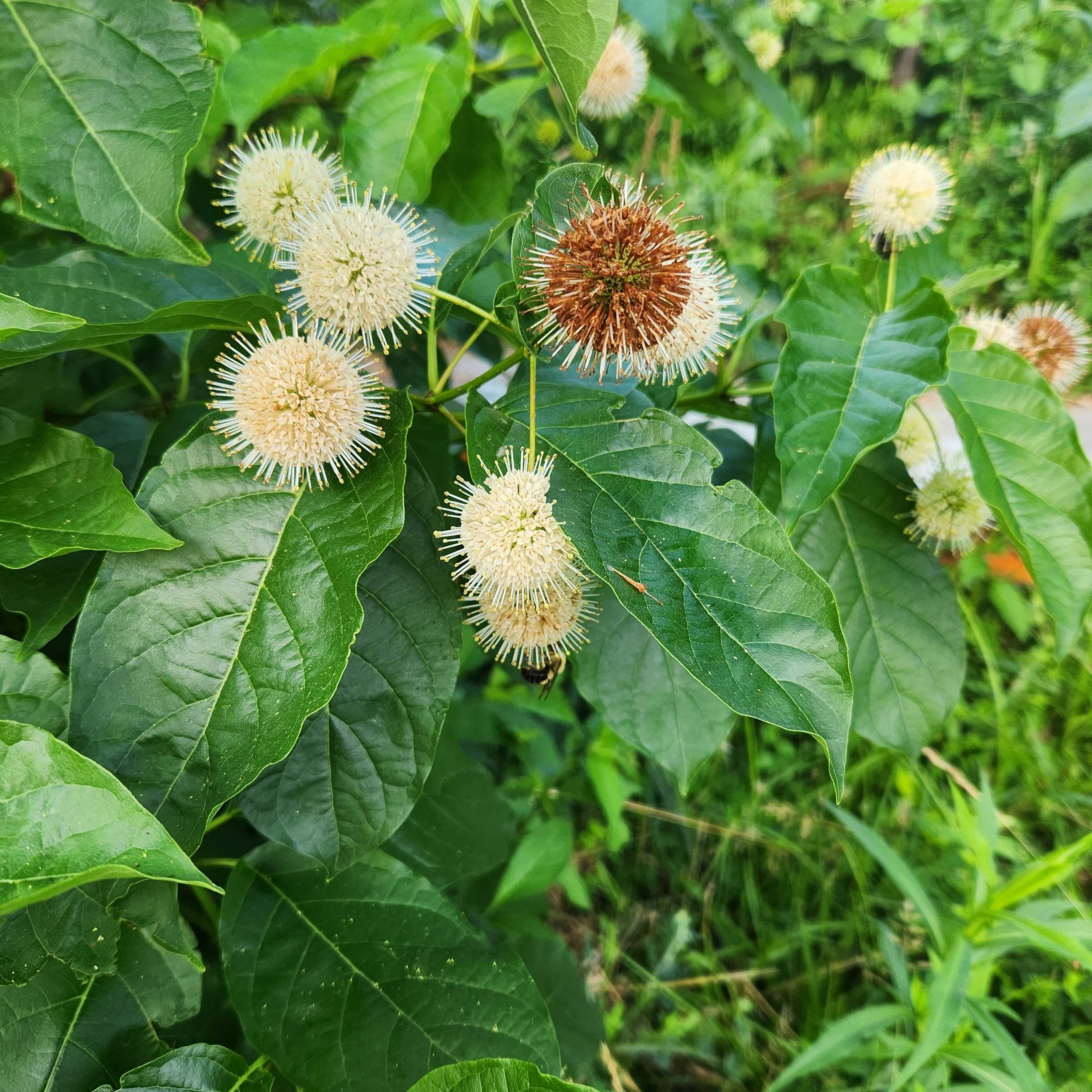 Image 15 of 17
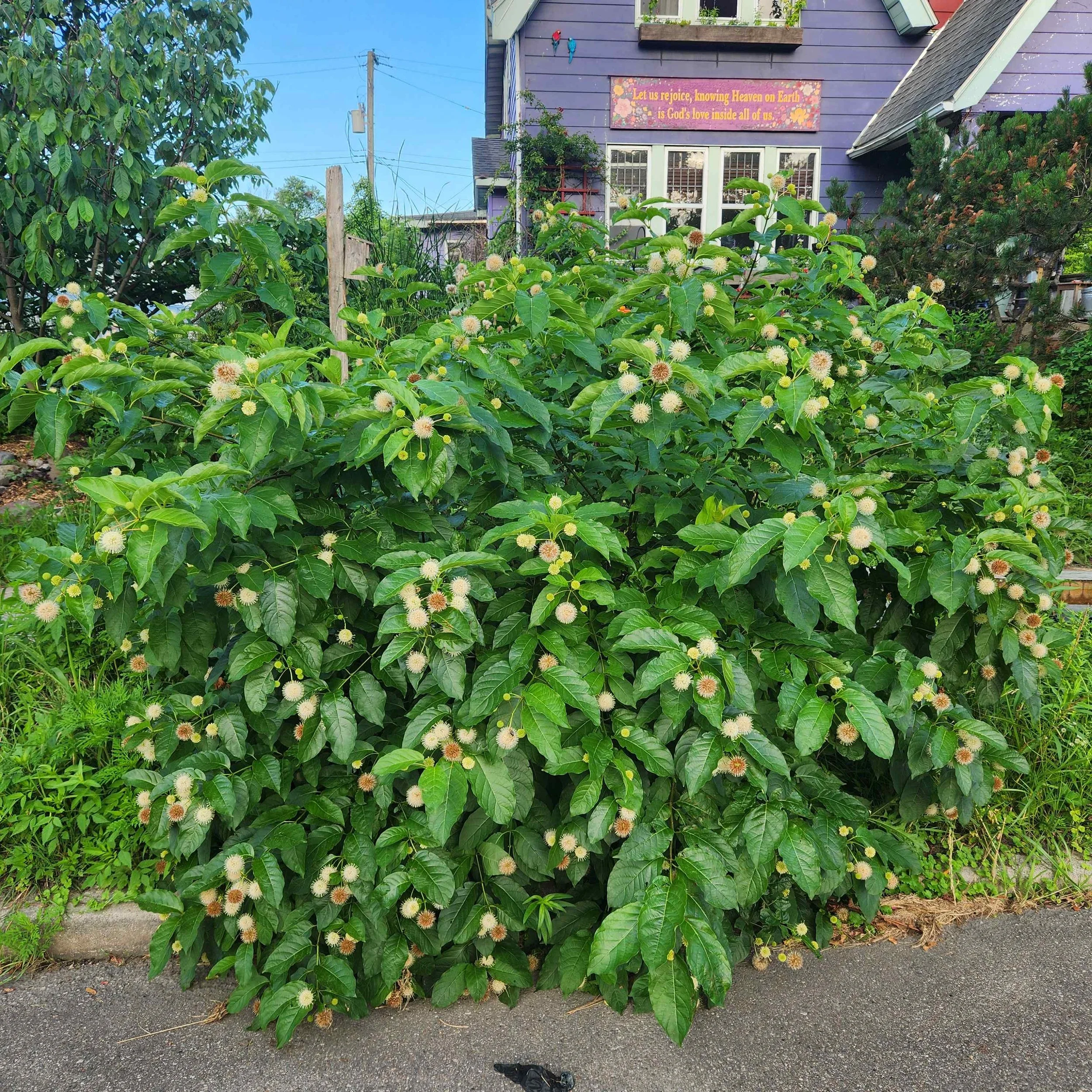 Image 16 of 17
 Image 17 of 17