 Image 1 of 3
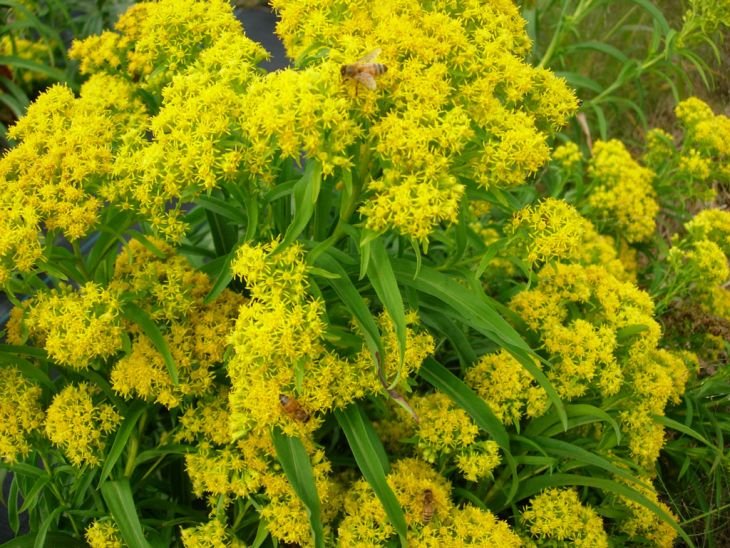 Image 2 of 3
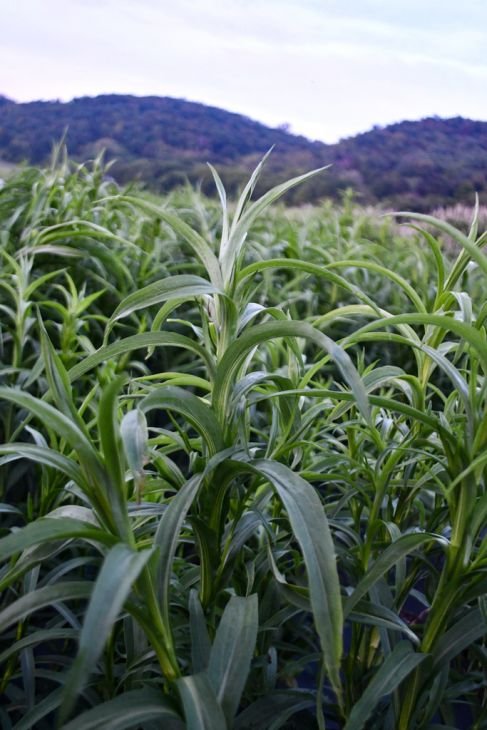 Image 3 of 3
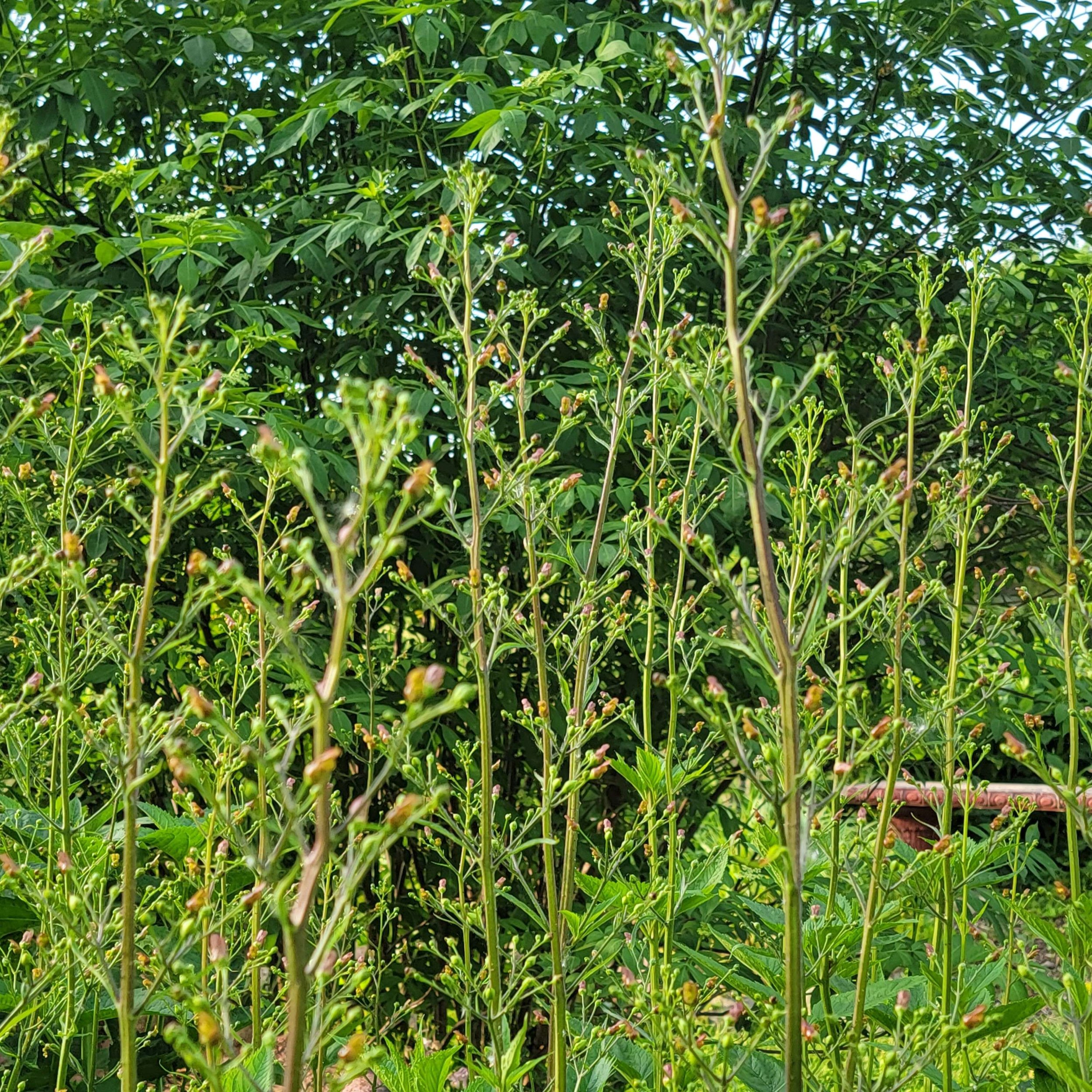
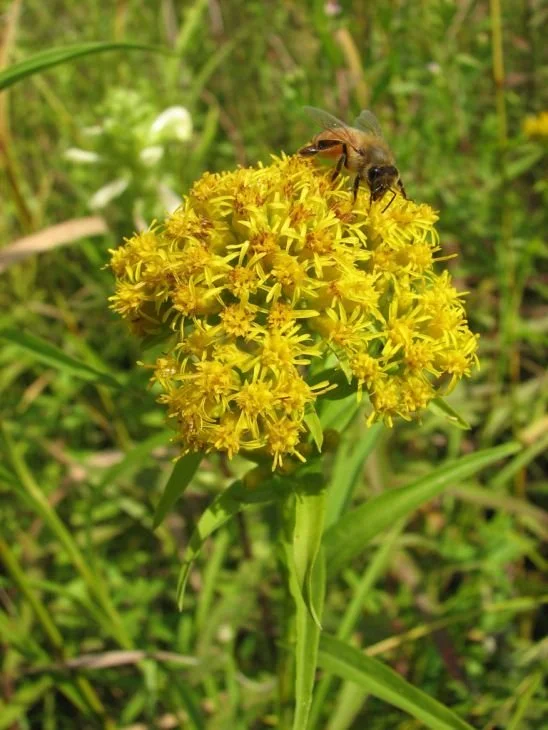
Solidago riddellii, Riddell's Goldenrod
FS, Zone 3, Blooms Aug-Oct, 3’ x 2’, wet to medium, deer resistant
Keystone Species - Goldenrods are among the top-ranked plants for supporting biodiversity. Goldenrod is the number one keystone perennial in Michigan. Goldenrod in general for our region supports 135 species of moths and butterflies. These caterpillars are a vital protein source for baby birds. It supports approximately 42 species of pollen specialist bees that rely exclusively on goldenrods for their diet. It blooms from late summer into autumn, providing a "pollinator powerhouse" of nectar and pollen when most other plants have finished blooming. It is an essential energy source for migrating Monarch butterflies, helping them fuel their journey south. In the winter, its seeds feed birds like finches, and its standing stems provide shelter for overwintering insects. This particular variety is highly adaptable and thrives in moist soils, making it excellent for rain gardens or shoreline stabilization.
Does best in damp conditions, but will adjust to medium moisture levels. May do well in gritty soil and can tolerate muck. Keep watered well until the plant is established or in drought situations. If the plant does not receive adequate moisture it may result in a shorter plant. Unlike other Goldenroda, Riddell's Goldenrod is a specialized that thrives in moist garden sites with mucky, clay, or loamy soil and full sun.
Solidago riddellii is highly attractive to native bees, including specialist bees that rely solely on goldenrod pollen. This includes Mining, Polyester and Long-horned bees. It is a host plant for over 100 species of moths and the Bronze Copper Butterfly. ts seed heads remain available through winter, serving as a primary food source for songbirds like Goldfinches and Chickadees.
Solidago riddellii, Riddell's Goldenrod
FS, Zone 3, Blooms Aug-Oct, 3’ x 2’, wet to medium, deer resistant
Keystone Species - Goldenrods are among the top-ranked plants for supporting biodiversity. Goldenrod is the number one keystone perennial in Michigan. Goldenrod in general for our region supports 135 species of moths and butterflies. These caterpillars are a vital protein source for baby birds. It supports approximately 42 species of pollen specialist bees that rely exclusively on goldenrods for their diet. It blooms from late summer into autumn, providing a "pollinator powerhouse" of nectar and pollen when most other plants have finished blooming. It is an essential energy source for migrating Monarch butterflies, helping them fuel their journey south. In the winter, its seeds feed birds like finches, and its standing stems provide shelter for overwintering insects. This particular variety is highly adaptable and thrives in moist soils, making it excellent for rain gardens or shoreline stabilization.
Does best in damp conditions, but will adjust to medium moisture levels. May do well in gritty soil and can tolerate muck. Keep watered well until the plant is established or in drought situations. If the plant does not receive adequate moisture it may result in a shorter plant. Unlike other Goldenroda, Riddell's Goldenrod is a specialized that thrives in moist garden sites with mucky, clay, or loamy soil and full sun.
Solidago riddellii is highly attractive to native bees, including specialist bees that rely solely on goldenrod pollen. This includes Mining, Polyester and Long-horned bees. It is a host plant for over 100 species of moths and the Bronze Copper Butterfly. ts seed heads remain available through winter, serving as a primary food source for songbirds like Goldfinches and Chickadees.