 Image 1 of 3
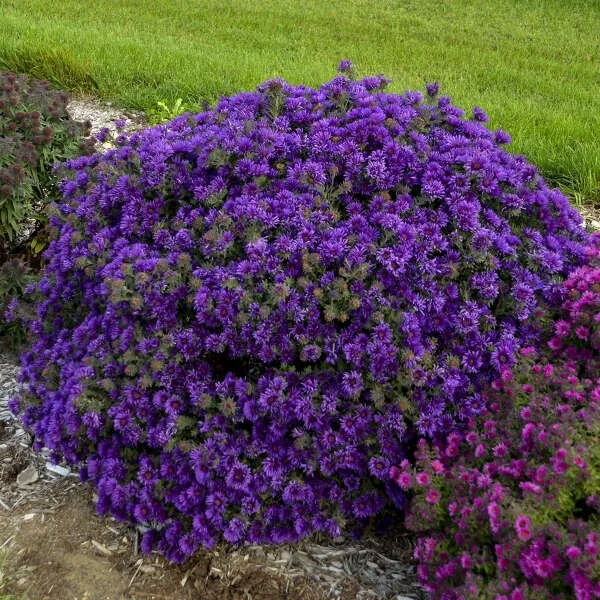 Image 2 of 3
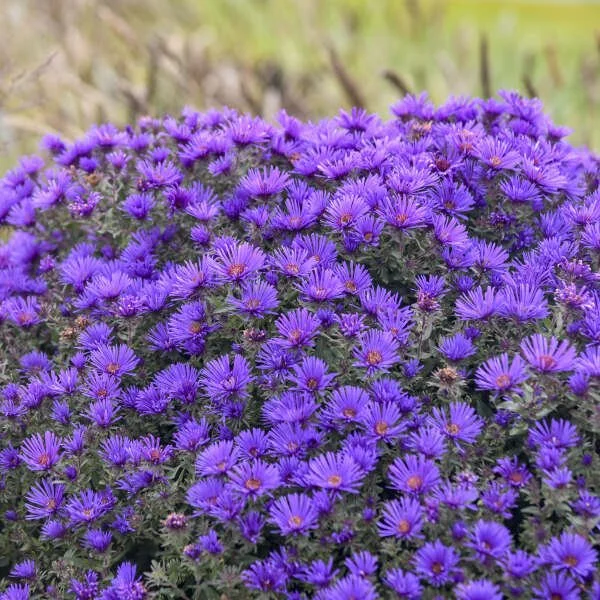 Image 3 of 3
Aster novae-angliae 'Grape Crush', New England Aster
FS, Zone 3, blooms Sept-Oct., 2.5’ x 3.5’, average moisture, deer resistant
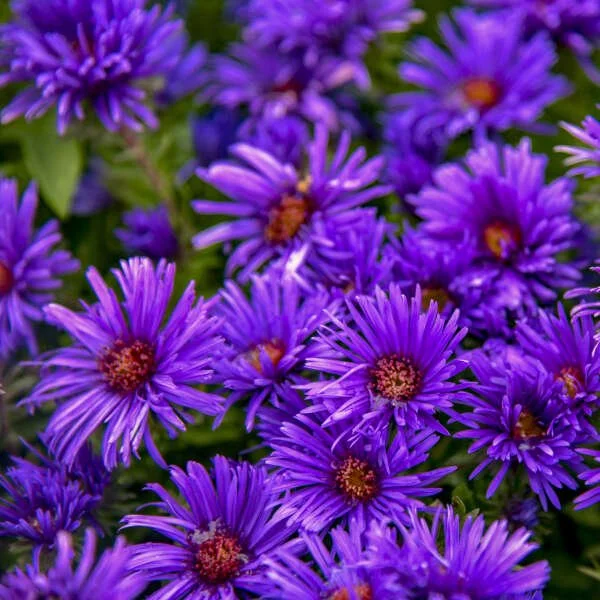
This is a navitar, a cultivated variety of Aster novae-angliiae. Bred for its mounded shape, purple flowers and resistance to powdery mildew.
Keystone Species - Asters are the number 2 keystone perennial in our region. In general they can support 112 species of caterpillars as host plant and more than 30 species of Specialist Bees rely on the pollen Asters produce. They have late season nectar crucial to native pollinators. By hosting a high diversity of caterpillars, it provides the essential protein source needed by 96% of terrestrial birds to raise their young. Because it supports so many insects (the primary food source for 96% of terrestrial birds), its removal can cause the local food web to collapse.
Bred by Walter’s Gardens in Zeeland MI and introduced in 2022, this aster will provide a massive color and pollinator statement for a 2 month period. Forms a perfect mound that is covered in grape hued blooms with yellow centers. As blooms are pollinated the centers turn dark pink.
During extensive testing Grape Crush exhibited high structural integrity and strong standability, even under environmental stress. Plants maintained upright, well-branched growth habits even with intensive conditions.
These plants will be grown from large bare roots and will produce a full size plant by seasons end. Photos are from Walters Gardens.
DA Planting Notes - Customers may wonder why we would add this plant, heres why. A few years ago a local nursery donated all of their remining native plant stock at seasons end. One of the plants was a NE Aster navitar called Bluebird. While we have always loved NE Aster pure natives, this plant wowed us. It is always the last plant in bloom and covered in many bees and butterflies. We were unable to source Bluebird, our research indicates Grape Crush will do the same.
Aster novae-angliae 'Grape Crush', New England Aster
FS, Zone 3, blooms Sept-Oct., 2.5’ x 3.5’, average moisture, deer resistant
This is a navitar, a cultivated variety of Aster novae-angliiae. Bred for its mounded shape, purple flowers and resistance to powdery mildew.
Keystone Species - Asters are the number 2 keystone perennial in our region. In general they can support 112 species of caterpillars as host plant and more than 30 species of Specialist Bees rely on the pollen Asters produce. They have late season nectar crucial to native pollinators. By hosting a high diversity of caterpillars, it provides the essential protein source needed by 96% of terrestrial birds to raise their young. Because it supports so many insects (the primary food source for 96% of terrestrial birds), its removal can cause the local food web to collapse.
Bred by Walter’s Gardens in Zeeland MI and introduced in 2022, this aster will provide a massive color and pollinator statement for a 2 month period. Forms a perfect mound that is covered in grape hued blooms with yellow centers. As blooms are pollinated the centers turn dark pink.
During extensive testing Grape Crush exhibited high structural integrity and strong standability, even under environmental stress. Plants maintained upright, well-branched growth habits even with intensive conditions.
These plants will be grown from large bare roots and will produce a full size plant by seasons end. Photos are from Walters Gardens.
DA Planting Notes - Customers may wonder why we would add this plant, heres why. A few years ago a local nursery donated all of their remining native plant stock at seasons end. One of the plants was a NE Aster navitar called Bluebird. While we have always loved NE Aster pure natives, this plant wowed us. It is always the last plant in bloom and covered in many bees and butterflies. We were unable to source Bluebird, our research indicates Grape Crush will do the same.