Aquilegia canadensis, Wild Columbine, Quart pot
FS -Shade, Zone 3, blooms April to June, 2’ x 2’, deer resistant
Wild Columbine is one of the first plants in the early spring to provide much-needed nectar. By nature’s arrangement, their bloom time coincides with the northern arrival of the Ruby Throated Hummingbird.
It is also an “easy to grow” plant that tolerates most soil conditions and full shade. Their only pest is the Columbine Sawfly, an introduced pest. The sawfly’s typically come in May and can be easily controlled by picking them off. We’ve grown healthy Columbines for many years. Only once, sawflies ate the leaves of our european columbines right down to their tiny ribs, before we could pick them off. Fortunately, the plants recuperated and came back the next year stronger then ever. We have not had sawflies on our native columbine.
Besides being the host plant for the Columbine DuskywingButterfly(part of the skipper butterfly family) this plant attracts a number of bees. The nectar is produced and accessed through the flower’s spurs. This requires a pollinator that has a long tongue such as our native bumble bees. Some Carpenter bees (they resemble bumble bees minus the furry bottoms) have adapted to nectar rob and bypass the flowers complex structure. They make a slit in the back of the nectar tube bypassing pollination. We have seen this on other flowers in the garden like native delphiniums and black and blue salvia.
Wild Columbine provides critical early-season pollen for generalist-specialist bridge species. There are at least 4 native bee species identified to date - bumble, sweat, mining and mason bees.
Aquilegia canadensis, Wild Columbine, Quart pot
FS -Shade, Zone 3, blooms April to June, 2’ x 2’, deer resistant
Wild Columbine is one of the first plants in the early spring to provide much-needed nectar. By nature’s arrangement, their bloom time coincides with the northern arrival of the Ruby Throated Hummingbird.
It is also an “easy to grow” plant that tolerates most soil conditions and full shade. Their only pest is the Columbine Sawfly, an introduced pest. The sawfly’s typically come in May and can be easily controlled by picking them off. We’ve grown healthy Columbines for many years. Only once, sawflies ate the leaves of our european columbines right down to their tiny ribs, before we could pick them off. Fortunately, the plants recuperated and came back the next year stronger then ever. We have not had sawflies on our native columbine.
Besides being the host plant for the Columbine DuskywingButterfly(part of the skipper butterfly family) this plant attracts a number of bees. The nectar is produced and accessed through the flower’s spurs. This requires a pollinator that has a long tongue such as our native bumble bees. Some Carpenter bees (they resemble bumble bees minus the furry bottoms) have adapted to nectar rob and bypass the flowers complex structure. They make a slit in the back of the nectar tube bypassing pollination. We have seen this on other flowers in the garden like native delphiniums and black and blue salvia.
Wild Columbine provides critical early-season pollen for generalist-specialist bridge species. There are at least 4 native bee species identified to date - bumble, sweat, mining and mason bees.
 Image 1 of 8
 Image 2 of 8
 Image 3 of 8
 Image 4 of 8
 Image 5 of 8
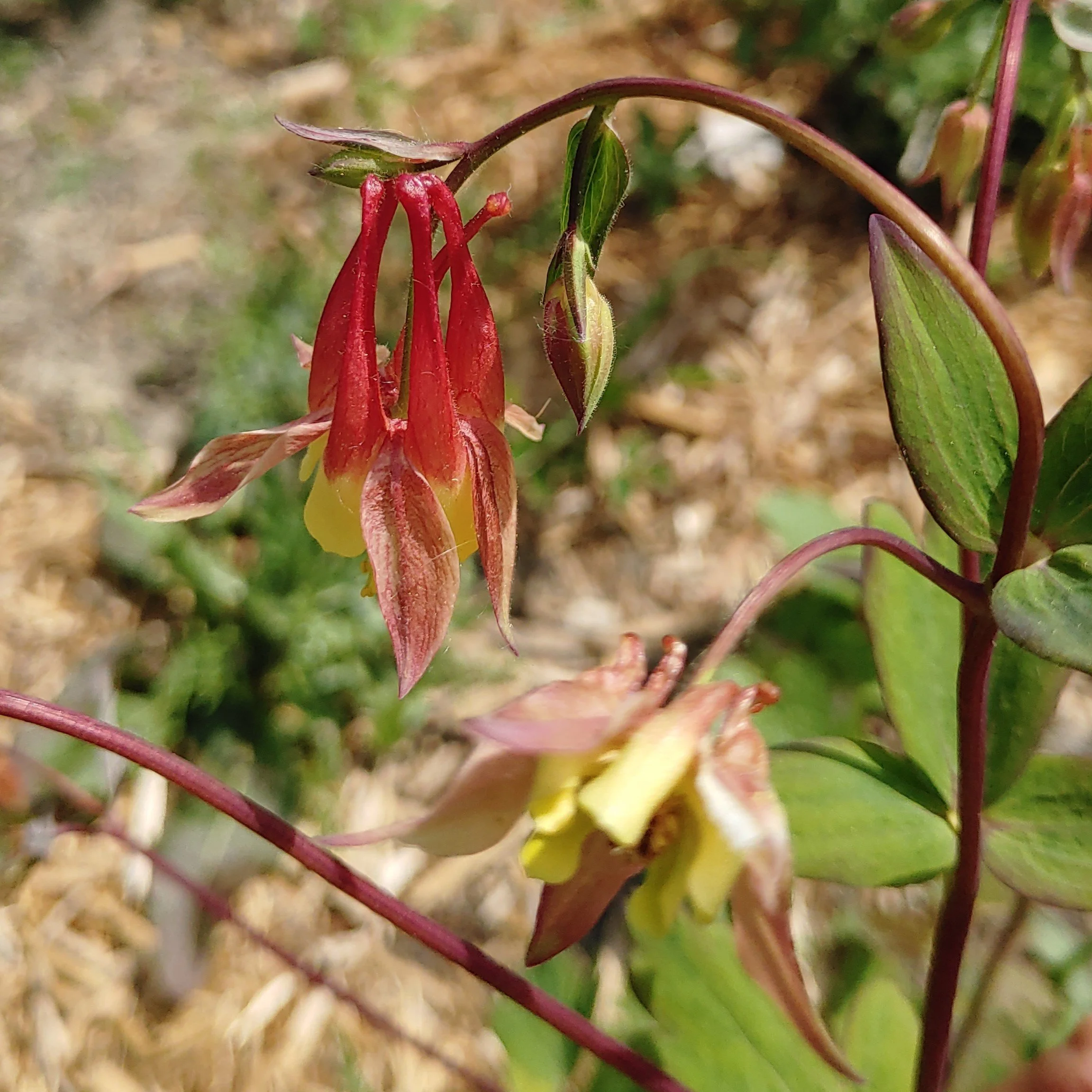 Image 6 of 8
 Image 7 of 8
 Image 8 of 8