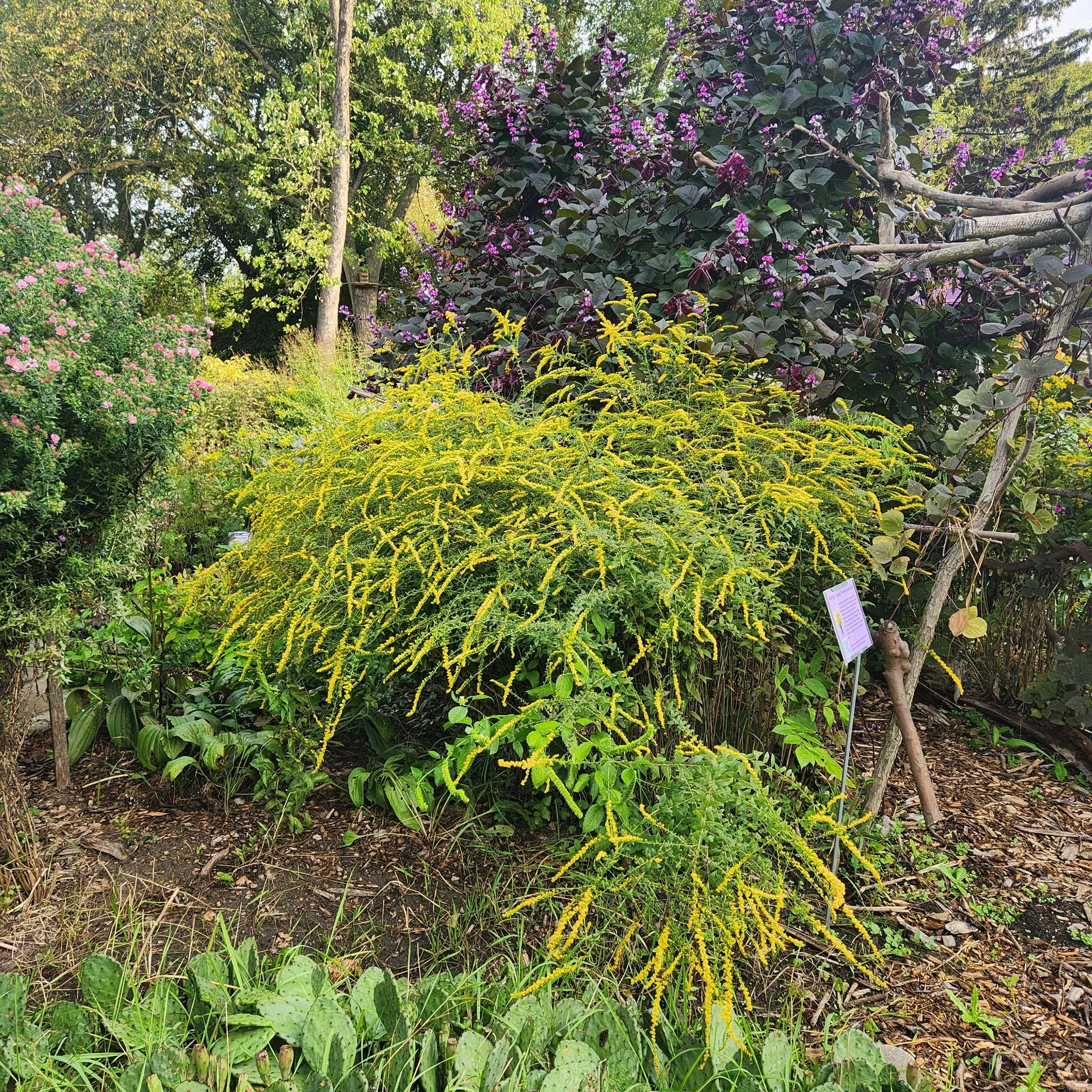
Agastache foeniculum, Anise Hyssop
Wild Type Nursery no longer starts this plant. We will source from Prairie Moon again in 2026.
FS-PS, Hardy to Zone 3. Blooms June - September, 2’ - 4’ x 2-2.5’ Drought, rabbit and deer resistant.
This beautiful plant is one of the reasons we were drawn to natives, having grown Anise Hyssop for over nine years. It’s always a delight to rub the leaves to get a magnificent scent of licorice and to observe the many insects that this plant attracts.
During their first season they usually bloom, growing to around 2-3’ tall. The second year they can reach around 4’ tall and become 3’ wide. Agastaches like full sun and don’t need to be deadheaded! The same blooms can remain on the plant over the entire blooming season as each tiny flower opens one at a time. This is true of all Agastaches! They form a nice vase-like shape and are not aggressive at all.
Plant them in a drift to promote floral constancy or floral fidelity. Bee’s look for stands of plants On a foraging trip, they look for a single plant species to nectar from. Otherwise, they expend more energy in foraging. If you can, always plant more than one.
Let them stand-as-is during the winter to add interest to the garden, provide food for song birds, and to provide an overwintering spot for beneficial insects. In mid-spring you can cut them back to 6 inches.
Attracts a wide variety of bees, butterflies including the Great Spangled Fritilary and Skippers, and the Ruby Throated Hummingbird. It is a host plant for the Common Buckeye and the American Lady, moth species. Anise Hyssop also supports specialist bee Beebalm Shortface.
Agastache foeniculum, Anise Hyssop
Wild Type Nursery no longer starts this plant. We will source from Prairie Moon again in 2026.
FS-PS, Hardy to Zone 3. Blooms June - September, 2’ - 4’ x 2-2.5’ Drought, rabbit and deer resistant.
This beautiful plant is one of the reasons we were drawn to natives, having grown Anise Hyssop for over nine years. It’s always a delight to rub the leaves to get a magnificent scent of licorice and to observe the many insects that this plant attracts.
During their first season they usually bloom, growing to around 2-3’ tall. The second year they can reach around 4’ tall and become 3’ wide. Agastaches like full sun and don’t need to be deadheaded! The same blooms can remain on the plant over the entire blooming season as each tiny flower opens one at a time. This is true of all Agastaches! They form a nice vase-like shape and are not aggressive at all.
Plant them in a drift to promote floral constancy or floral fidelity. Bee’s look for stands of plants On a foraging trip, they look for a single plant species to nectar from. Otherwise, they expend more energy in foraging. If you can, always plant more than one.
Let them stand-as-is during the winter to add interest to the garden, provide food for song birds, and to provide an overwintering spot for beneficial insects. In mid-spring you can cut them back to 6 inches.
Attracts a wide variety of bees, butterflies including the Great Spangled Fritilary and Skippers, and the Ruby Throated Hummingbird. It is a host plant for the Common Buckeye and the American Lady, moth species. Anise Hyssop also supports specialist bee Beebalm Shortface.
 Image 1 of 7
 Image 2 of 7
 Image 3 of 7
 Image 4 of 7
 Image 5 of 7
 Image 6 of 7
 Image 7 of 7