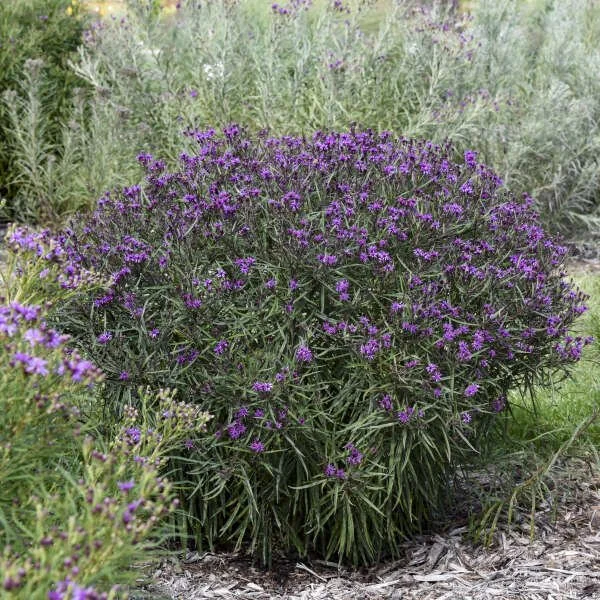
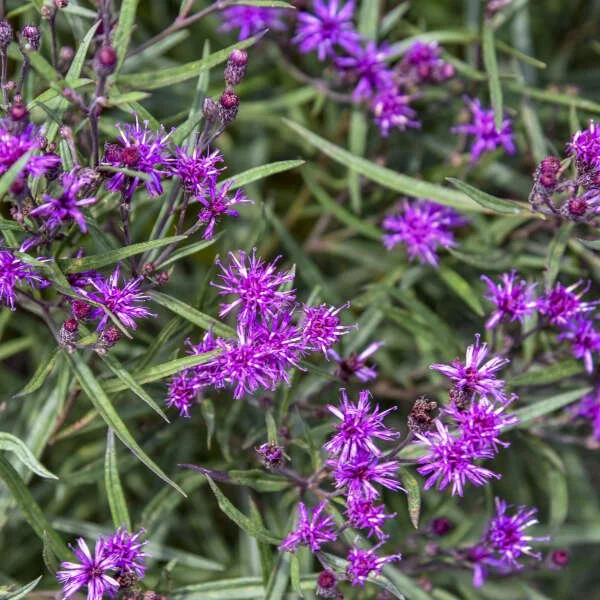
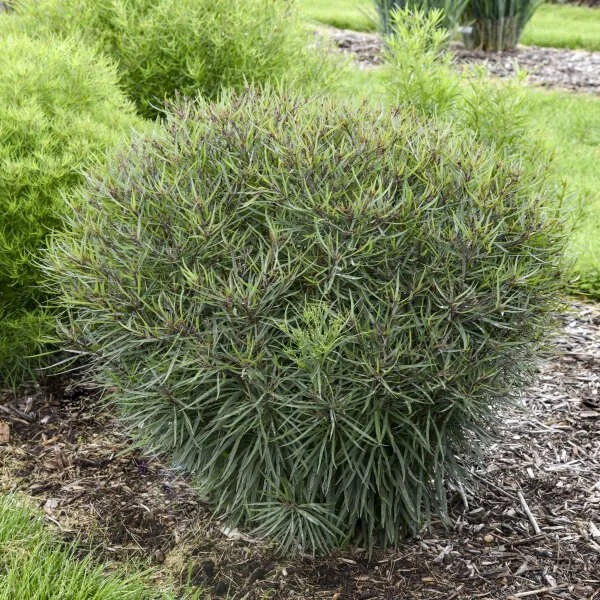
Anemone virginiana, Tall Thimbleweed, Quart pot
FS - Shade, Zone 3, Blooms June - August, 3’ x 1.5-2’, Moisture Medium-dry - Dry, Deer resistant
Tall Thimbleweed is in the Ranunculus family and is a charming addition to any garden with its long-lasting, off-white flowers. Much like other anemones, what may appear to be petals are actually beautifully colored sepals. As the season progresses, towards winter the thimble-like oviod seed heads become ornamental, transforming into fluffy structures as they disperse their seeds. This unique quality makes Tall Thimbleweed a captivating multi-season plant, adding to the intrigue of open woods, naturalized gardens, rock gardens and clearings.
The plant spreads by rhizomes, but not aggressively. The stems produce a sap which causes blistering when deer or rabbitts try to ingest it! If you have sensitive skin, consider wearing gloves. It is drought tolerant and can withstand clayish soil.
Easy to propagate by Winter Sowing. Simply spread the seeds around in the fall, slightly buried. The stratification requirement will naturally occur. Thimbleweed contains protoanemonin, an acrid blistering agent that makes the leaves bitter and irritating to the mouth. This chemical defense makes the plant highly resistant to browsing by deer and rabbits.
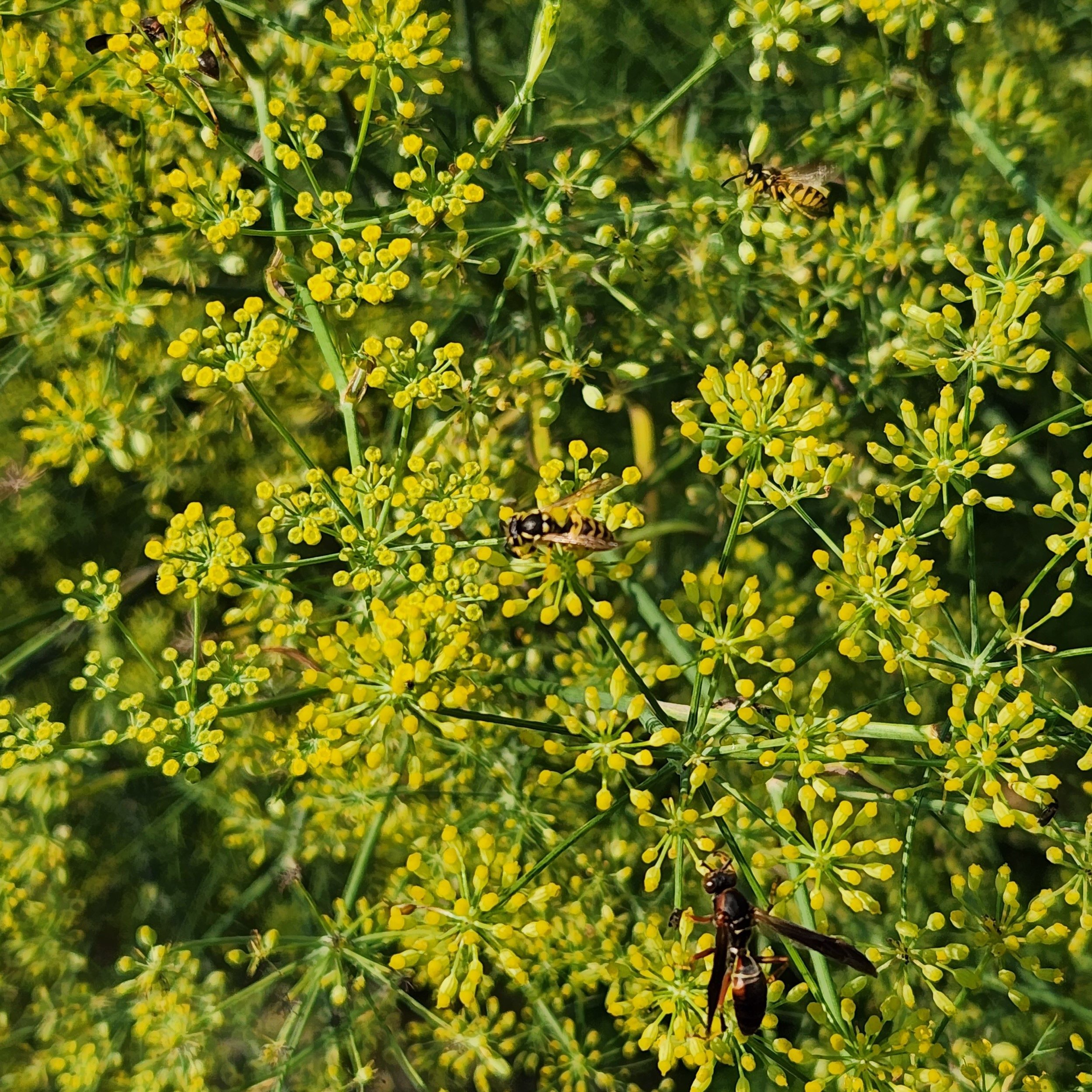
Small native bees, such as Halictid bees and Plasterer bees, along with flower flies (hoverflies), visit the flowers primarily for pollen.
Thimbleweed is the host plant for several moths, including the Veiled Ear Moth and One-lined Sparganothis.
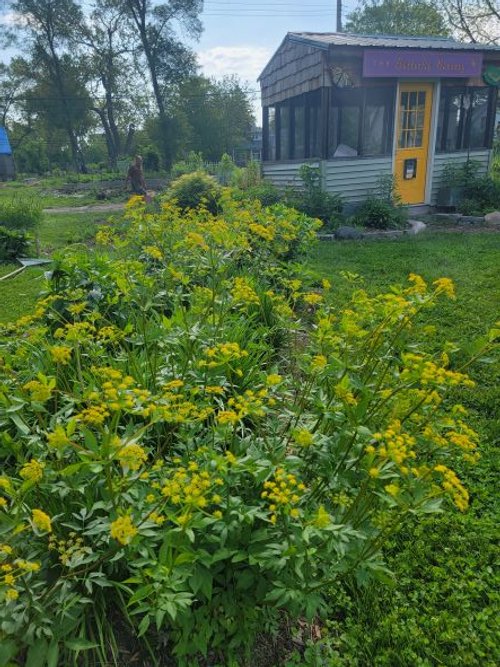
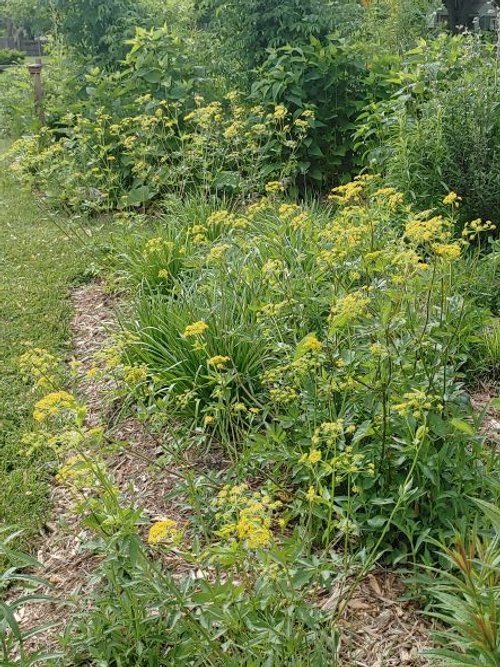
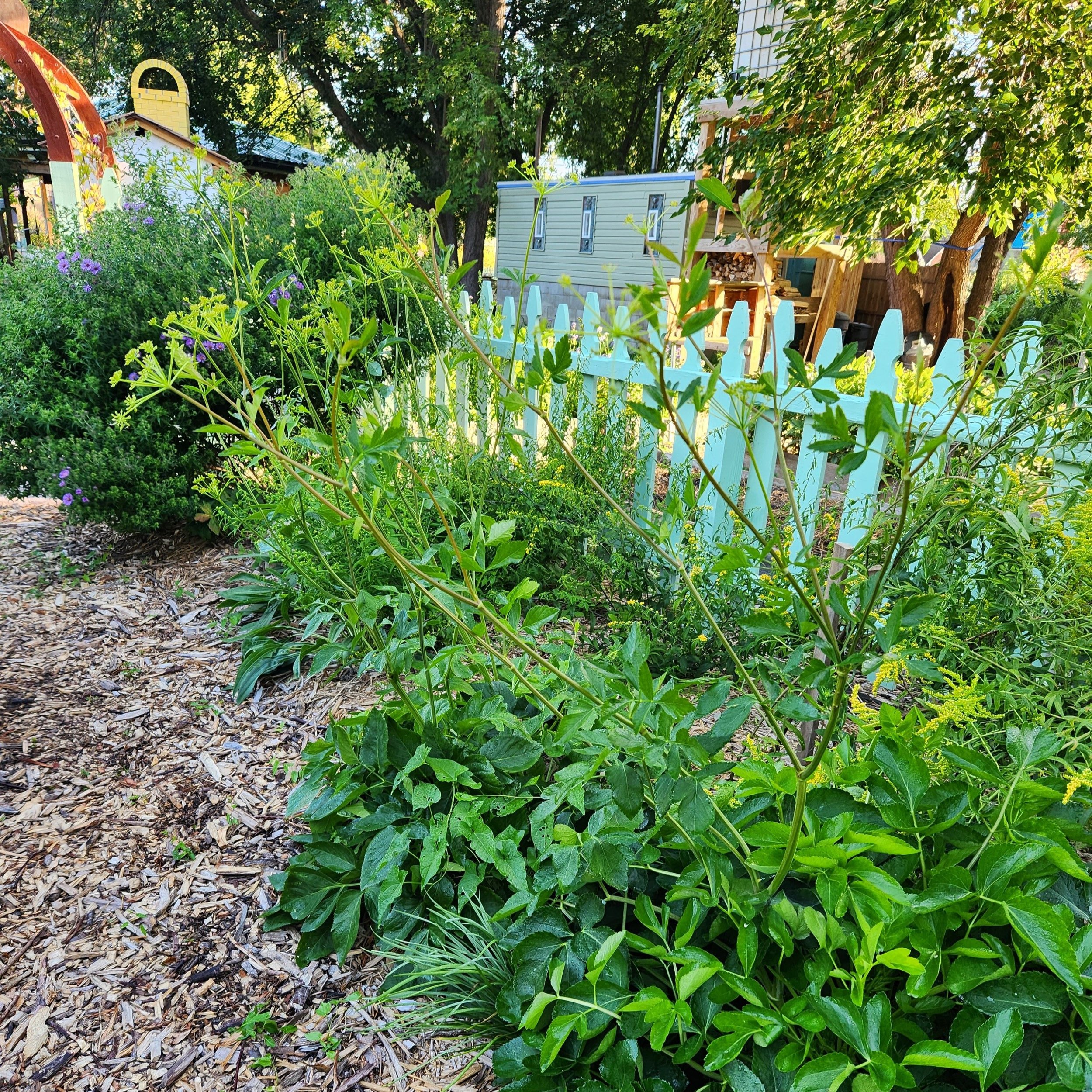
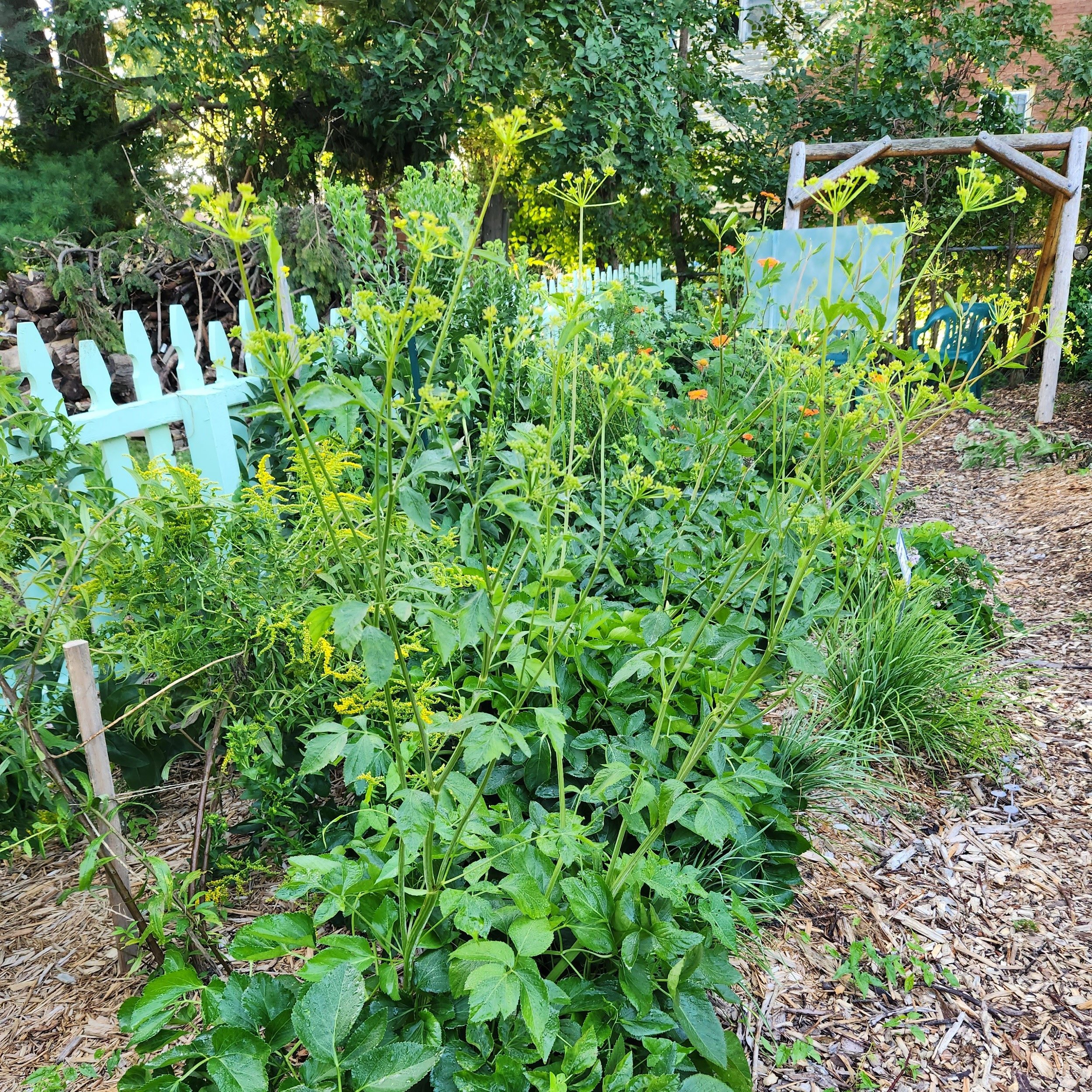
DA Plant Notes - One of the things we noticed in 2025 was that the plant stands straight and the stems branch about 3/4’s of the way towards the top where the plant produces 3 or 4 shoots of small flowers. Once the blooms fade the thimble shaped seed head is formed. The archenes which are single seeded dry fruits develops a cottony mass. This helps in seed dispersal. We also noted bird activity at that time. Once the cottony substance was gone, we used the seed heads in bouquets!
Anemone virginiana, Tall Thimbleweed, Quart pot
FS - Shade, Zone 3, Blooms June - August, 3’ x 1.5-2’, Moisture Medium-dry - Dry, Deer resistant
Tall Thimbleweed is in the Ranunculus family and is a charming addition to any garden with its long-lasting, off-white flowers. Much like other anemones, what may appear to be petals are actually beautifully colored sepals. As the season progresses, towards winter the thimble-like oviod seed heads become ornamental, transforming into fluffy structures as they disperse their seeds. This unique quality makes Tall Thimbleweed a captivating multi-season plant, adding to the intrigue of open woods, naturalized gardens, rock gardens and clearings.
The plant spreads by rhizomes, but not aggressively. The stems produce a sap which causes blistering when deer or rabbitts try to ingest it! If you have sensitive skin, consider wearing gloves. It is drought tolerant and can withstand clayish soil.
Easy to propagate by Winter Sowing. Simply spread the seeds around in the fall, slightly buried. The stratification requirement will naturally occur. Thimbleweed contains protoanemonin, an acrid blistering agent that makes the leaves bitter and irritating to the mouth. This chemical defense makes the plant highly resistant to browsing by deer and rabbits.
Small native bees, such as Halictid bees and Plasterer bees, along with flower flies (hoverflies), visit the flowers primarily for pollen.
Thimbleweed is the host plant for several moths, including the Veiled Ear Moth and One-lined Sparganothis.
DA Plant Notes - One of the things we noticed in 2025 was that the plant stands straight and the stems branch about 3/4’s of the way towards the top where the plant produces 3 or 4 shoots of small flowers. Once the blooms fade the thimble shaped seed head is formed. The archenes which are single seeded dry fruits develops a cottony mass. This helps in seed dispersal. We also noted bird activity at that time. Once the cottony substance was gone, we used the seed heads in bouquets!
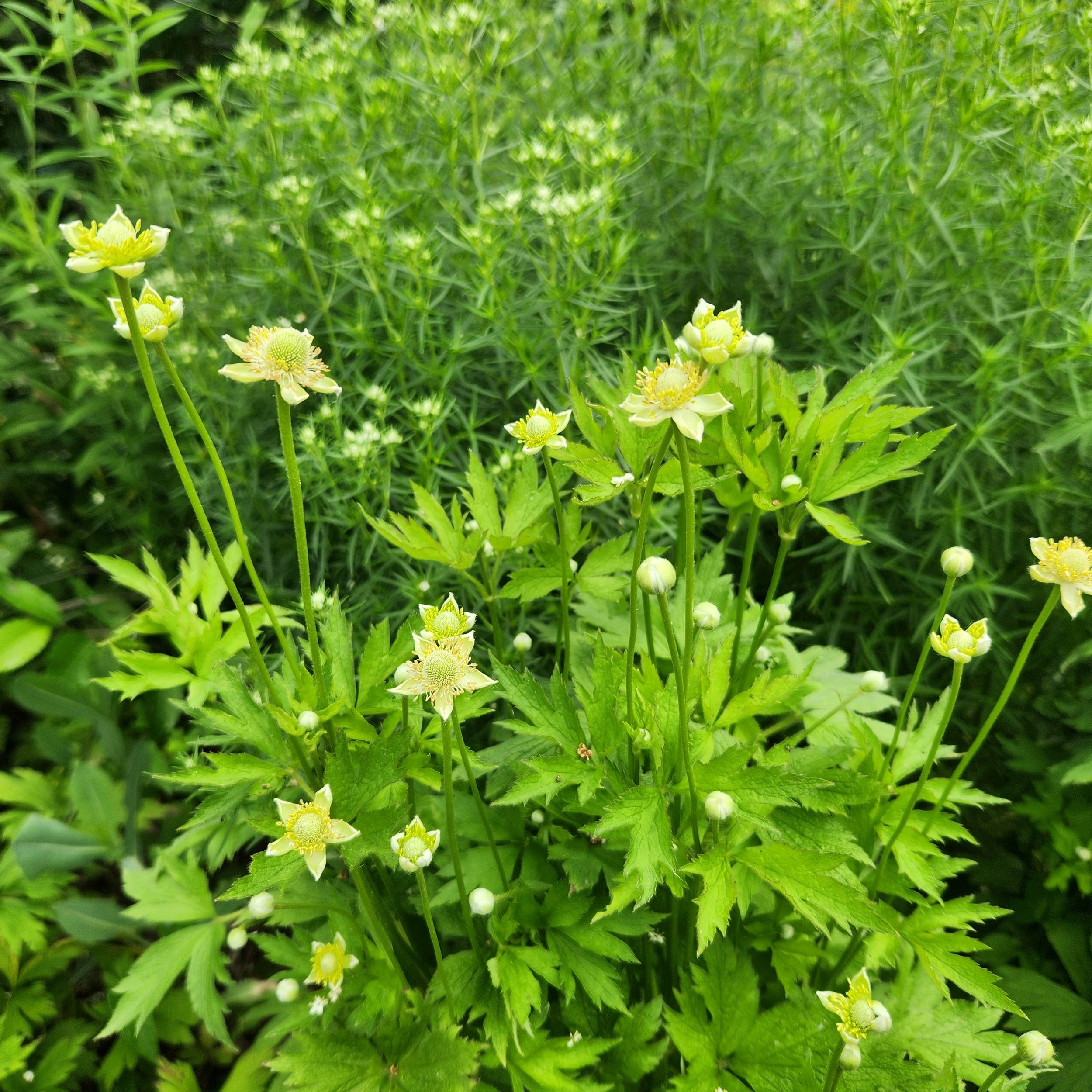 Image 1 of 8
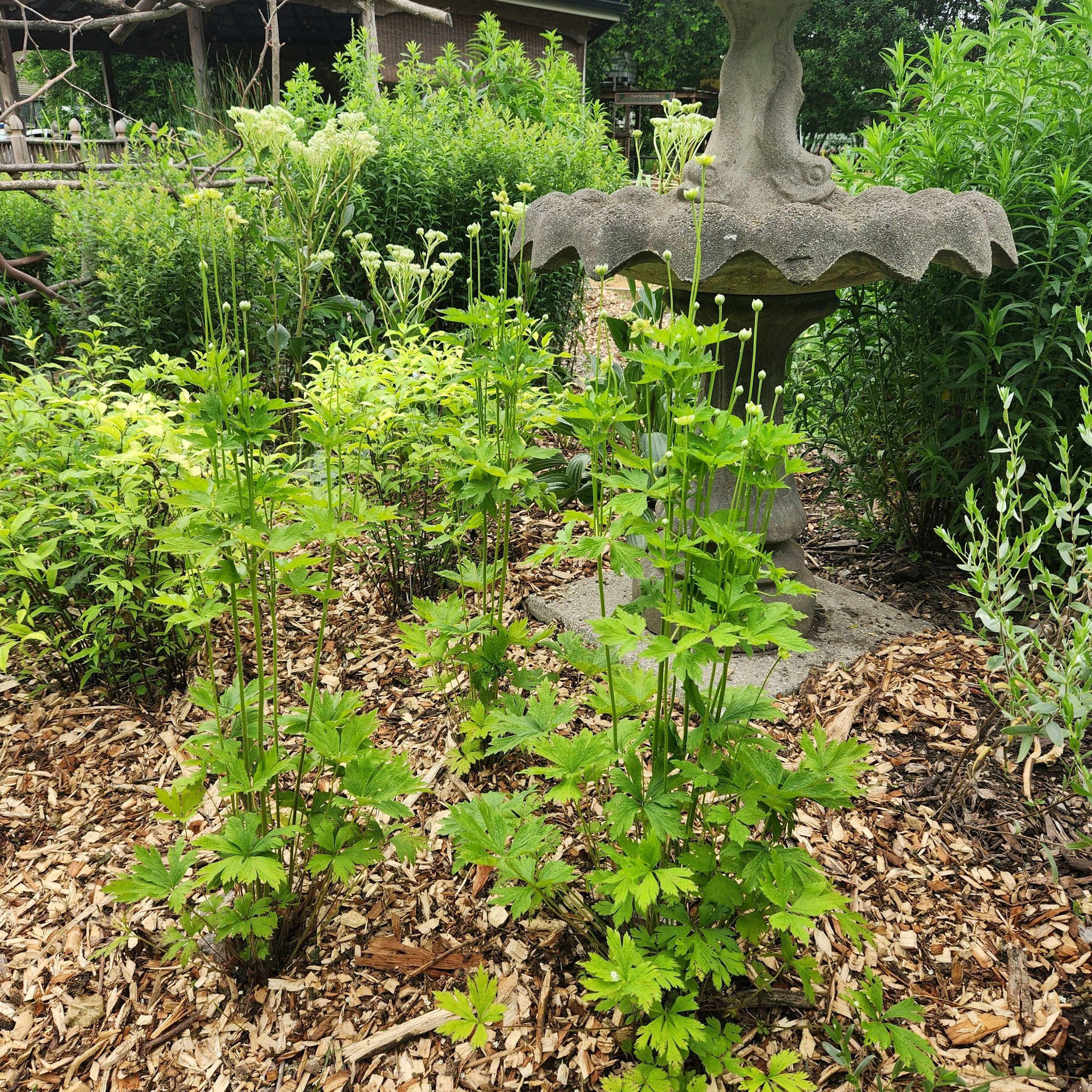 Image 2 of 8
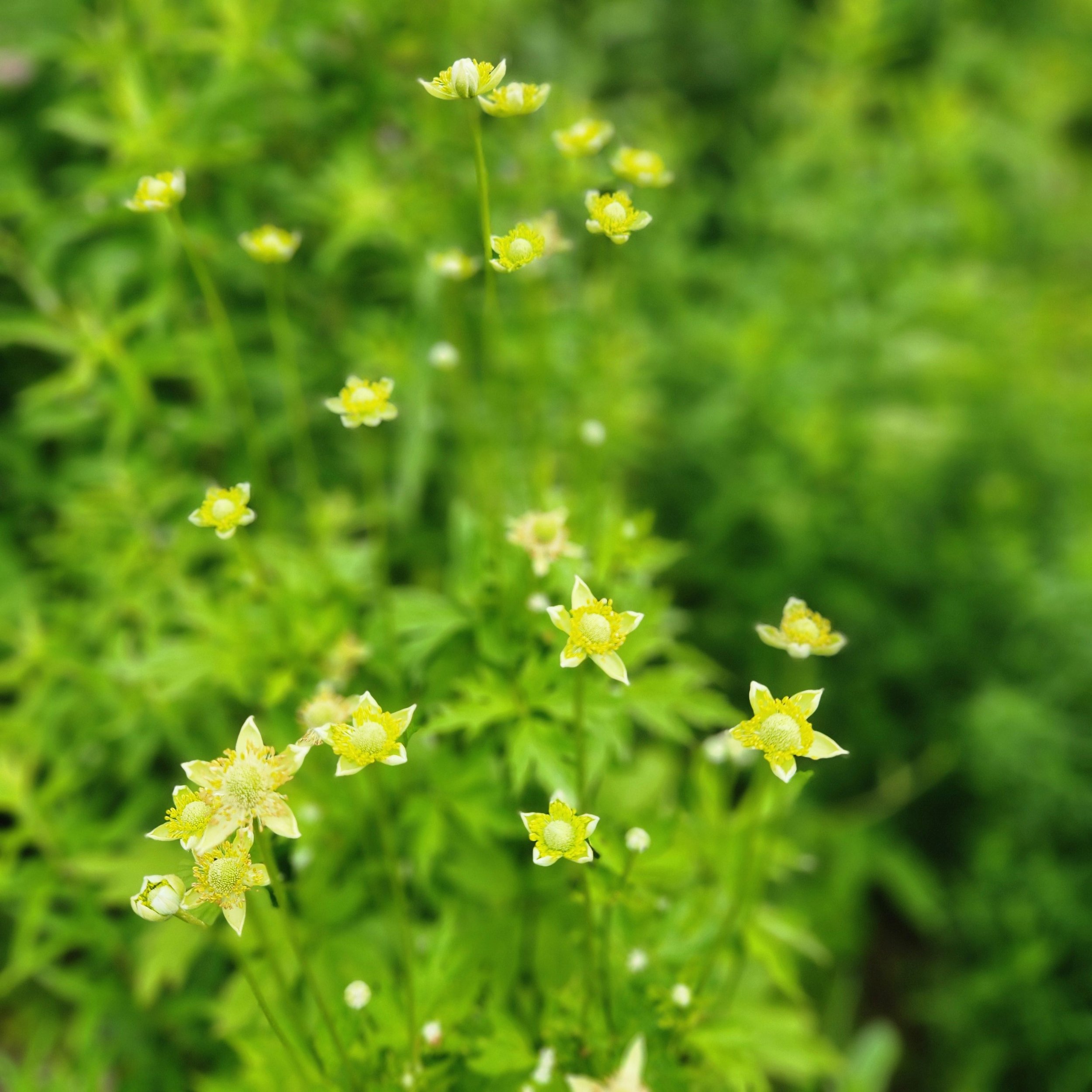 Image 3 of 8
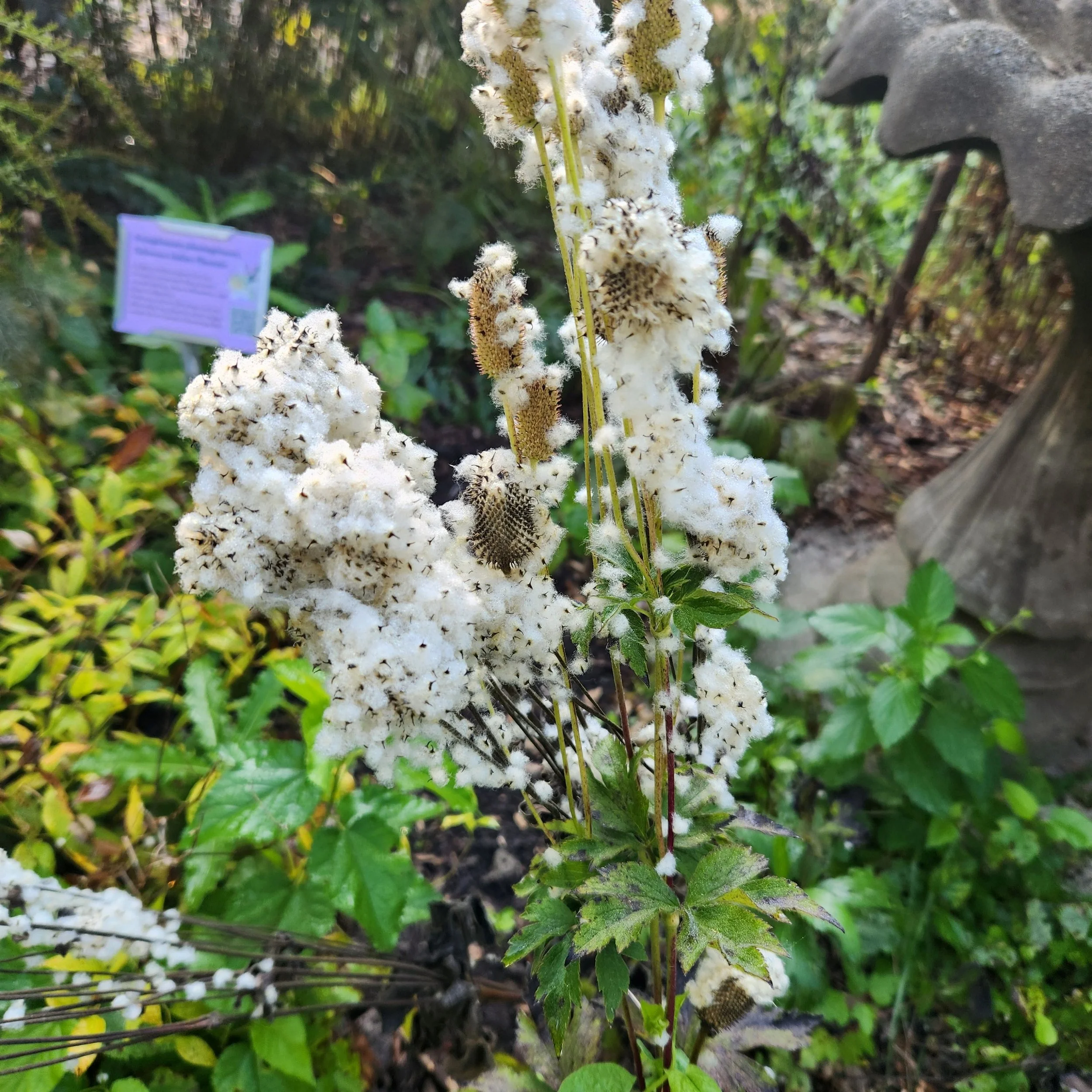 Image 4 of 8
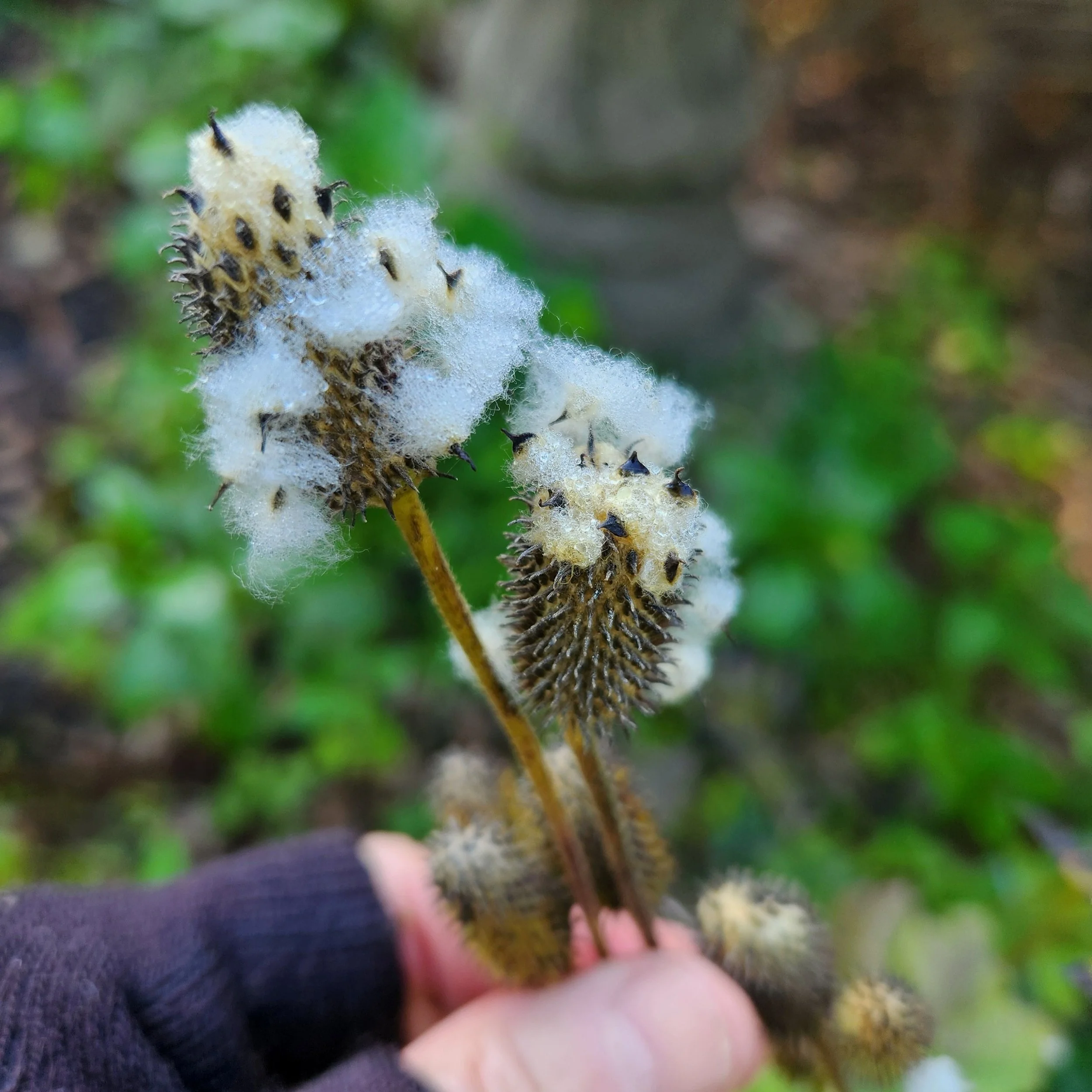 Image 5 of 8
 Image 6 of 8
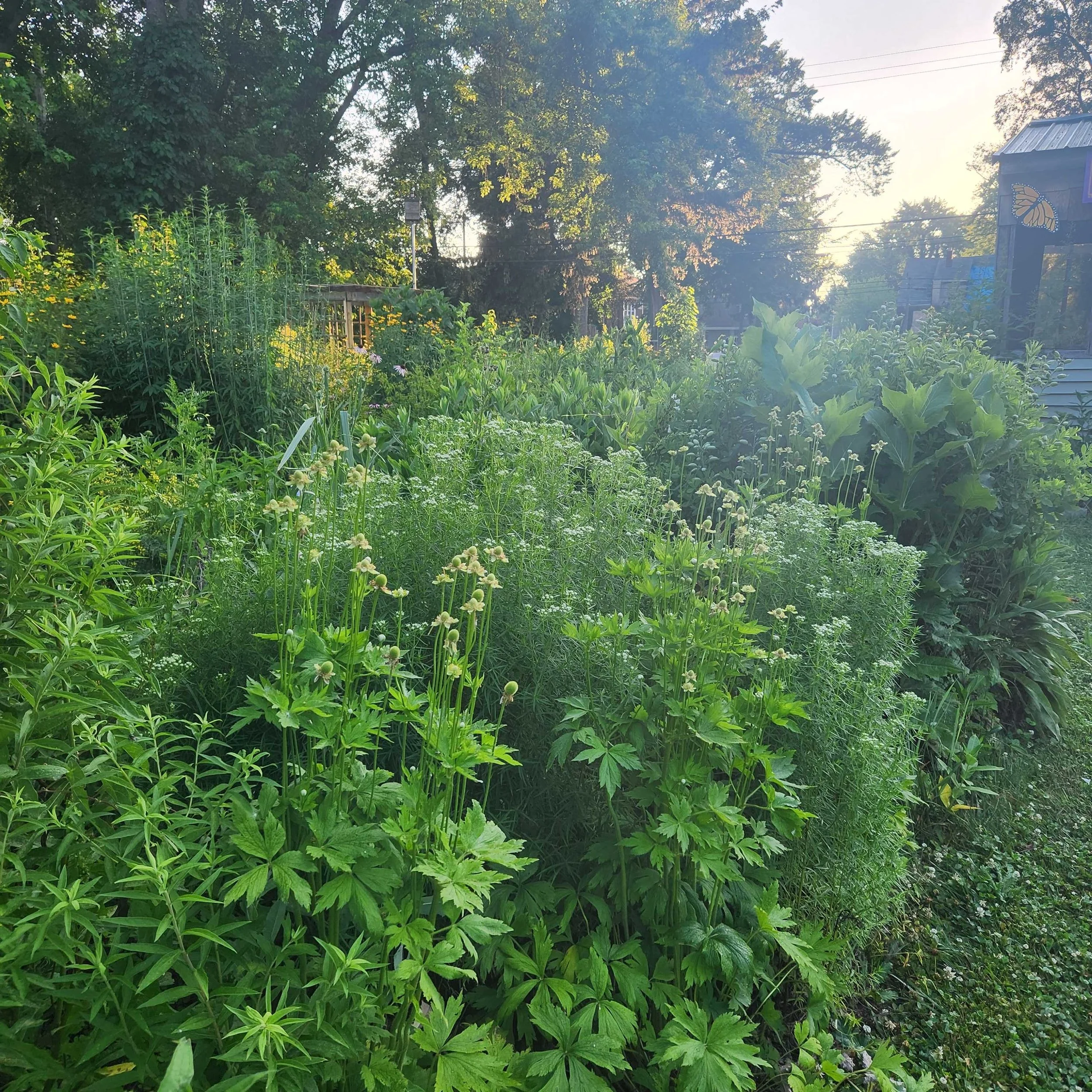 Image 7 of 8
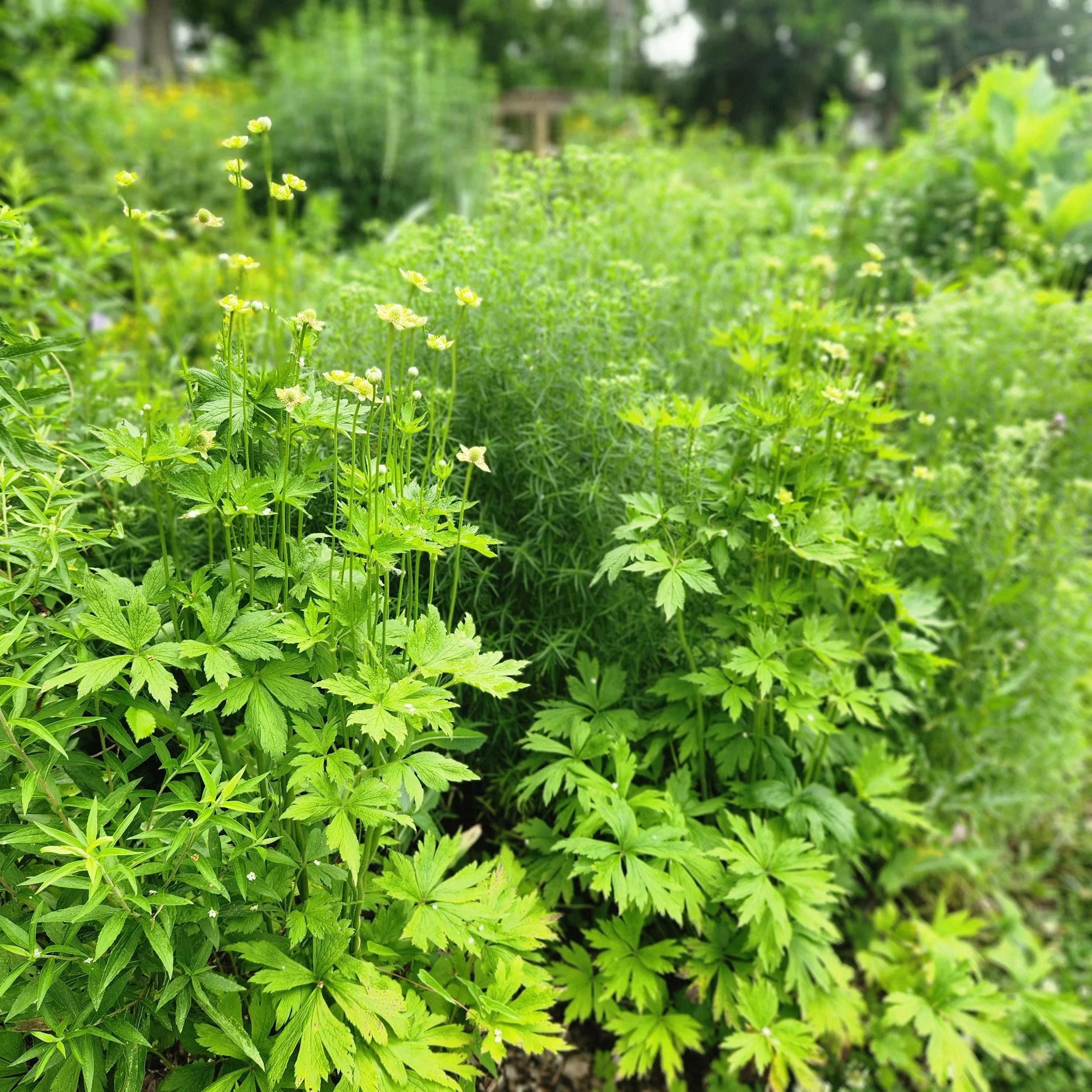 Image 8 of 8