 Image 1 of 2
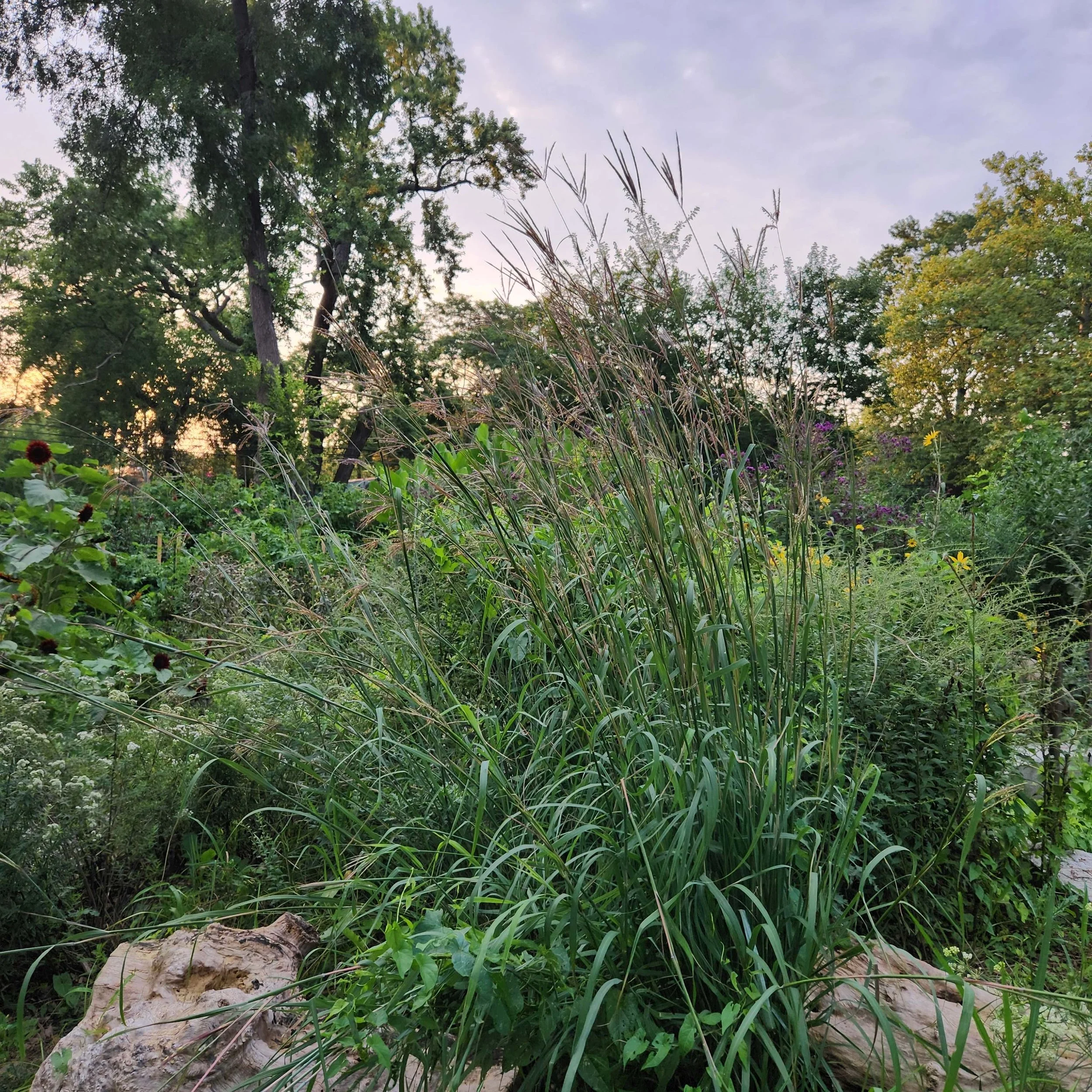 Image 2 of 2
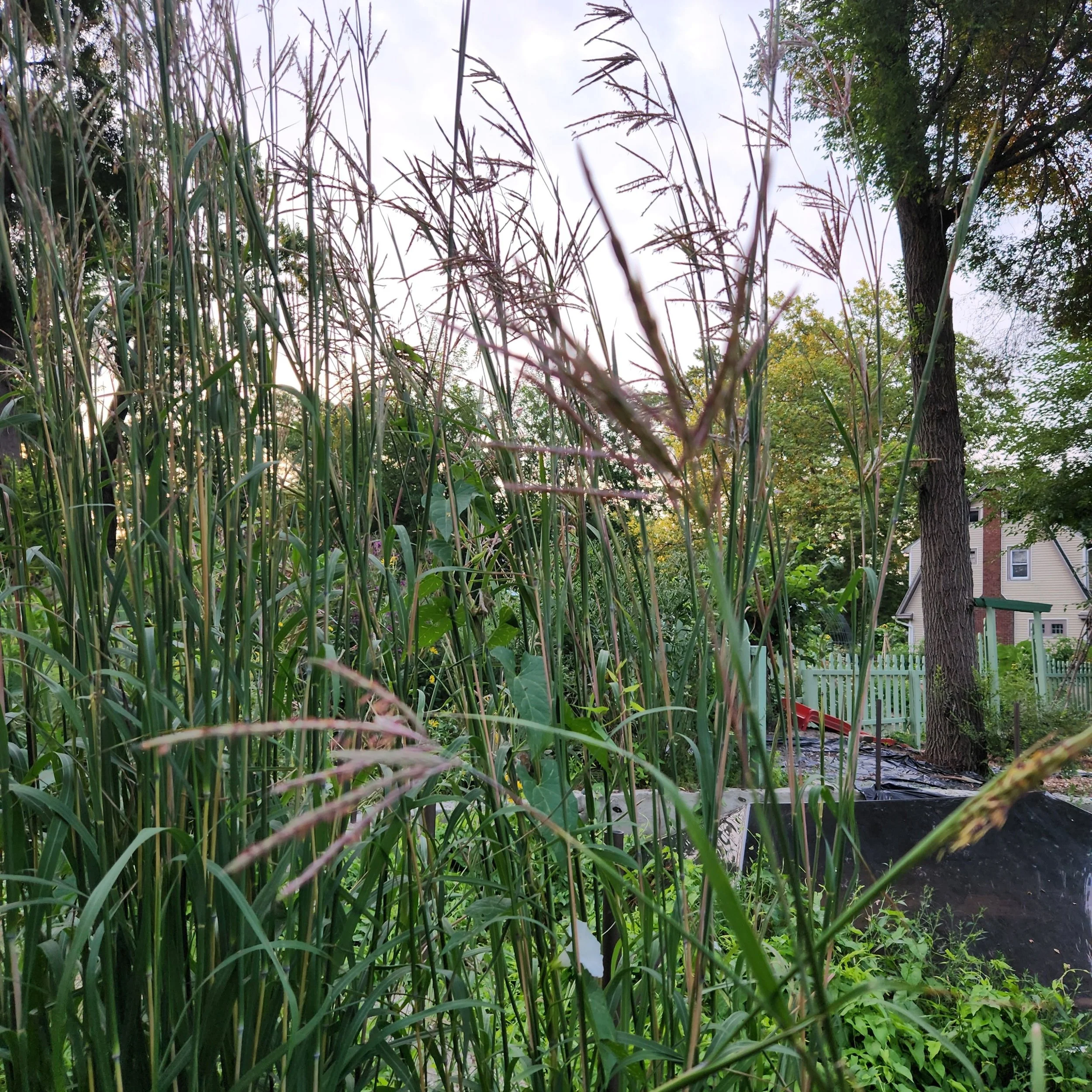
Andropagon geradi, Big Blue Stem
FS, Zone 3, 5-8’ x 2-3’, medium wet - dry, sand to clay, blooms June - August
Keystone Species - As a "foundation" or keystone species, it is essential for the structure and function of habitats in Southern Michigan. Big Bluestem, serves as a primary larval host for 13 species including several butterfly species, particularly skippers and satyrs. Its deep, extensive root system (reaching 5-8 feet deep) is vital for anchoring soil, preventing erosion, and storing large amounts of carbon below ground. it is currently in decline and is the primary species used in Michigan to restore native prairies and maintain biodiversity.
Commonly called big bluestem grass, this tall Michigan native perennial was the dominant grass of the tallgrass prairie which once covered large parts of the Midwest. Now, mainly due to farming and urbanization, only 1% of that original prairie remains intact. Yikes!
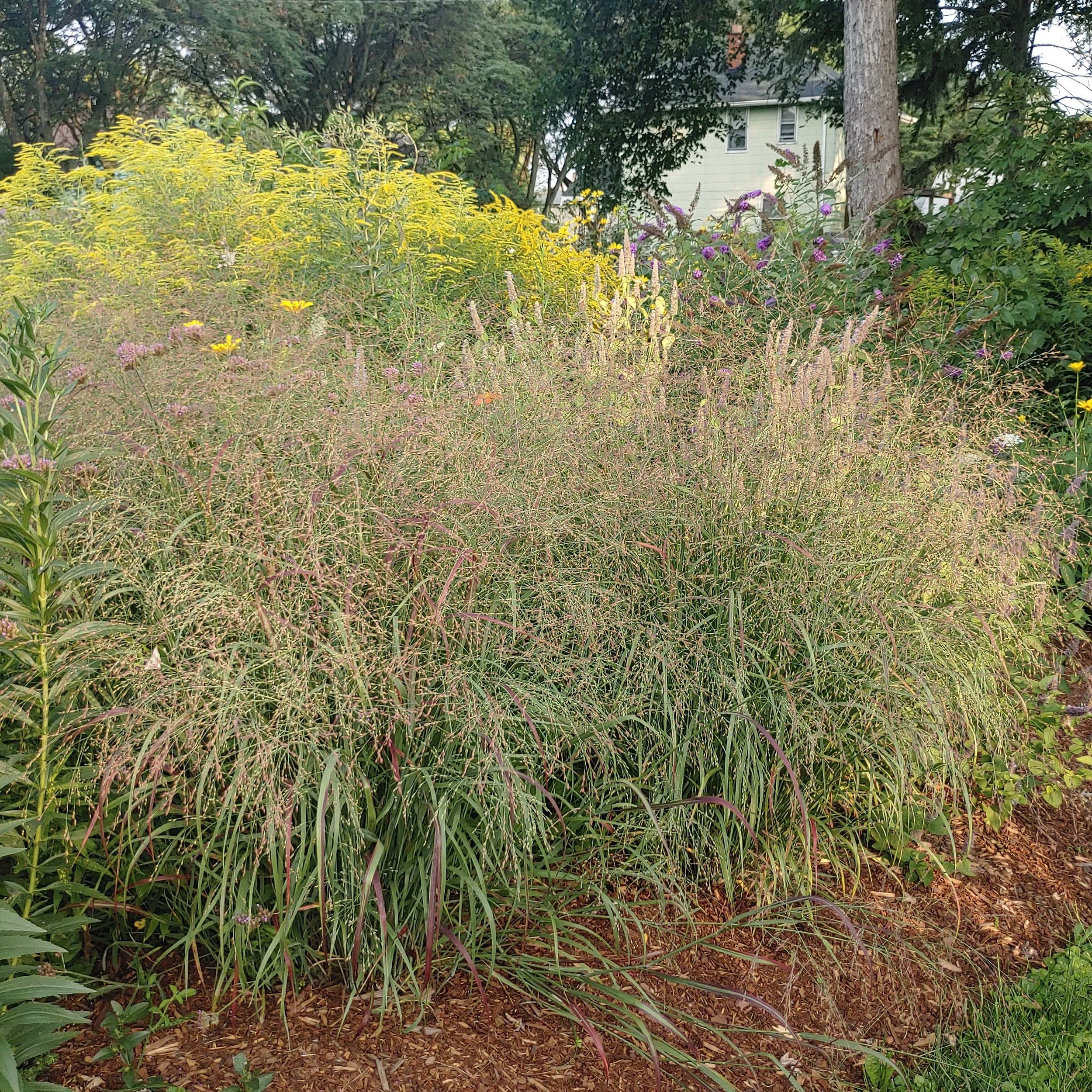
Big Blue Stem features an upright clump of stems with flattened leaves which emerge gray to blue green in spring, mature to green with red tinges in summer and turn reddish bronze with lavender tones in autumn after frost. Flowering stems rise in late summer above the foliage clump bearing purplish 3-parted, finger-like flower clusters (to 4" long) purportedly resembling turkey feet (hence the additional common name of “turkeyfoot” grass for this species).
Flowering stems bring total height of this grass to 5-8' tall (typically at the taller end in moist soils and the shorter end in dry soils). As a warm season grass it grows mainly in the summer months. The tips of the grass bloom and change colors as the season progresses. This an ideal grass for butterfly gardens and habitat restoration, for erosion control, providing food, shelter and nesting materials for birds and other forms of life. Groupings of Big Blue Stem can provide shelter for many kinds of animals that need a safe place to hibernate for the winter.
Provides seeds for the birds and an overwintering site for insects and other animals. Host plant for Delaware Skipper, Dusted Skipper, and Common Wood Nymph.
Andropagon geradi, Big Blue Stem
FS, Zone 3, 5-8’ x 2-3’, medium wet - dry, sand to clay, blooms June - August
Keystone Species - As a "foundation" or keystone species, it is essential for the structure and function of habitats in Southern Michigan. Big Bluestem, serves as a primary larval host for 13 species including several butterfly species, particularly skippers and satyrs. Its deep, extensive root system (reaching 5-8 feet deep) is vital for anchoring soil, preventing erosion, and storing large amounts of carbon below ground. it is currently in decline and is the primary species used in Michigan to restore native prairies and maintain biodiversity.
Commonly called big bluestem grass, this tall Michigan native perennial was the dominant grass of the tallgrass prairie which once covered large parts of the Midwest. Now, mainly due to farming and urbanization, only 1% of that original prairie remains intact. Yikes!
Big Blue Stem features an upright clump of stems with flattened leaves which emerge gray to blue green in spring, mature to green with red tinges in summer and turn reddish bronze with lavender tones in autumn after frost. Flowering stems rise in late summer above the foliage clump bearing purplish 3-parted, finger-like flower clusters (to 4" long) purportedly resembling turkey feet (hence the additional common name of “turkeyfoot” grass for this species).
Flowering stems bring total height of this grass to 5-8' tall (typically at the taller end in moist soils and the shorter end in dry soils). As a warm season grass it grows mainly in the summer months. The tips of the grass bloom and change colors as the season progresses. This an ideal grass for butterfly gardens and habitat restoration, for erosion control, providing food, shelter and nesting materials for birds and other forms of life. Groupings of Big Blue Stem can provide shelter for many kinds of animals that need a safe place to hibernate for the winter.
Provides seeds for the birds and an overwintering site for insects and other animals. Host plant for Delaware Skipper, Dusted Skipper, and Common Wood Nymph.