 Image 1 of 5
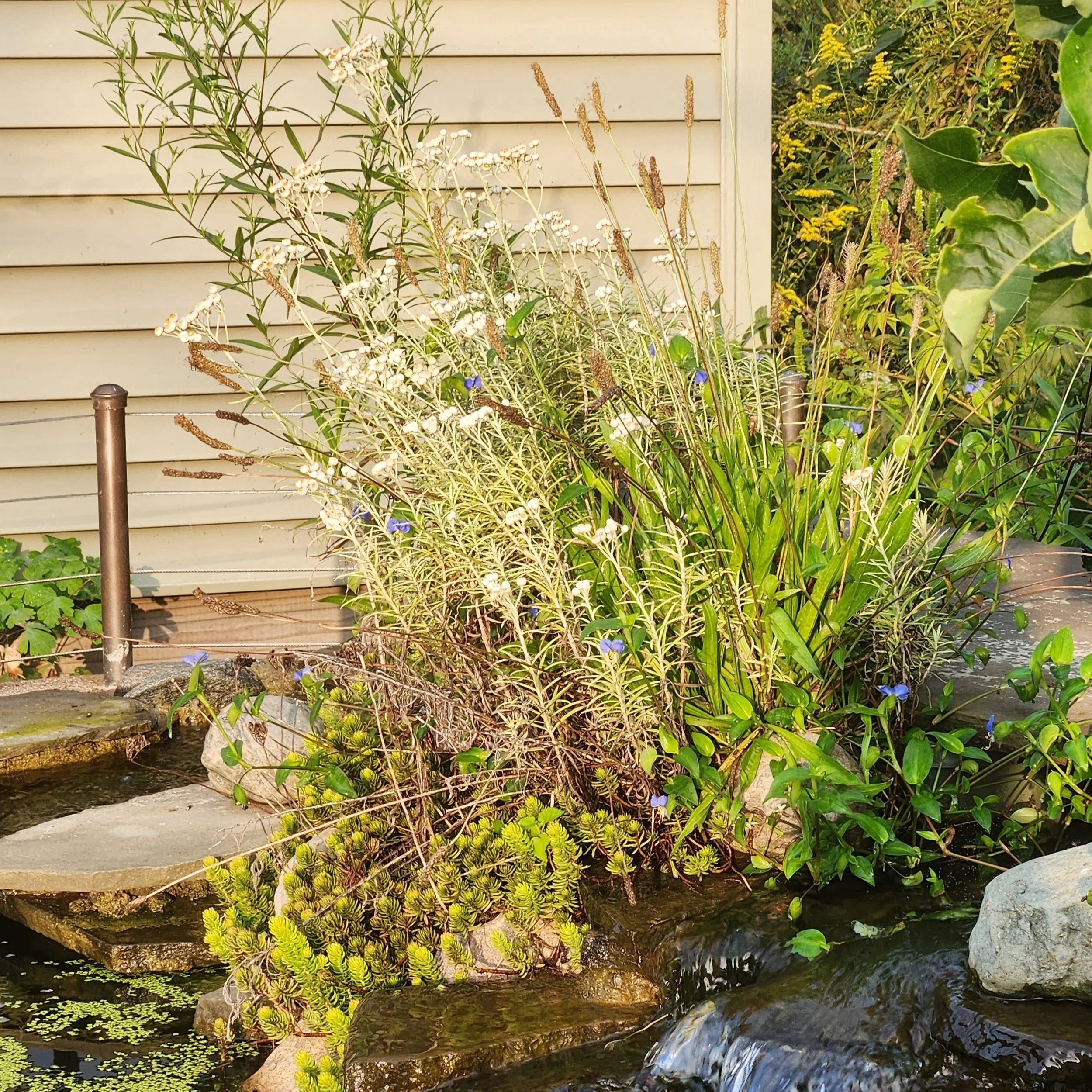 Image 2 of 5
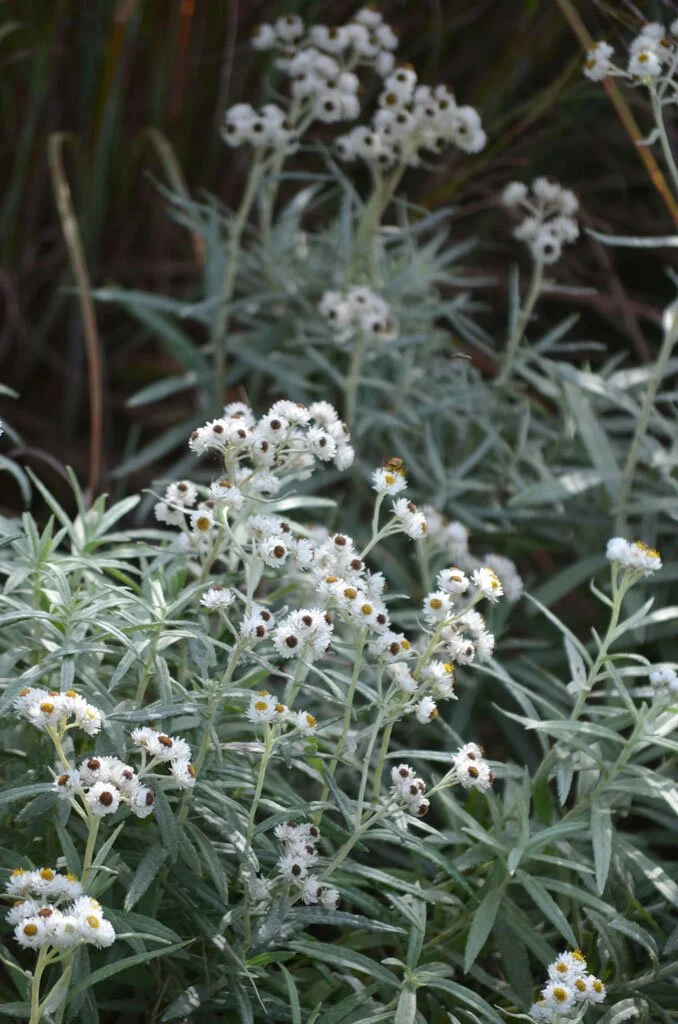 Image 3 of 5
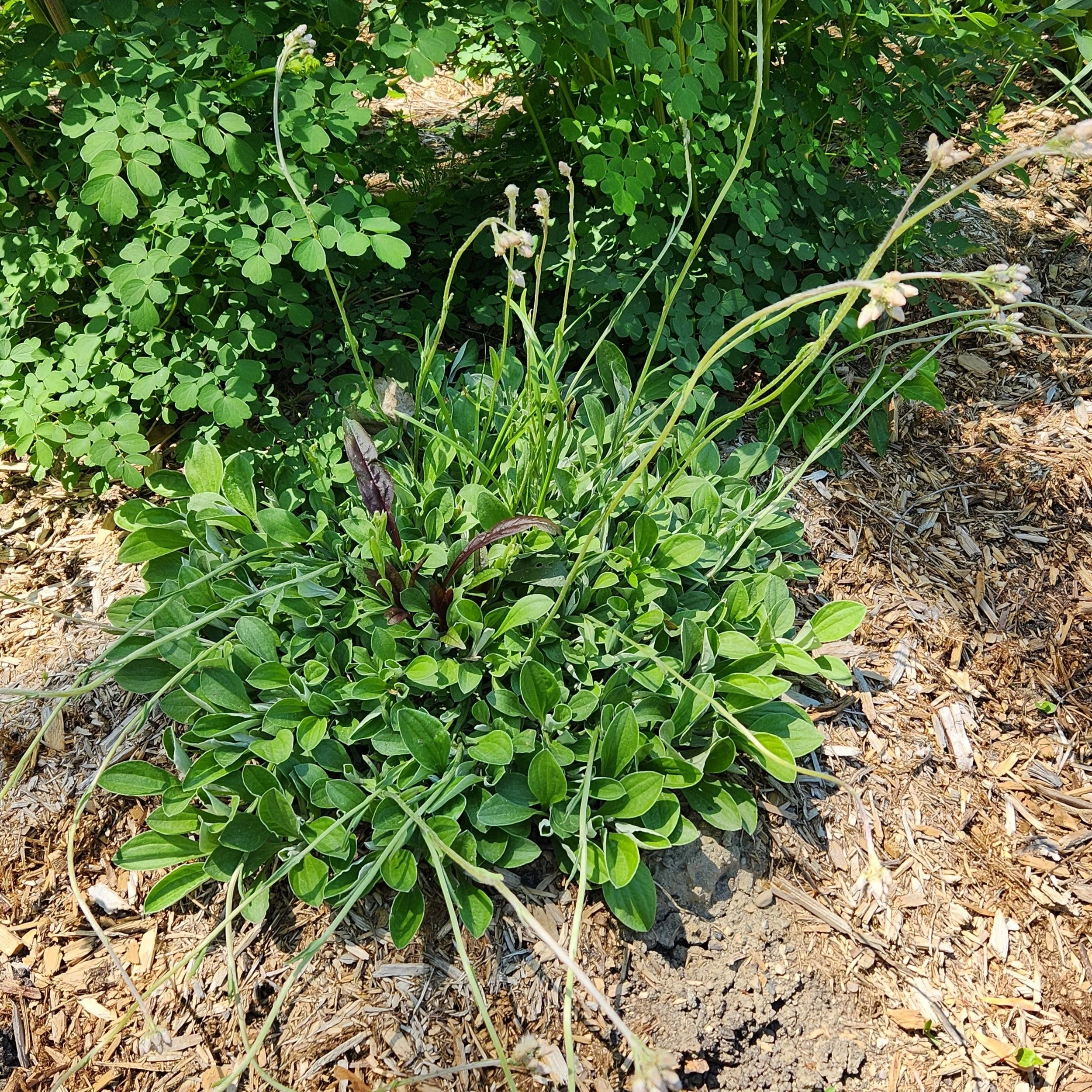 Image 4 of 5
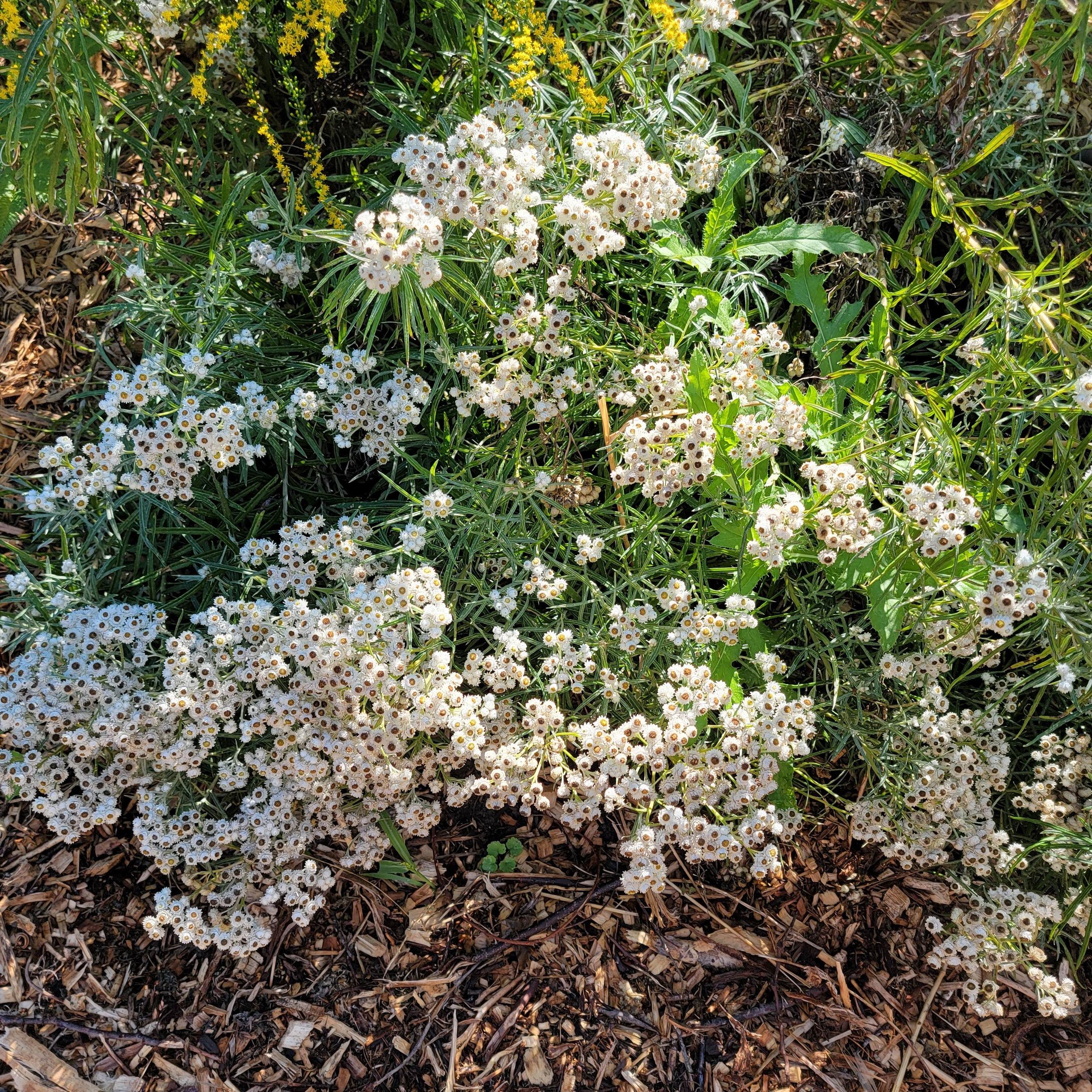 Image 5 of 5
Anaphalis margaritacea, Pearly Everlasting
FS-PS, Zone 3, Blooms mid-summer to Fall, 2’ x 1.5-3’, low moisture
We are sourcing this plant from Pairie Moon Nursery.
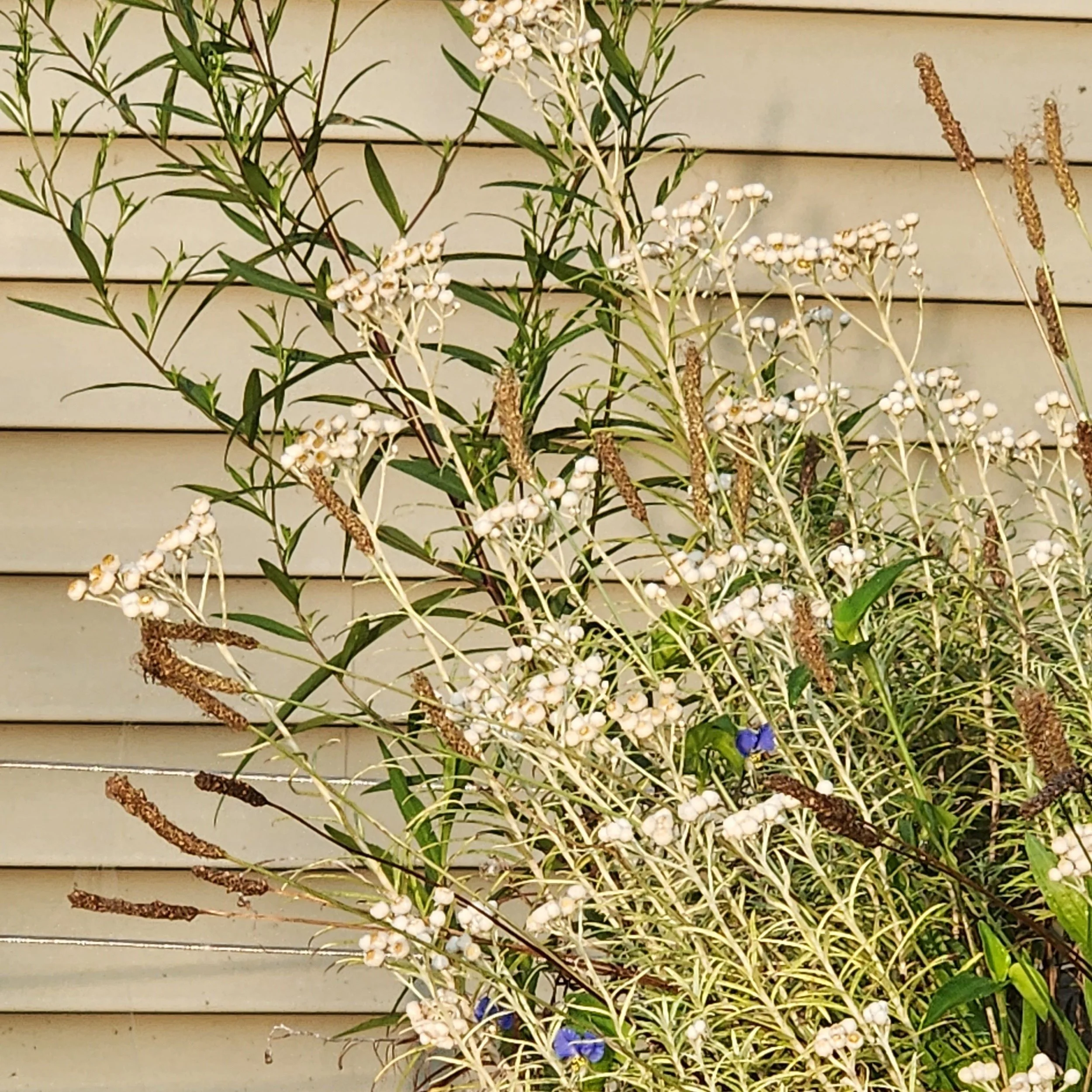
Pearly everlasting is considered a flowering perennial herb that dies down to the ground during the winter. The stems and elongated leaves of Pearly Everlasting are covered with white hairs. Clustered at the top of erect stems, the tiny yellow flowers are enclosed by white papery bracts, often mistaken for petals. The overall appearance is a pearly mound; a nice shape and color for a garden edge. It is dioecious, meaning the male and female reproductive parts are present on different plants. They take on different gender-specific yellow or rust-yellow color.
It is a great host plant for American Lady butterflies. They can lay their eggs anytime during the summer, but egg-laying is most common in the spring. The emerging caterpillars will feed on this plant’s foliage and live as individuals in nests made out of leaves. The plant will fully recover.
Blossoms can be dried for durable bouquets or flower arrangements as they keep their color and shape well. The plants papery blooms are long lasting in the garden and provide nectar for many pollinators.
Anaphalis margaritacea, Pearly Everlasting
FS-PS, Zone 3, Blooms mid-summer to Fall, 2’ x 1.5-3’, low moisture
We are sourcing this plant from Pairie Moon Nursery.
Pearly everlasting is considered a flowering perennial herb that dies down to the ground during the winter. The stems and elongated leaves of Pearly Everlasting are covered with white hairs. Clustered at the top of erect stems, the tiny yellow flowers are enclosed by white papery bracts, often mistaken for petals. The overall appearance is a pearly mound; a nice shape and color for a garden edge. It is dioecious, meaning the male and female reproductive parts are present on different plants. They take on different gender-specific yellow or rust-yellow color.
It is a great host plant for American Lady butterflies. They can lay their eggs anytime during the summer, but egg-laying is most common in the spring. The emerging caterpillars will feed on this plant’s foliage and live as individuals in nests made out of leaves. The plant will fully recover.
Blossoms can be dried for durable bouquets or flower arrangements as they keep their color and shape well. The plants papery blooms are long lasting in the garden and provide nectar for many pollinators.