Vernonia missurica, Ironweed
FS - PS, Zone 4, blooms July - August or later, 3-5’ x 3-4, wet to medium-dry, somewhat sandy to partial clay, deer resistant.
Keystone Species - It is the larval host plant for 20 species of moths and butterflies, including the American Lady and the Painted Lady butterflies. It is also the host for several specialist bees. The Denticulate Longhorn Bee s the most notable specialist for Ironweed. These bees are active from July to early September, perfectly synchronized with the plant's bloom period. They are known for collecting the plant's unique white pollen in thick, fluffy on their hind legs. By supporting a massive diversity of insects, it provides the essential food base (caterpillars and bugs) needed for birds to feed their young.
A good plant for low-lying moist areas or a rain garden. It will tolerate periodic flooding. It’s very common through most of the central U.S. The root system is densely fibrous and rhizomatous. The plant grows taller in very moist conditions. It’s a host plant for the Parthenice Tiger Moth and It produces both nectar and pollen for late-season visitors.
2020 was our first season growing this plant. The florets reminded us of Blazing Star Liatris. The pollinator activity was wonderfully intense for the duration of its bloom cycle. So many Skippers! Looking forward to more Ironweed. First year plants stay fairly short, but take off in year 2. It is a good back of the border plant. You may get some volunteers the next season, but not too much!
Native and honey bees, butterflies and skippers and Soldier Beetles are attracted to Veronia. Long-Horned Bees are frequent visitors for pollen. Skippers are also common visitors. It is the host plant for the Painted Lady and American Lady butterflies.
DA Planting Notes - We do not have wet planting conditions at DA. We have Ironweed planted in numerous locations at DA all dry, well drained soil, in FS. It is a large plant that makes a statement and does well in non wet places.
Vernonia missurica, Ironweed
FS - PS, Zone 4, blooms July - August or later, 3-5’ x 3-4, wet to medium-dry, somewhat sandy to partial clay, deer resistant.
Keystone Species - It is the larval host plant for 20 species of moths and butterflies, including the American Lady and the Painted Lady butterflies. It is also the host for several specialist bees. The Denticulate Longhorn Bee s the most notable specialist for Ironweed. These bees are active from July to early September, perfectly synchronized with the plant's bloom period. They are known for collecting the plant's unique white pollen in thick, fluffy on their hind legs. By supporting a massive diversity of insects, it provides the essential food base (caterpillars and bugs) needed for birds to feed their young.
A good plant for low-lying moist areas or a rain garden. It will tolerate periodic flooding. It’s very common through most of the central U.S. The root system is densely fibrous and rhizomatous. The plant grows taller in very moist conditions. It’s a host plant for the Parthenice Tiger Moth and It produces both nectar and pollen for late-season visitors.
2020 was our first season growing this plant. The florets reminded us of Blazing Star Liatris. The pollinator activity was wonderfully intense for the duration of its bloom cycle. So many Skippers! Looking forward to more Ironweed. First year plants stay fairly short, but take off in year 2. It is a good back of the border plant. You may get some volunteers the next season, but not too much!
Native and honey bees, butterflies and skippers and Soldier Beetles are attracted to Veronia. Long-Horned Bees are frequent visitors for pollen. Skippers are also common visitors. It is the host plant for the Painted Lady and American Lady butterflies.
DA Planting Notes - We do not have wet planting conditions at DA. We have Ironweed planted in numerous locations at DA all dry, well drained soil, in FS. It is a large plant that makes a statement and does well in non wet places.
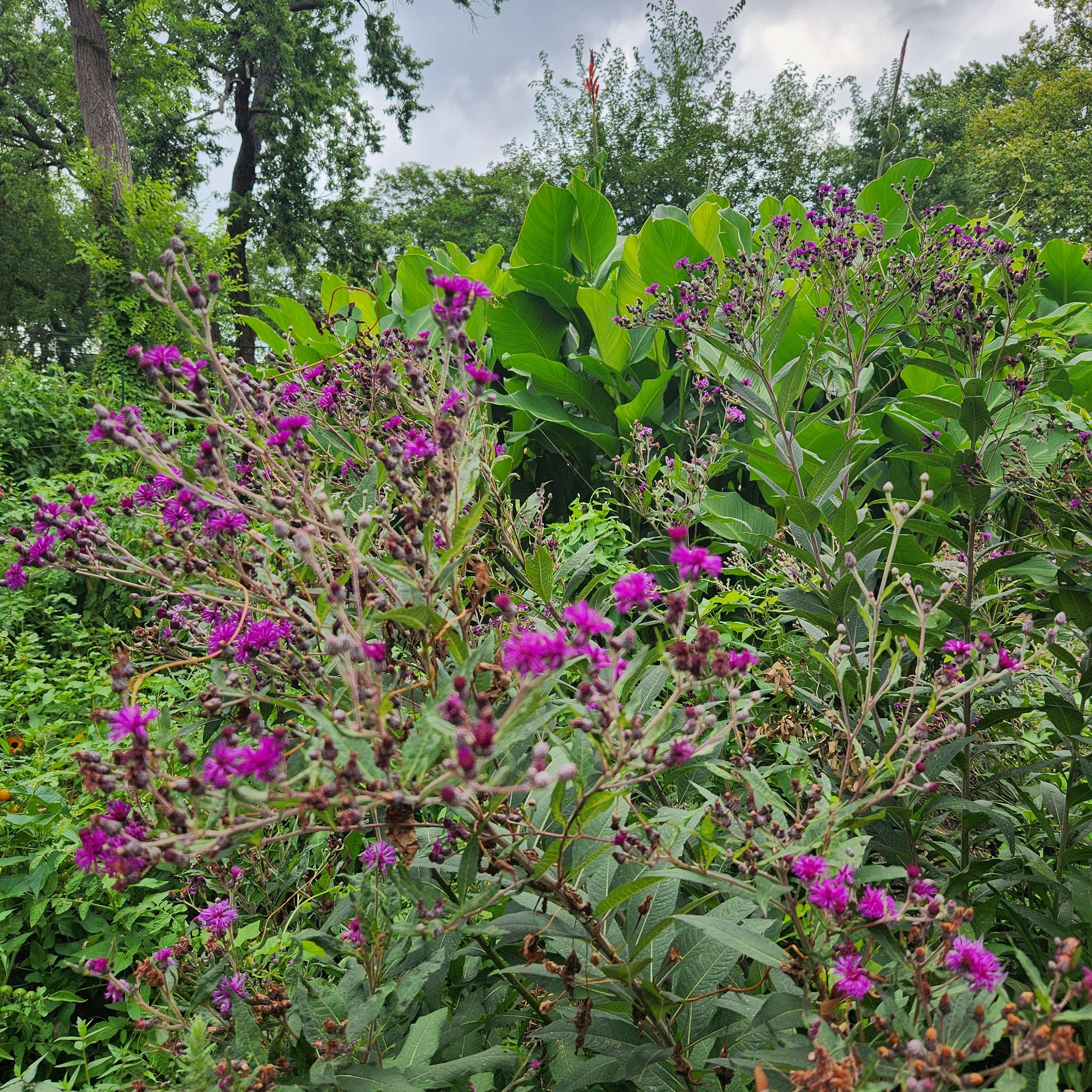 Image 1 of 11
 Image 2 of 11
 Image 3 of 11
 Image 4 of 11
 Image 5 of 11
 Image 6 of 11
 Image 7 of 11
 Image 8 of 11
 Image 9 of 11
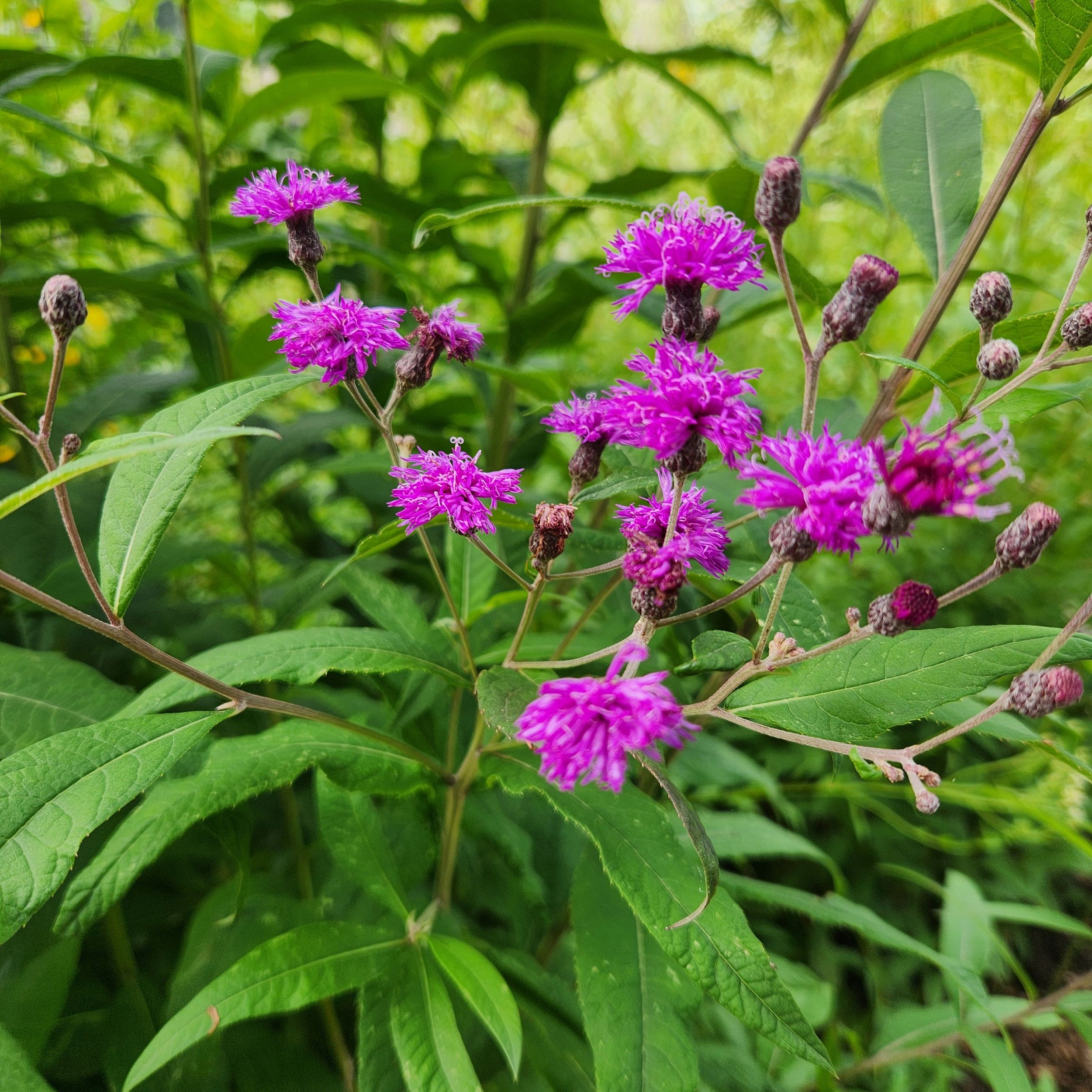 Image 10 of 11
 Image 11 of 11